
Successful commercial lease negotiation depends less on instinct and more on evidence. Data transforms negotiation from a subjective exchange into a quantifiable, defensible process.
Every metric within a commercial lease agreement can be measured, benchmarked, and optimized — and organizations that do so consistently outperform peers in cost control, flexibility, and risk reduction.
The following categories represent the most consequential data points in a commercial property lease. These are the levers that materially influence cost, exposure, and operational control.
Tenant Improvement Allowances
Tenant improvement (TI) allowances are one of the largest single variables affecting total occupancy cost.

2024 industry data shows that average TI packages for Class A offices fell roughly 9% year-over-year, to $98 per square foot.
This decline signals a shift: landlords are recalibrating incentives and embedding more capital recovery into base rent.
To negotiate effectively, tenants require benchmarking data ….not only on headline TI values but also on how landlords amortize those costs over the lease term. A nominally higher allowance can translate to higher rent if the landlord capitalizes the contribution into rent escalations. The key metric is effective rent per square foot, inclusive of amortized TI.
To quantify this impact, consider a standard 10-year commercial lease for 25,000 square feet of office space. If a landlord provides a tenant improvement allowance of $100 per square foot but amortizes it at 7% over the term, the embedded repayment raises the base rent by roughly $1.43 per square foot annually. Over the full term, the tenant effectively repays $357,500 in capital—often without recognizing it.
This phenomenon is widespread. A 2024 JLL corporate occupier report found that 63% of leases with high TI allowances included some form of amortization clause tied to rent escalation. In many cases, the allowance inflated total occupancy cost by 6–8% over the stated rent schedule. From a negotiation perspective, the difference between “landlord-funded” and “tenant-financed” improvements is not semantic; it’s financial.
Rent Abatement in Your Lease Agreement
Free rent periods have compressed across most U.S. markets.

Industry reports that average free rent on new leases fell from 9.6 months in 2023 to 8.9 months in 2024. In a negotiation, this contraction must be offset elsewhere — through lower rent, extended term flexibility, or expanded build-out concessions.
The relevant data point is abatement value as a percentage of total lease consideration. A balanced transaction aligns that ratio with market norms. Without that benchmark, tenants risk accepting nominal incentives that fail to offset underlying rent increases or reduced tenant improvements.
Operating Expenses and CAM Pass-Throughs
Operating expenses — including property taxes, insurance, utilities, and common area maintenance (CAM) — routinely account for 20–40% of total lease cost. They also remain the least transparent component of many commercial real estate leases.
Tenants should maintain longitudinal data on operating cost per square foot across their portfolio, segmented by building type and geography. Comparing those figures to market data identifies outliers where landlords may be passing through nonrecoverable capital items or management fees.
Negotiation objectives should include:
- Defined exclusions for capital improvements and administrative overhead
- Annual caps on controllable expenses
- Full audit rights for CAM reconciliations
Without data, these discussions default to anecdote; with it, they become quantifiable.
Effective Rent Analysis for Your Commercial Space
The only reliable measure of lease competitiveness is effective rent — the total cost of occupancy, incorporating rent, expenses, incentives, and escalations.
Formulaically:
Effective Rent = (Base Rent + Operating Costs + Property Taxes – Incentives) ÷ Square Footage
This metric neutralizes the distortions created by front-loaded incentives or artificially extended lease terms. A lease with higher nominal rent but stronger concessions may yield a lower effective rate over its duration. Comparing effective rents across transactions enables like-for-like analysis and eliminates reliance on headline figures.
Renewal Options and Termination Clauses
You can’t simply exit a commercial lease early because business conditions change. Unless you’ve negotiated a defined termination mechanism up front, you’re bound by the contract—and that rigidity can become expensive fast. A well-structured early termination clause is your release valve. It sets the notice period, the fee, and the process before there’s a problem. Without it, your only options are subleasing or default, both of which erode leverage and reputation.
Market data shows that structured break rights—typically requiring six to twelve months’ notice and a penalty equal to three to six months of base rent—can reduce portfolio exposure by as much as 8–10% in volatile markets. The precise numbers matter less than the presence of the clause itself. A contract that defines cost and timing gives you control; one that doesn’t leaves the landlord in full command of your flexibility.
Renewals carry the same risk in reverse. Too many tenants sleepwalk into extensions, assuming their existing lease terms remain competitive. They rarely are. If you signed a lease five or seven years ago, you negotiated in a different market—with different base rents, operating costs, and tenant inducements. The effective rent landscape has shifted.
Portfolio analytics should flag every upcoming renewal window at least a year in advance. Use that time to benchmark your current rent against market data and comparable commercial property leases. In 2025, national asking rents in prime office markets have declined by roughly 5–7% since their 2019 peak (CBRE), while tenant improvement allowances and free rent periods have also compressed. That means there is often room to renegotiate—not automatically renew.
A renewal option should be treated as a negotiation event, not an administrative step. Evaluate it with the same scrutiny as a new lease: reassess effective rent, operating cost allocations, and any new competitor clauses or maintenance responsibilities the landlord might introduce.
Holdover and Penalty Rent
Holdover provisions, which determine rent payable after lease expiry, often contain punitive rates of 150–200% of base rent. Data collected across a tenant’s portfolio typically reveals a more sustainable benchmark between 110–125%.
During negotiation, citing internal or industry averages reframes the discussion from anecdotal fairness to documented precedent. Every percentage above market is a predictable and avoidable liability.
Want a Favorable Lease? Come Prepared.
Every commercial lease negotiation should begin — and end — with data.Data exposes the true economics of every commercial property lease — how base rent, operating costs, and property taxes evolve across your leased space. It reveals whether your tenant improvements were properly amortized or if you’re effectively funding the property owner’s capital through a triple net lease, gross rent lease, or modified gross lease structure. It highlights unexpected costs, maintenance responsibilities, and rent increases that quietly inflate total cost over time.
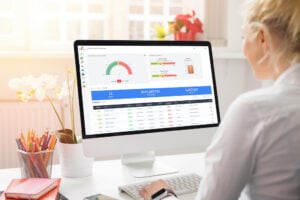
REoptimizer® transforms that data into action. The platform automatically scans, flags, and benchmarks your lease terms across every office space and industrial property in your portfolio. It identifies when a commercial lease agreement includes non-standard escalation clauses, unfavorable competitor clauses, or missing renewal options. It quantifies how your net lease obligations compare to market norms, where landlord pays versus tenant pays, and when your square footage or lease duration exposes you to higher-than-average rent costs or maintenance costs.he system cross-references market benchmarks to surface favorable clauses, highlight negotiation opportunities, and help tenants negotiate lease terms from a position of data-backed strength.
In practice, that means no more “sleepwalking” into renewals or overpaying for a long-term lease negotiated in a different cycle. REoptimizer® provides the intelligence to identify potential risks, recalibrate lease options, and pursue lower rent or rent abatement where justified. It gives portfolio managers and experienced attorneys the tools to analyze legally binding contracts with precision — turning every complex process of negotiating a commercial lease into a disciplined, repeatable, data-driven workflow.
Your leases are more than contracts; they’re financial instruments. REoptimizer® ensures you treat them that way — by converting static documents into live intelligence.
Optimize every square foot. Reduce total cost. Negotiate every lease with data. Learn more about REoptimizer® can give your portfolio an edge.