Is this the end of renewal as default? In today’s market, staying put may actually cost more than moving — as hidden inflation quietly drives up your lease costs year after year.
For decades, tenants defaulted to renewing leases because it felt safer…less disruption, less capital, fewer unknowns.But in 2025, that old playbook no longer works. High vacancies, stressed landlords, and compounding rent escalations have flipped the risk equation.
Today, renewal decisions must be strategic, not automatic — because the “status quo” lease is often the most expensive one you hold.

Market Forces Are Out of Balance
The renewal landscape has changed. What used to be a straightforward decision is now a high-stakes choice.
-
U.S. office vacancy stands at roughly 20.6–20.7% as of Q2 2025 — the highest level on record (Moody’s Analytics).
-
About 24% of office mortgages mature this year, according to the Mortgage Bankers Association. Many landlords face refinancing at higher interest rates or lower valuations.
-
Office loans remain the weakest link in commercial mortgage-backed securities (Trepp), with delinquencies climbing unevenly across markets.
In simple terms, there’s more empty space and more landlord distress than at any time in modern history. That gives tenants leverage — but only if they use it.
Renewing out of habit, without benchmarking the market, means ignoring your negotiating power.
The Hidden Inflation Inside Every Renewal
Even tenants who think they’re holding steady on rent often aren’t. Escalations and pass-throughs quietly compound total cost year after year.
Base Rent Escalations
Most leases bake in 3% annual increases, a number that feels harmless but adds up fast.
Operating Expense Pass-Throughs
The bigger budget threat comes from expenses that flow through your lease — taxes, insurance, utilities, janitorial, maintenance.
-
Insurance costs rose for 25 consecutive quarters through late 2023 (Marsh Global Insurance Index).
-
While U.S. property insurance rates declined around 9% in early 2025, they’re still well above 2019 levels.
-
Taxes and insurance now represent the largest share of total building operating costs, according to BOMA benchmarks.
If your lease passes these costs through to you — as most do — your “flat renewal” is anything but flat. Without renegotiation, you’re absorbing hidden inflation every year.

Why Older Leases Are Now Out of Sync
Many tenants still sit on leases signed before or during the pandemic. Those deals no longer reflect today’s realities.
Here’s what’s changed:
-
Rent escalations have compounded for years, inflating your effective rate.
-
Concessions peaked in 2023, softened slightly in 2024, but remain materially higher than in 2019.
-
Average free rent: 8.9 months (2024) vs. 9.6 months (2023).
-
Average tenant improvement allowance: $87.51 per square foot, down from $97.55 but far higher than 2019 levels.
-
-
Vacancies are historically high, which means landlords are still competing hard for credit tenants.
If you signed in 2019 or 2020, you’re likely paying an inflated effective rent and getting none of the concessions currently available to new tenants.
Landlord Solvency: The Risk You Inherit When You Renew
Renewing isn’t just about your rent — it’s about who’s on the other side of the lease.
-
Landlords facing refinancing pressure may defer maintenance or reduce building services to conserve cash.
-
Some owners can’t refinance at all, pushing assets toward loan default or receivership.
-
Even otherwise stable landlords are often unwilling or unable to fund new TI packages or rent abatements.
Before renewing, treat your landlord like a counterparty you’re underwriting. Check when their loans mature, whether they’ve reinvested in the property, and what their debt terms look like. The strength of your landlord’s balance sheet directly affects the reliability of your lease.

When Renewals Quietly Outprice the Market
The biggest misconception in corporate real estate right now is that staying put is always cheaper.
Across most U.S. markets, effective rents for new deals have flattened or fallen, while renewal rents have continued to climb through automatic escalations and compounding pass-through costs.
2024 U.S. office data shows that although nominal asking rents have held steady, effective rents — after concessions — are now roughly 5–10% lower than 2019 levels for non-prime assets. Meanwhile, tenants still on long-term leases signed before the pandemic are often paying 15–20% more after years of escalations, with no offsetting incentives.
That divergence is reshaping tenant strategy.Corporate occupiers are no longer expanding — they’re re-allocating: consolidating footprints, upgrading to better-located or better-amenitized buildings, and resetting rent baselines in the process.
In this environment, the “cheapest” option on paper — a renewal at your current building — may actually deliver the highest total cost of occupancy once escalations, operating expenses, and foregone concessions are factored in.
The takeaway: continuity isn’t cost control. If you haven’t benchmarked your rent and incentives against the active market in the last 12–18 months, there’s a strong chance your renewal is already overpriced.
How to Pressure-Test Your Renewal Strategy
A renewal decision shouldn’t rely on instinct — it should rely on data discipline and market comparison.
Here’s how to approach it with rigor:
1. Benchmark your effective rate.
Gather recent comps or proposals in your submarket. Normalize them for effective rent by including free rent, amortized TI dollars, and estimated operating expenses. This provides an apples-to-apples comparison against your escalated rate.
2. Model your total cost of occupancy.
Base rent is only part of the story. Taxes, insurance, parking, maintenance, and deferred upgrades can add 20–30% to your total spend. iOptimize Realty’s portfolio data confirms that tenants who quantify these costs early negotiate more complete rent resets later.
3. Evaluate landlord risk.
Renewing with a highly leveraged or under-capitalized owner carries operational risk — deferred maintenance, slow response times, and uncertain reinvestment. Those soft costs can be real and material.
4. Quantify flexibility value.
Shorter lease terms, contraction rights, and assignment clauses have tangible financial value. They allow you to adapt to headcount or location changes — something many pre-pandemic leases lack.
5. Create competitive tension.
Even if you intend to stay, act as though you’re running a competitive bid. According to iOptimize Realty’s renewal data, tenants who pursue at least one credible relocation alternative achieve 10–15% stronger economic outcomes on renewals.
The goal isn’t to move for the sake of moving — it’s to ensure your renewal performs like a market-rate transaction. In 2025, mobility equals leverage, and leverage is what keeps renewals honest.

How to Make Staying Put Worth It
Renewal can still make sense — but only if you re-engineer the deal.
Treat it as a full market negotiation, not an administrative extension.
Key renewal levers:
-
Re-strike base rent to current market rates, normalized for TI and free rent.
-
Reset escalation terms. Replace 3% fixed bumps with CPI-linked increases capped at a maximum percentage.
-
Cap controllable expenses and seek carve-outs or collars on taxes and insurance.
-
Add service guarantees or remedies if landlord credit is a concern.
-
Negotiate flexibility — options to contract, expand, or assign space.
-
Start early. Tenants who begin renewals 12–18 months ahead can achieve 10–15% better outcomes.
Tenant Behavior in 2025: What the Data Shows
Two clear shifts define current tenant strategy.
1. Trading Up While Downsizing
Many occupiers are consolidating into smaller footprints but upgrading to higher-quality assets. The result is better employee experience and stronger brand positioning at equal or lower total cost.
2. Concessions Plateau, Not Collapse
While incentives have pulled back from 2023 peaks, they remain significantly richer than pre-COVID levels. Landlords are still offering months of free rent and sizable improvement allowances to secure strong credits.
In short, the market is fluid — and tenants with data-backed strategies can extract more value than ever before.
The 2025 Renewal Playbook
Before you sign anything, run your process through this checklist:
-
Re-underwrite your market. Gather at least three comparable live alternatives.
-
Audit your OPEX exposure. Model taxes, insurance, and utilities over the next three to five years.
-
Evaluate landlord credit. Identify loan maturities and potential refinancing risk.
-
Reset rent escalations. Negotiate CPI-linked or step-down structures.
-
Add flexibility. Build in contraction and expansion rights.
-
Start early. Early preparation is the single biggest driver of negotiation leverage.
Bottom Line
The “easy renewal” era is over.
In a market defined by record vacancies, shaky landlord finances, and the lingering effects of hidden inflation, staying put without analysis can cost more than moving.
Every renewal should be a competition.Your existing landlord should earn your continued tenancy by matching — or beating — what the market offers.
Renew strategically.Because in 2025, convenience is the most expensive lease clause of all.Make every renewal a win. REoptimizer® gives you the data, leverage, and clarity to turn renewals into negotiations, and negotiations into savings. Learn more about how the REoptimizer® can give your portfolio and all your renewals a razor sharp edge.
Successful commercial lease negotiation depends less on instinct and more on evidence. Data transforms negotiation from a subjective exchange into a quantifiable, defensible process.
Every metric within a commercial lease agreement can be measured, benchmarked, and optimized — and organizations that do so consistently outperform peers in cost control, flexibility, and risk reduction.
The following categories represent the most consequential data points in a commercial property lease. These are the levers that materially influence cost, exposure, and operational control.
Tenant Improvement Allowances
Tenant improvement (TI) allowances are one of the largest single variables affecting total occupancy cost.
2024 industry data shows that average TI packages for Class A offices fell roughly 9% year-over-year, to $98 per square foot.
This decline signals a shift: landlords are recalibrating incentives and embedding more capital recovery into base rent.
To negotiate effectively, tenants require benchmarking data ….not only on headline TI values but also on how landlords amortize those costs over the lease term. A nominally higher allowance can translate to higher rent if the landlord capitalizes the contribution into rent escalations. The key metric is effective rent per square foot, inclusive of amortized TI.
To quantify this impact, consider a standard 10-year commercial lease for 25,000 square feet of office space. If a landlord provides a tenant improvement allowance of $100 per square foot but amortizes it at 7% over the term, the embedded repayment raises the base rent by roughly $1.43 per square foot annually. Over the full term, the tenant effectively repays $357,500 in capital—often without recognizing it.
This phenomenon is widespread. A 2024 JLL corporate occupier report found that 63% of leases with high TI allowances included some form of amortization clause tied to rent escalation. In many cases, the allowance inflated total occupancy cost by 6–8% over the stated rent schedule. From a negotiation perspective, the difference between “landlord-funded” and “tenant-financed” improvements is not semantic; it’s financial.
Rent Abatement in Your Lease Agreement
Free rent periods have compressed across most U.S. markets.

Industry reports that average free rent on new leases fell from 9.6 months in 2023 to 8.9 months in 2024. In a negotiation, this contraction must be offset elsewhere — through lower rent, extended term flexibility, or expanded build-out concessions.
The relevant data point is abatement value as a percentage of total lease consideration. A balanced transaction aligns that ratio with market norms. Without that benchmark, tenants risk accepting nominal incentives that fail to offset underlying rent increases or reduced tenant improvements.
Operating Expenses and CAM Pass-Throughs
Operating expenses — including property taxes, insurance, utilities, and common area maintenance (CAM) — routinely account for 20–40% of total lease cost. They also remain the least transparent component of many commercial real estate leases.
Tenants should maintain longitudinal data on operating cost per square foot across their portfolio, segmented by building type and geography. Comparing those figures to market data identifies outliers where landlords may be passing through nonrecoverable capital items or management fees.
Negotiation objectives should include:
- Defined exclusions for capital improvements and administrative overhead
- Annual caps on controllable expenses
- Full audit rights for CAM reconciliations
Without data, these discussions default to anecdote; with it, they become quantifiable.

Effective Rent Analysis for Your Commercial Space
The only reliable measure of lease competitiveness is effective rent — the total cost of occupancy, incorporating rent, expenses, incentives, and escalations.
Formulaically:
Effective Rent = (Base Rent + Operating Costs + Property Taxes – Incentives) ÷ Square Footage
This metric neutralizes the distortions created by front-loaded incentives or artificially extended lease terms. A lease with higher nominal rent but stronger concessions may yield a lower effective rate over its duration. Comparing effective rents across transactions enables like-for-like analysis and eliminates reliance on headline figures.
Renewal Options and Termination Clauses
You can’t simply exit a commercial lease early because business conditions change. Unless you’ve negotiated a defined termination mechanism up front, you’re bound by the contract—and that rigidity can become expensive fast. A well-structured early termination clause is your release valve. It sets the notice period, the fee, and the process before there’s a problem. Without it, your only options are subleasing or default, both of which erode leverage and reputation.
Market data shows that structured break rights—typically requiring six to twelve months’ notice and a penalty equal to three to six months of base rent—can reduce portfolio exposure by as much as 8–10% in volatile markets. The precise numbers matter less than the presence of the clause itself. A contract that defines cost and timing gives you control; one that doesn’t leaves the landlord in full command of your flexibility.
Renewals carry the same risk in reverse. Too many tenants sleepwalk into extensions, assuming their existing lease terms remain competitive. They rarely are. If you signed a lease five or seven years ago, you negotiated in a different market—with different base rents, operating costs, and tenant inducements. The effective rent landscape has shifted.
Portfolio analytics should flag every upcoming renewal window at least a year in advance. Use that time to benchmark your current rent against market data and comparable commercial property leases. In 2025, national asking rents in prime office markets have declined by roughly 5–7% since their 2019 peak (CBRE), while tenant improvement allowances and free rent periods have also compressed. That means there is often room to renegotiate—not automatically renew.
A renewal option should be treated as a negotiation event, not an administrative step. Evaluate it with the same scrutiny as a new lease: reassess effective rent, operating cost allocations, and any new competitor clauses or maintenance responsibilities the landlord might introduce.
Holdover and Penalty Rent
Holdover provisions, which determine rent payable after lease expiry, often contain punitive rates of 150–200% of base rent. Data collected across a tenant’s portfolio typically reveals a more sustainable benchmark between 110–125%.
During negotiation, citing internal or industry averages reframes the discussion from anecdotal fairness to documented precedent. Every percentage above market is a predictable and avoidable liability.
Want a Favorable Lease? Come Prepared.
Every commercial lease negotiation should begin — and end — with data.Data exposes the true economics of every commercial property lease — how base rent, operating costs, and property taxes evolve across your leased space. It reveals whether your tenant improvements were properly amortized or if you’re effectively funding the property owner’s capital through a triple net lease, gross rent lease, or modified gross lease structure. It highlights unexpected costs, maintenance responsibilities, and rent increases that quietly inflate total cost over time.

REoptimizer® transforms that data into action. The platform automatically scans, flags, and benchmarks your lease terms across every office space and industrial property in your portfolio. It identifies when a commercial lease agreement includes non-standard escalation clauses, unfavorable competitor clauses, or missing renewal options. It quantifies how your net lease obligations compare to market norms, where landlord pays versus tenant pays, and when your square footage or lease duration exposes you to higher-than-average rent costs or maintenance costs.he system cross-references market benchmarks to surface favorable clauses, highlight negotiation opportunities, and help tenants negotiate lease terms from a position of data-backed strength.
In practice, that means no more “sleepwalking” into renewals or overpaying for a long-term lease negotiated in a different cycle. REoptimizer® provides the intelligence to identify potential risks, recalibrate lease options, and pursue lower rent or rent abatement where justified. It gives portfolio managers and experienced attorneys the tools to analyze legally binding contracts with precision — turning every complex process of negotiating a commercial lease into a disciplined, repeatable, data-driven workflow.
Your leases are more than contracts; they’re financial instruments. REoptimizer® ensures you treat them that way — by converting static documents into live intelligence.
Optimize every square foot. Reduce total cost. Negotiate every lease with data. Learn more about REoptimizer® can give your portfolio an edge.
Warehouse space is still one of the most competitive corners of commercial real estate.Demand in recent years surged, vacancy rates plummeted, and even with some cooling in last year landlords are still in a strong position in many markets.
If you’re in the hunt for space right now, the margin for error is razor thin. Make the wrong move (or the right move too slowly) and you’ll be stuck paying too much for a property that doesn’t actually fit your operational needs.
Here’s how to stack the deck in your favor, even in today’s tight market and how software like REoptimizer® can give you the clarity, speed, and leverage you need to get the best deal. Let’s dive in and discuss the steps to negotiate a warehouse lease that gives your business a sharp edge.
1. Lock In a Longer Lease — On Your Terms
Landlords love stability, and in an uncertain market, a tenant willing to commit for a longer term is gold. The trade-off? They’ll often be more flexible on rate, concessions, or tenant improvement dollars if you’re willing to sign for longer.
That doesn’t mean you should blindly accept a long-term deal.
The key is using portfolio and market data to know exactly:
- Where lease rates are trending in your target markets
- How competing properties are pricing their space
- Which concessions (free rent, buildout, TI allowance) are being offered
With REoptimizer®, you can track these numbers in real time, compare scenarios, and go into negotiations knowing exactly what’s fair… and where there’s room to push.
2. Start Early — Way Early
Time isn’t just money; it’s leverage.
From the moment you start scouting space to the day your operation goes live; you could be looking at 12–18 months. That’s market research, site tours, hardball negotiations, lease reviews, and possibly months of buildout before you can even move in a pallet.
Start too late, and you’re boxed in. You’ll take whatever’s left, pay whatever it costs, and spend the next several years regretting it.
Start early, and you control the board:
- Create real competition between landlords and make them fight for your tenancy.
- Negotiate from a position of strength instead of racing the clock.
- Avoid settling for a “good enough” property that bleeds you dry in operating costs.
Don’t settle, before you sign another industrial lease, check your p’s and q’s. There are certain questions you can ask before you sign. Learn them here: 5 Hard-Hitting Cost Questions for Industrial Tenants.
3. Know Your KSDs (Key Site Drivers) Before You Tour
Here’s one of the biggest mistakes companies make: they start touring warehouses without clearly defining what matters most to the business.
Your KSDs might include:
- Ceiling height (clear height for racking and mezzanine)
- Dock-to-door ratio
- Column spacing for forklift efficiency
- Proximity to ports, rail, or major interstates
- Power requirements (amperage and phase)
- Sprinkler systems and fire suppression needs
- Parking for trucks and employees
- ESG goals like solar readiness or energy efficiency

REoptimizer® lets you set these requirements up front and filter every market option against them. That way, you’re only comparing properties that actually meet your operational needs — and you avoid wasting weeks evaluating poor-fit sites.
4. Widen Your Geographic Net, But Do It Strategically
Yes, location matters. But in a tight market, sticking too narrowly to one ZIP code could cost you opportunities and money.
Use your KSDs and cost models to evaluate:
- Secondary markets that may offer better lease rates and tax incentives
- Labor availability — is there an affordable, skilled workforce nearby?
- Logistics efficiency — sometimes being 20 miles farther from a port is worth it if you shave 15% off rent and payroll
- State and municipal incentive packages — these can be six or seven figures over the life of a lease
One of the biggest variables? Logistics costs.
A warehouse that’s cheap to lease but poorly located can blow up your transportation budget. Every extra mile your trucks travel means more fuel, higher maintenance costs, and more driver hours. It also means longer lead times — and in a world where customers expect next-day or same-day delivery, that lag can cost your business.

Being within easy access of an intermodal hub is one of the best things you can do for the long term efficiency of your warehouse location.
Consider this:
- A distribution hub that’s just 20 miles off your ideal route can add tens of thousands of dollars a year in extra fuel and driver wages.
- Poor interstate access can tack on 15–30 minutes per trip — multiply that by hundreds of shipments a month, and you’re losing hours of productivity.
- Being too far from your customer base can force you into using more expensive expedited freight just to meet delivery promises.
5. Track & Compare More Than Just Rent
In a warehouse lease, base rent is just the start. You also need to compare:
- Operating expenses/CAM charges
- Utilities
- Insurance requirements
- Maintenance responsibilities (especially for roofs, HVAC, and paving)
And as discussed, logistics cost can topple anything spent on rent. This is the premier consideration of where to place a manufacturing hub and how it will impact the total cost of occupancy.
Learn more about total cost of occupancy.
How to evaluate location smartly:
- Look beyond base rent — factor in cost-per-mile for your most common delivery routes.
- Model fuel price sensitivity — a location that works at $3/gallon might be a budget-buster at $5/gallon.
- Weigh driver availability and wage rates — a lower rent market isn’t worth it if you can’t staff it affordably.
- Factor in toll roads, congestion zones, and weather patterns that affect transit times.

6. Make Data Your Negotiation Weapon
Walking into a negotiation with “we’d like to pay less” is weak.
Walking in with “Here are three comparable buildings within 20 miles, all offering $0.40 less per square foot plus $8/SF in TI” is a different conversation.
Landlords pay attention when you bring facts that cut through the sales pitch.
REOptimizer® gives you that firepower, with:
- Current market comps so you know exactly what similar properties are leasing for right now.
- Real-time vacancy and absorption trends to show whether supply is softening (your leverage goes up) or tightening (time to act fast).
- Historical cost data from your own portfolio to benchmark past deals and avoid repeating expensive mistakes.
- Scenario modeling tools so you can walk in with multiple offers, counteroffers, and “what-if” projections already in your back pocket.
In a tight market, deals go to the tenant who can move fast and prove their number is the right number. Speed + data isn’t just leverage — it’s the win condition.
The Bottom Line for Manufacturing Tenants
A warehouse lease is one of the biggest operational and financial decisions your company will make. The difference between a “good enough” lease and a truly optimized one can mean millions over the term.
REoptimizer® gives you the tools to:
- Define exactly what you need in a warehouse (your KSDs)
- Track every lease date and cost across your portfolio
- Filter the market to only properties that match your criteria
- Compare options instantly and negotiate from a position of strength
If you’re heading into the warehouse market in 2025, don’t go in blind.
See how REoptimizer® can help you find, compare, and win your next lease — faster.
Learn more below.
The best lease terms aren’t won at the table; they’re won in the preparation.
Current landlords are juggling rising debt costs, shifting tenant demand, and in some cases, serious pressure from lenders. At the same time, tenants are navigating higher operating expenses, tighter labor markets, and the challenge of forecasting needs in an uncertain economy.
That mix has made 2025 a year where data and leverage are everything.
If you know the numbers—your own, your landlord’s, and the market’s (and beyond) you can shape a lease that protects your downside, controls costs, and leaves room for growth. If you don’t, you’re playing the landlord’s game by their rules.
So let’s discuss the 5 steps tenants need to be taking to win the lease negotiation.
1. Benchmark to Market
If you’re heading into a lease negotiation without current market benchmarks, you’re essentially stepping into the ring with a blindfold.
Landlords track this data obsessively. They know what their competitors are offering, and they know what tenants are paying down to the dollar. If you don’t have the same intel, you’re already negotiating from behind.

In reality, the rent you pay depends on factors including:
- Location (core, secondary, or fringe submarkets)
- Building class (A, B, or C, and how those definitions vary locally)
- Amenities (lobby upgrades, parking ratios, on-site food, wellness features)
- Lease structure (gross, modified gross, triple net, and their pass-throughs)
So, all these things (at minimum) should be understood frontwards and back before negotiating with your landlord.
This works even better when you pull comps from:
- Your exact submarket – Shows direct competitive pressure.
- Adjacent or similar markets – Gives you credible relocation leverage (“I can get more for less elsewhere”).
2. Look for Comparables—Inside and Outside Your Market
Most tenants focus solely on their immediate market, but broadening your lens (by even 50 to 100 miles) can completely change your negotiating position.
(You don’t really have to move there, just by seeing what else is out there, you’re in a better position to negotiate.)
Looking outside your home market gives you two powerful advantages:
- Discovery of Value Gaps
- You might find newer, larger, or better-equipped facilities for the same (or less) total occupancy cost.
- Many secondary or “tier-two” markets have Class A buildings with features you’d expect in a big city, but at 15–25% lower base rents.
- These areas often have lower operating expenses (OpEx) thanks to reduced property taxes, utility rates, and insurance premiums.
- Leverage at the Negotiating Table
- When you can point to real, available properties outside your immediate market, you’re showing the landlord that relocation is a viable threat. This may pressure them of offer better deals.
- This can drive higher TI allowances, more months of free rent, or even reduced escalations in your home market lease.
Looking outside your immediate window gives you a peek at these value gaps the exist. For example, organizations that open up headquarters in states with lower living costs, may find more amenities at a better price.
The goal isn’t necessarily to relocate it’s to make your landlord understand you could. Once they see you have credible, cost-effective alternatives, the conversation shifts from “what they’ll offer” to “what they’ll offer to keep you.”
3. Generate Competition for Your Tenancy
Competition turns a one-way conversation into a bidding process. If your current landlord thinks they’re the only game in town, they have zero incentive to sharpen their pencil. But if they see you touring other buildings, requesting proposals, and pulling comps from different markets, they know they’re in a race to keep you.

The Urban Land Institute has reported that tenants who actively solicit three or more proposals receive 8–12% more in total concessions—including free rent, higher tenant improvement (TI) packages, and lower escalation rates—than those who negotiate with a single landlord.
How to Create Real Competition
- Shortlist 3–5 viable alternatives that meet your operational needs, not just “token” options.
- Request formal proposals (RFPs) from each, specifying lease term, TI, concessions, and OpEx breakdowns.
- Tour the spaces even if you have a preferred option.
4. Protect Yourself in the Clauses
Before signing a lease, you have the power to determine what clauses will protect your tenancy. Because now, provisions in your lease can determine how well you weather a downturn, a landlord change, or a building systems failure.
In 2025, lease language has become a bigger line of defense for tenants because the market has more moving parts:
- Debt maturities are rising – Trepp reports U.S. office delinquency rates reached 2% in June 2025, the highest since 2012.
- Landlord distress is real – Some owners are under pressure to cut expenses, which can mean deferred maintenance, reduced services, or slower repairs.
- Insurance and OpEx volatility – In some markets, property insurance premiums are up 20–30% YoY, and landlords are looking to push those costs through to tenants.
Clauses That Matter More Now
Landlord Default Protections
Make sure your lease gives you rights to:
- Terminate or withhold rent if essential building services (HVAC, elevators, water) fail for an extended period.
- Step in and perform necessary repairs at the landlord’s cost if they don’t act.
Maintenance & Capital Improvements
- Clarify who is responsible for replacing major systems (roof, HVAC, sprinklers) and at whose cost.
- Push to exclude capital improvements from your pass-through expenses unless they reduce your operating costs.
Sublease & Assignment Flexibility
- Allows you to offload part or all of your space if business needs change.
- Critical in volatile markets where footprint adjustments may be necessary mid-term.
5. Audit the Landlord’s Financials
This brings us to our next point. A lease is only as strong as the landlord behind it. You can negotiate the perfect rent, concessions, and clauses, but if the owner’s finances collapse, all those promises are at risk.

When a landlord is under financial stress, the first things to suffer are often the things tenants notice most: slower repairs, cutback amenities, deferred maintenance, or maybe, a surprise “For Sale” sign on the building.
Because CRE pressure is building and current office tenants in particular are refusing to sign without seeing the landlord’s financials.
- MSCI Real Assets reports that $659 billion in U.S. commercial mortgages mature in 2025, with office loans representing a high percentage of “refinance-at-risk” debt.
- In some metros, property tax delinquencies are ticking up as owners juggle cash flow.
- Distressed property sales rose +39% year-over-year in Q2 2025 (Trepp).
What to Review Before You Sign
Debt Maturity Timeline
Ask when the landlord’s loans come due and at what interest rates they were originally financed. If maturity is within the next 12–24 months, refinancing at today’s higher rates could strain cash flow—often leading to rent pressure or reduced CapEx spending.
DSCR (Debt Service Coverage Ratio)
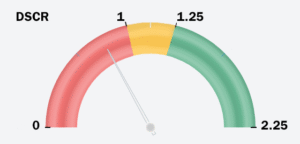
If available, review the property’s DSCR (Net Operating Income ÷ Debt Service). A DSCR below 1.25 is generally considered a red flag for stability. Lower ratios indicate the landlord has little cushion if income drops or expenses rise.
Occupancy Trends & NOI
Vacancy rates and NOI go hand in hand. If occupancy is trending down and there’s no strong leasing activity, the property’s Net Operating Income may already be under stress. Ask for historical NOI data—not just current rent rolls—to spot trends.
CapEx & Maintenance History
Review records for major systems—roof, HVAC, elevators, sprinklers. If these haven’t been replaced or upgraded in 15–20 years, the landlord may be deferring investments due to cash constraints, meaning those costs could be pushed to you mid-lease through OpEx pass-throughs.
Litigation & Tax Records
Search public records for unpaid property taxes, mechanics’ liens, or lawsuits involving the property or landlord. Frequent disputes with vendors or other tenants can signal operational instability.
Takeaways for Tenants
Every step we’ve covered—benchmarking to market, finding comparables beyond your immediate area, generating real competition, protecting yourself with smart clauses, and auditing your landlord’s financial health—comes down to two things:
- Access to reliable, real-time market data
- The ability to act on it before deadlines force your hand
This is where technology gives tenants a measurable advantage. Platforms like REoptimizer® put all of these variables—comps, concessions, OpEx history, landlord profiles, even DSCR and NOI risk—into a single view. You can:
- See comparables at a glance – Not just in your submarket, but across secondary and tertiary markets to spot value gaps.
- Map better alternatives – Layer demographic, labor, and transportation data on available properties to find locations that work operationally and financially.
- Track key lease and market timelines – Set alerts for lease expirations, market shifts, and landlord debt maturities so you never lose leverage to the clock.
- Compare total cost of occupancy scenarios – Evaluate “stay vs. move” decisions with base rent, OpEx, payroll impact, and incentives factored in.
In a 2025 market where landlords are facing rising debt costs, tenants are absorbing higher operating expenses, and competition for quality space is real, the tenants who win are the ones who walk into negotiations knowing exactly what the alternatives are—and what they’re worth.
So don’t risk your next negotiation. Learn more about the tool that can save you millions, REoptimizer®
