
High vacancy rates, a growing wave of landlord defaults, and a lingering oversupply of office space have created a rare market moment: corporate tenants can often secure better buildings on better terms—sometimes for less than they’d have paid years ago.
But there’s a catch. Distressed assets are a major risk and navigating this environment should not be taken lightly for tenants. To make it more difficult, they’re not waving a white flag announcing the trouble. There can be real risk hiding behind an address. This includes the landlord’s broader debt exposure, watchlist status, and cross-collateralized loans that can drag “healthy” properties down with “sick” ones.
That’s why today’s winners aren’t guessing—they’re using REoptimizer® to uncover which landlords are on a watchlist, what loans are at risk, and which properties may be tied together behind the scenes.
In this article, you’ll learn how to:
-
Define what makes a commercial property “distressed”
-
Understand why distressed buildings can be strategically valuable for tenants
-
Identify risk and opportunity using landlord watchlists and cross-collateral exposure
-
Negotiate smarter by knowing what the landlord can’t afford to lose
And while distressed properties aren’t automatically “bad,” the danger is leasing from a landlord whose portfolio-level risk can create operational, financial, and continuity headaches for your business. Let’s discuss.
What Defines a Distressed Commercial Property?
A commercial property is “distressed” when financial or operational pressure makes it undervalued, unstable, or at elevated risk of default, foreclosure, or forced restructuring. Common indicators include:
Loan Distress and Servicing Red Flags
-
Delinquencies (missed or late payments)
-
Special servicing transfers (a major warning sign that the lender has stepped in)
-
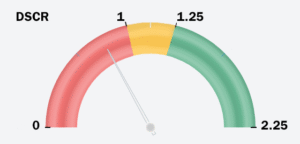
Weak DSCR (Debt Service Coverage Ratio) where income doesn’t comfortably cover debt payments
-
As a rule of thumb, DSCR below ~1.0–1.25 often signals heightened risk, depending on the lender and asset profile.
-
High Vacancy and “Silent Vacancy”
-
Vacancy rates: obvious indicator of weaker tenant demand and unstable cash flow
-
Under-occupancy (“dormant vacancy”): space that looks occupied today, but is functionally vacant the moment a lease rolls.
Market Saturation
Oversupplied submarkets create fire-sale leasing conditions—especially in older classes of inventory. Distress, in other words, isn’t just about a building. It’s about cash flow + debt + market pressure converging in a way that reduces stability and increases urgency.
How to Identify Distressed Properties (and Risky Landlords) the Smart Way
Whether you want to avoid distressed assets, audit your current portfolio, or capitalize on tenant-favorable conditions, your method matters. A quick “market scan” won’t cut it anymore.
1. Use Distress and Watchlist Intelligence (Not Just Comps)
Traditional leasing analysis is backwards-looking. Watchlist intelligence is forward-looking.
With REoptimizer®, you can evaluate a target building through the lens that matters most:
-
Is the landlord on a watchlist?
-
Is the loan associated with the property showing elevated risk signals?
-
Are there other properties in the owner’s portfolio that appear connected (cross-collateralized) to loans under stress?
This is how corporate tenants avoid signing a long-term lease under a landlord who may be forced into reactive decision-making.

2. Leverage CMBS and Loan-Performance Data for Negotiation Power
Platforms like Trepp and KBRA aggregate CMBS and credit performance data that can help identify pressure points. Key metrics to watch include:
-
Special servicing and delinquency flags
-
High LTV (Loan-to-Value): often signals thin equity and urgency to stabilize cash flow
-
Debt yield weakness: low debt yield indicates lenders may view the loan as higher risk
-
NOI declines and cap rate pressure: signals reduced income stability
Even if you don’t live in these datasets day-to-day, REoptimizer®’s watchlist visibility helps translate “credit stress” into real-world leasing decision support.
3. Track Market Indicators (At the Submarket Level)
Big headline vacancy numbers don’t negotiate your lease—micro conditions do.
Look at:
-
Vacancy by class (A vs. B/C)
-
Vacancy composition (shadow vacancy, near-term rollovers)
-
Net absorption trends by submarket, not just city-wide averages
-
Employer movement patterns and infrastructure investment
The best opportunities often sit in the gaps—where a submarket is weak overall, but a specific pocket is still strategically valuable.

Risks When Leasing a Distressed Building
The biggest risk is not the space—it’s the landlord’s financial position and what’s happening across their portfolio.
Key tenant risks:
-
Service degradation (maintenance delays, understaffed management)
-
Deferred capex (systems fail, upgrades stall)
-
Ownership disruption (sale, receivership, lender control)
-
Lease administration issues during restructures
Most importantly: a building that looks “fine” can still be risky if the owner is exposed elsewhere.
Why Distressed Properties Can Be a Strategic Advantage (If You Avoid the Wrong Risks)
Distressed office environments are brutal for landlords and lenders—but that stress can translate into meaningful tenant upside:
Cost Savings and Concessions
Distressed owners are often more willing to offer:
-
Lower base rent
-
Bigger TI (tenant improvement) allowances
-
Longer rent-free periods
-
Flexibility on term length, options, signage, etc.
Better Space for the Same (Or Less) Money
This is where tenants can “trade up” into stronger locations or higher-class assets at reduced effective rates—boosting brand perception and talent attraction.
Negotiating Leverage
A landlord under pressure values predictable cash flow. A strong corporate lease can be the difference between stabilizing the asset—or sliding further toward default.
But here’s the part most tenants miss:
What Lease Protections Should Tenants Request in Distressed Situations?
If a property or owner shows financial stress, tenants should prioritize operational continuity and risk containment, not just pricing. High-value protections to negotiate:
-
Stronger landlord maintenance/service obligations
-
Clear remedies and cure periods
-
Delivery and TI completion guarantees
-
Operating expense transparency / caps (where feasible)
-
Rights tied to building disruption events (practical protections if conditions deteriorate)

The Hidden Risk: A “Fine” Building Owned by a Watchlisted Landlord
Even if your building looks safe, the owner’s portfolio may not be.
Landlords frequently use financing structures that can connect multiple properties to the same debt obligation. In cross-collateralized loans, several properties serve as collateral for a single loan (or interconnected loans). If one asset deteriorates, it can raise risk across all linked assets—even the ones performing well.
That can create tenant risks like:
-
Deferred maintenance or degraded building services
-
Slower response times from ownership/management
-
Surprise ownership changes or lender intervention
-
Disrupted capital plans (elevators, HVAC, lobby, build-out approvals)
-
Lease administration complications during restructures
Where REoptimizer® Changes the Game
Instead of relying on surface-level deal comps and a building tour, REoptimizer® helps tenants:
-
See which landlords are on a watchlist
-
Identify which properties appear tied to debt at risk of default
-
Spot potential cross-collateral exposure so you can avoid getting trapped in a portfolio-wide problem
This means you can pursue “distressed opportunity” while filtering out “distressed operator risk.”
How to Approach Negotiations Once You’ve Found a Target
When REoptimizer® shows ownership pressure (watchlist status, risky debt, portfolio flags), you don’t just “ask for a better deal.” You negotiate around what the landlord must solve.
High-impact asks commonly include:
-
Larger TI allowances (or turnkey build-outs)
-
Longer free rent and phased commencement
-
Stronger landlord work-letter commitments
-
More protective defaults/cure rights
-
Expanded termination/relocation rights (where appropriate)
-
Audit rights / transparency improvements in operating costs
Knowing the landlord’s risk profile helps you structure terms that protect your operations—not just your rent number.

Bottom Line: Distressed Can Be a Win—If You Can See the Landlord Risk
Distressed leasing environments create real opportunity for corporate tenants. But the smartest move isn’t simply finding a “cheap Class A building.”
It’s finding the right building owned by the right landlord, with a clear view into:
-
watchlist risk,
-
loan stress,
-
and cross-collateral exposure that could blindside you mid-lease.
That’s exactly what REoptimizer® is built for: turning opaque landlord risk into actionable intelligence—so your relocation is an advantage, not a gamble. Learn more about how to utilize REoptimizer® for portfolio wide visibility and strategic moves that will keep your portfolio safe for years to come.