Triple net (NNN) leases are a go-to structure across commercial real estate, especially for industrial and flex properties. On paper, they’re simple:
Base rent + taxes + insurance + maintenance (CAM/OPEX).
Landlords like the steady return. Tenants like the transparency and control.
But here’s the catch: NNN leases aren’t fixed-cost. They’re variable-cost agreements tied to expense categories that can swing sharply—especially as buildings age. Over time, that volatility can:
If your portfolio includes mixed-age facilities, age-driven OPEX risk may be a bigger financial story than rent. Let’s discuss.
The Built-In Exposure of Triple Net Leases
In a true triple net structure, tenants typically carry most operating expense responsibility beyond base rent, including:
-
Property Taxes: reassessments, mill rate changes, local incentives, shifting valuations
-
Insurance: market cycles, regional risk, asset condition, claims history
-
Maintenance & Repairs (CAM/OPEX): the largest—and least predictable—driver
Think of these as moving variables, not line items. They flex with market conditions, landlord behavior, and building performance. And they rarely move in a straight line.

Why Industrial Tenants Feel It First (and Worst)
Industrial users often see the most immediate impact because so many costs are passed through—and because maintenance decisions are frequently tenant-managed. That means OPEX shifts with:
-
System performance (HVAC, roof, paving, dock equipment)
-
Vendor pricing and availability
-
Seasonality and operational intensity
-
Deferred capital conditions inherited at move-in
A quick reality check:
Across a multi-site network, that spread can translate into six figures of unplanned spend annually.

Building Age Isn’t a Detail—It’s a Cost Multiplier
Under NNN terms, age becomes a direct financial variable. Older properties usually bring:
-
Higher repair frequency
-
Less efficient mechanical systems
-
End-of-life components (roof, RTUs, electrical, paving)
-
Higher emergency maintenance risk
Deferred Maintenance: The “Rent Discount” Trap
In older assets, landlords may delay major capital replacements knowing an NNN tenant absorbs the operating burden. A “competitive” rent rate can hide upcoming expense spikes that show up in year 2, 4, or 7—right when you’re trying to stabilize operations.
Energy and System Inefficiency Adds Up Fast
Older industrial buildings often lack modern efficiency standards—HVAC performance, insulation, lighting, controls. If you’re paying utilities directly (common in NNN), inefficiency becomes a recurring tax that compounds over the full term.
Maintenance Escalation Isn’t Linear
Maintenance doesn’t rise gradually—it often jumps once major systems hit the 15–20 year range. If the roof, mechanical, or electrical systems are near that threshold, your cost curve can steepen mid-term—not at renewal.
Bottom line: a low base rent can mask a high effective rent once age-adjusted OPEX is included.

Model Total Cost of Occupancy (TCO), Not Just Rent
The more durable approach is Total Cost of Occupancy (TCO) modeling across the lease term—rent plus projected OPEX and capital exposure.
Evaluate Life-Cycle Cost, Not Just Lease Cost
Run scenarios that incorporate:
-
Age-based maintenance trajectories (roof, HVAC, lighting, paving)
-
Historical tax reassessment patterns
-
Insurance volatility (especially for older or high-value assets)
Even conservative assumptions will quickly reveal where “cheap rent” becomes high all-in occupancy cost.
Negotiation Moves That Actually Reduce Risk
Tie Tenant Improvements to Asset Condition
If the building needs modernization—mechanical upgrades, lighting retrofits, dock equipment—push for landlord participation. Improvements with residual life beyond your lease term often increase property value, which makes them easier for landlords to justify.
Define Maintenance vs. Capital Replacement—In Writing
This is non-negotiable in older facilities. Lease language must clearly separate:
The difference determines whether a failure becomes a manageable repair—or a major unbudgeted capital hit.
Require OPEX Transparency and Audit Rights
Add provisions for:
-
Detailed CAM/OPEX statements
-
Standardized backup documentation
-
Audit rights and dispute windows
For multi-site occupiers, centralized audits across the portfolio can uncover recurring discrepancies and recover overcharges.

Control vs. Responsibility: The Hidden Trade-Off in NNN
NNN leasing promises visibility and operational control—but across dozens (or hundreds) of sites, that control becomes complexity.
What you gain
-
Cost management through bidding, preventative maintenance, and efficiency upgrades
-
Operational alignment with your temperature, security, and logistics needs
-
Line-item transparency
What you inherit
-
Cost volatility in taxes, insurance, and repairs
-
Administrative burden across vendors, invoices, audits, and site conditions
-
Age amplification: older assets = less predictability
This is where many portfolios get surprised: control doesn’t guarantee predictability.
Turn NNN Exposure Into an Advantage With Operational Discipline
NNN shifts risk to the tenant—but disciplined operators can turn that into cost leadership through structured portfolio management:
-
Preventive maintenance optimization: extend system life and reduce emergency repairs
-
Energy retrofits: lighting and controls upgrades can meaningfully lower utility spend
-
Portfolio-level insights: recurring inefficiencies and overcharges become visible only when data is centralized
Without integrated data, most tenants never see the full trendline—they just keep paying the bills.

The Strategic Shift: From Lease Thinking to Lifecycle Thinking
Triple net leases make one thing clear: you’re not just leasing space—you’re operating an asset. That means performance depends as much on physical condition and operating discipline as on the lease terms.
Sophisticated occupiers are shifting toward lifecycle-based governance, evaluating sites by:
-
Age and deferred maintenance exposure
-
Energy intensity and upgrade potential
-
OPEX volatility mapping
-
Renewal vs. relocation equivalency
That’s where platforms like REoptimizer® become essential—turning occupancy cost into a measurable, optimizable variable.
The Bottom Line
Triple net leases reward diligence and punish complacency. They offer transparency—but they also transfer volatility and aging-asset risk downstream.
In today’s environment of rising maintenance costs, insurance swings, and aging industrial stock, lease structure is strategy.
If you manage a large, mixed-age portfolio, don’t just negotiate rent. Model lifecycle exposure, track OPEX trends, and quantify the real cost of building age.
Because in a triple net world, the number on the lease is only half the story.
Model the real cost of occupancy. Optimize with REoptimizer®. See what REoptimizer® can unlock across your portfolio. Learn More
Learn More
FAQs: Triple Net Leases, Building Age, and OPEX Volatility
What is a triple net (NNN) lease?
A triple net lease is a commercial lease structure where the tenant pays base rent plus operating expenses, typically including property taxes, insurance, and maintenance/CAM. It’s common in industrial, flex, retail, and single-tenant assets.
What does “OPEX” mean in commercial real estate?
OPEX (operating expenses) refers to the ongoing costs to operate a property, such as maintenance, repairs, common area maintenance (CAM), utilities (often), property management, and other pass-through charges, depending on lease language.
Why can OPEX matter more than rent in an NNN lease?
Because rent is usually fixed or escalates predictably, while taxes, insurance, and maintenance can fluctuate significantly. Over time, OPEX volatility can raise your effective occupancy cost enough to outweigh a “good” rent rate.
How does building age increase NNN lease risk?
Older buildings typically have:
-
More frequent repairs
-
Less efficient systems (HVAC, lighting, insulation)
-
Components closer to end of life (roof, paving, electrical)
This results in higher maintenance spend and a greater likelihood of mid-term cost spikes, not just renewal-driven increases.
What is CAM, and how is it different from OPEX?
CAM (common area maintenance) usually refers to shared-area costs in multi-tenant properties, including:
-
Parking lots
-
Landscaping
-
Snow removal
-
Exterior lighting
OPEX is broader and may include CAM plus other operating costs, depending on how the lease defines pass-through expenses.
What are the biggest hidden cost drivers in an NNN lease?
Most surprises come from:
-
Tax reassessments and mill rate changes
-
Insurance premium increases driven by market shifts, risk exposure, or asset condition
-
Maintenance and repair escalation, especially in older assets
-
Unclear responsibility for capital replacement versus routine maintenance
What’s the difference between maintenance and capital replacement?
-
Maintenance: routine service and repairs that keep systems operating, such as filters, minor fixes, and patchwork
-
Capital replacement: replacing major components like roofs, HVAC units, paving, or structural systems
Lease language should clearly define responsibility, as this distinction often determines whether costs remain manageable or escalate rapidly.
Can a landlord push capital costs to a tenant in an NNN lease?
If the lease is vague, yes—especially in older properties. Clear definitions separating repair from replacement and operating costs from capital costs are critical to limiting exposure.
How do I evaluate the real cost of an NNN lease?
Use total cost of occupancy (TCO) modeling across the lease term, including:
-
Base rent
-
Property taxes and reassessment trends
-
Insurance volatility assumptions
-
Age-based maintenance curves
-
Energy and utility impacts if utilities are tenant-paid
What should I request before signing an NNN lease?
Ask for:
-
Three or more years of CAM and OPEX history with line-item detail
-
Recent property tax bills and assessment history
-
Insurance claims history and current premiums
-
Roof and HVAC age, service records, and estimated remaining life
-
Vendor contracts tied to pass-through charges
What lease clauses reduce OPEX volatility?
Common protections include:
-
Detailed CAM statement requirements
-
Audit rights and dispute windows
-
Exclusions for landlord overhead or undefined administrative fees
-
Clear capital replacement responsibility and amortization rules
-
Spending approval thresholds for major repairs
Are NNN leases always a bad deal for tenants?
No. NNN leases can be advantageous for tenants with strong operational discipline because they allow:
-
Competitive vendor bidding
-
Preventive maintenance optimization
-
Energy efficiency and retrofit strategies
Without portfolio-level visibility, however, the cost volatility remains with the tenant.
How can tenants reduce OPEX in older industrial buildings?
High-impact strategies include:
-
Preventive maintenance scheduling, especially for HVAC and roof systems
-
LED lighting and controls retrofits
-
Sealing and insulation improvements
-
Vendor consolidation and standardized scopes of work
-
Portfolio-wide CAM and OPEX audits
What’s the simplest red flag that an older NNN building will get expensive?
A combination of:
-
Below-market base rent
-
Limited building documentation
-
Aging roof and HVAC systems near end of life
-
Vague lease language around maintenance and capital replacement
How does REoptimizer® help with NNN lease management?
REoptimizer® helps occupiers turn occupancy cost into structured intelligence by enabling:
-
Portfolio-wide OPEX trend tracking
-
Anomaly detection and audit readiness
-
Lifecycle exposure modeling tied to asset age
-
Data-driven renewal versus relocation decisions
Commercial leases don’t just have “terms.” They have deadlines—and missing one can cost you renewal rights, expansion space, tenant improvement dollars, or trigger default. This guide breaks down the most important lease dates to track, what they mean, and how to stay protected.
Quick Answer: What Are The Key Dates In A Commercial Lease?
The most important dates in a commercial lease usually include:
-
Delivery Date (when the space must be ready)
-
Lease Commencement Date (when the lease legally starts)
-
Rent Commencement Date (when billing begins)
-
Rent Escalation Dates (when rent increases)
-
Option Notice Windows (renew, terminate, expand, downsize)
-
CAM / Operating Expense Reconciliation & Audit Deadlines
-
Insurance & Certificate of Insurance (COI) Renewal Dates
-
Security Deposit / Letter of Credit (LOC) Expiration & Step-Down Dates
-
Assignment/Sublease Consent & Recapture Deadlines
-
Restoration, Surrender, and Move-Out Dates
-
Termination Date and Holdover Period Triggers
If you track nothing else, track these.
Why Key Lease Dates Matter (And Why Tenants Lose Money)
Most commercial leases make it 100% the tenant’s responsibility to:
-
remember critical dates, and
-
deliver notice exactly the way the lease requires.
Landlords don’t have to remind you. And many are perfectly happy if you miss a renewal window, lose a right to expand, or default on an administrative technicality.
The Portfolio Problem: One Lease Is Manageable—Twenty Isn’t
Tracking lease dates for a single location is hard enough. Tracking them across an entire portfolio is where tenants get hurt.
Because once you scale to multiple sites, you’re no longer managing a “lease.” You’re managing a deadline ecosystem, with hard stops and serious liability.
One missed renewal window can wipe out your leverage. One missed CAM audit deadline can lock in overcharges. One delayed delivery can force holdover tenancy with penalty rent and potential damages. And spreadsheets? They don’t protect you when the real landmines are notice requirements—the exact method, address, timing, and proof that make or break your rights.
If you manage multiple locations, you need more than reminders—you need a system built for lease deadlines. REoptimizer® helps track critical dates, notice windows, escalations, and portfolio exposure in one place, so you don’t lose options, overpay rent, or get trapped in holdover. See how it can streamline your portfolio and book a demo today.
Book a Demo
The “Trigger Chain”: Dates That Control Other Dates
A best practice is to map your lease like a domino run:
Delivery Date → Lease Commencement → Rent Commencement → Escalations → Option Windows → Termination/Surrender
A surprising number of disputes come down to: which date triggered which obligation.

1. Delivery Date (When The Space Must Be Ready)
Definition: The date the landlord must deliver the premises in the condition required by the lease.
What Tenants Should Tie To The Delivery Date
-
Required Condition Standard (code-compliant, clean, safe, systems working)
-
Utilities/Services Live (HVAC, electric, water, internet readiness)
-
Punch List Process (walkthrough, deficiency list, cure timeline)
-
Remedies If Late (rent delay, per diem penalties, termination right, reimbursement)
Why It’s Critical
A late delivery can force a business into:
Tenant tip: Your lease should define “delivered” clearly—otherwise a landlord can argue the space is “ready” when it’s not ready for your operations.
2. Lease Commencement Date (When The Lease Legally Starts)
Definition: The date the lease term officially begins.
This date often controls:
-
The Lease Term End Date
-
When Options Can Be Exercised
-
When Certain Obligations Begin (insurance, maintenance responsibilities, reporting)
Watch for: “earlier of” and “later of” language. Many leases say commencement is the earlier of occupancy or a set date—meaning you might trigger obligations by moving in early.
3. Rent Commencement Date (When You Start Paying)
Definition: The date rent starts accruing—often different from lease commencement.
Common Rent Commencement Structures
Free Rent Isn’t Always Free
Many leases make free rent conditional:
-
Base Rent Only (not CAM/operating expenses)
-
Abatement Ends If You Default
-
The “Free Months” Extend The Lease Term (e.g., 120 months of paid rent becomes 132 months total)

4. Rent Escalation Dates (When Rent Increases)
Definition: The recurring date rent increases (often annually).
Common Rent Escalation Types
-
Fixed Percentage Increases
-
CPI Adjustments (with caps/floors sometimes)
-
Stepped Increases (pre-set schedule)
-
Fair Market Adjustments (typically at renewal)
Why It Matters
Escalations are cumulative—they compound across long terms. A “small” clause can become a major cost driver over 7–15 years.
Tenant tip: Track escalation dates and the formula inputs (CPI base year, index month, cap/floor, rounding rules).
5. Option Notice Windows (Renew, Terminate, Expand, Downsize)
Definition: A set window when a tenant must give notice to exercise a right.
This is the #1 category tenants miss.
Options Usually Include
-
Renewal / Extension Options
-
Early Termination Options
-
Contraction Or Downsize Options
-
Expansion Options (ROFO/ROFR or fixed space options)
The Real Trap: Notice Rules
A tenant can “send notice” and still lose the right if:
-
Notice Method Is Wrong (email not allowed)
-
Sent To The Wrong Address
-
Missed The Window By A Day
-
Lacked Required Enclosures (financials, proposed terms)
Best practice: Track both:

6. Right of First Offer (ROFO) (Expansion Timing Advantage)
Definition: Before the landlord markets certain space, they must offer it to the existing tenant first.
Key dates to track:
If you can’t respond fast, you lose the shot.
7. Right of First Refusal (ROFR) (Match A Third-Party Deal)
Definition: Landlord can market space, but must let the existing tenant match the third-party deal.
Key dates to track:
Practical difference: ROFR can slow deals, but gives the tenant a chance to “match” a real market offer.
8. CAM / Operating Expense Reconciliation And Audit Deadlines
This is one of the most expensive “hidden” date categories.
Key dates:
-
Annual Reconciliation Statement Delivery Date
-
Tenant Dispute Window (often 30–180 days)
-
Audit Request Deadline
-
Payment Due Date For Under-Billings
Tenant tip: If you miss the dispute window, many leases treat the landlord’s statement as final—even if it’s wrong.

9. Insurance Renewal And COI Deadlines
Many leases require:
-
Specific Coverage Types/Limits
-
Landlord Named As Additional Insured
-
COIs Delivered Annually or upon renewal
Key dates:
-
Policy Expiration
-
COI Delivery Deadline
-
Renewal Bind Date
Missing this can be a technical default even if you’re otherwise a perfect tenant.
10. Security Deposit / Letter Of Credit (LOC) Dates
If you have an LOC, date tracking is non-negotiable.
Key dates:
Tenants get defaulted all the time for simply failing to renew an LOC on time.
11. Assignment / Sublease Consent And Recapture Deadlines
If you plan to sublease or assign the lease:
Key dates:
-
Tenant Request Submission Date
-
Landlord Response Deadline
-
Recapture Election Deadline
-
Execution Deadline For Sublease/Assignment
12. Restoration, Surrender, And Move-Out Dates (The Endgame)
The termination date isn’t your only end-of-lease date.
Key dates:
-
Restoration Notice Deadline (landlord tells you what must be removed)
-
Decommission Start Date (IT, cabling, supplemental HVAC, signage)
-
Final Walkthrough Date
-
Key Return/Access Shutoff Date
-
Move-Out Completion Deadline

13. Termination Date And Holdover Trigger
Definition: The date the lease ends and you must be fully out.
If you stay past it, you can trigger:
Tenant tip: Track a move-out runway (60–180 days out) so surrender doesn’t become a crisis.
The Tenant’s Critical Date System (Best Practice Checklist)
To make lease date tracking actually work, log each critical date with:
-
Deadline Date
-
Earliest Notice Date (if applicable)
-
Notice Method + Address(es)
-
Owner (primary person responsible)
-
Backup Owner
-
Proof-Of-Delivery Requirement
-
Linked Lease Clause Reference
A calendar reminder alone is not enough if your lease requires certified mail to a specific address by a specific time.
FAQ: Key Dates In Commercial Leases
What is the most important date in a commercial lease?
For most tenants: Rent Commencement Date (when payments begin) and option notice deadlines (renewal/termination). These two categories drive the biggest financial outcomes.
Are lease dates the tenant’s responsibility?
In most leases, yes. The tenant is typically responsible for tracking dates and providing proper notice exactly as required.
What happens if I miss a renewal notice deadline?
You may lose the renewal option entirely and be forced to vacate or renegotiate at a much higher rent—often with reduced leverage.
Never Miss a Key Date
Tracking critical dates is a business imperative—but it’s only one part of optimizing a lease.The real advantage comes from seeing every deadline, notice window, escalation, and expansion right across your entire portfolio—before it turns into a costly mistake.
REoptimizer® is built to do exactly that: centralize your lease obligations, surface upcoming risk, and keep you ahead of renewals, CAM deadlines, LOC expirations, and holdover exposure. If you’re still relying on spreadsheets and calendar reminders, you’re one missed notice away from losing leverage.
Book a REoptimizer® demo to see how portfolio-wide critical date management actually works—and how much money and risk you can pull back into your control.
Book a Demo
High vacancy rates, a growing wave of landlord defaults, and a lingering oversupply of office space have created a rare market moment: corporate tenants can often secure better buildings on better terms—sometimes for less than they’d have paid years ago.
But there’s a catch. Distressed assets are a major risk and navigating this environment should not be taken lightly for tenants. To make it more difficult, they’re not waving a white flag announcing the trouble. There can be real risk hiding behind an address. This includes the landlord’s broader debt exposure, watchlist status, and cross-collateralized loans that can drag “healthy” properties down with “sick” ones.
That’s why today’s winners aren’t guessing—they’re using REoptimizer® to uncover which landlords are on a watchlist, what loans are at risk, and which properties may be tied together behind the scenes.
In this article, you’ll learn how to:
-
Define what makes a commercial property “distressed”
-
Understand why distressed buildings can be strategically valuable for tenants
-
Identify risk and opportunity using landlord watchlists and cross-collateral exposure
-
Negotiate smarter by knowing what the landlord can’t afford to lose
And while distressed properties aren’t automatically “bad,” the danger is leasing from a landlord whose portfolio-level risk can create operational, financial, and continuity headaches for your business. Let’s discuss.
What Defines a Distressed Commercial Property?
A commercial property is “distressed” when financial or operational pressure makes it undervalued, unstable, or at elevated risk of default, foreclosure, or forced restructuring. Common indicators include:
Loan Distress and Servicing Red Flags
-
Delinquencies (missed or late payments)
-
Special servicing transfers (a major warning sign that the lender has stepped in)
-
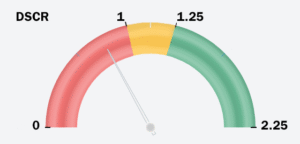
Weak DSCR (Debt Service Coverage Ratio) where income doesn’t comfortably cover debt payments
High Vacancy and “Silent Vacancy”
-
Vacancy rates: obvious indicator of weaker tenant demand and unstable cash flow
-
Under-occupancy (“dormant vacancy”): space that looks occupied today, but is functionally vacant the moment a lease rolls.
Market Saturation
Oversupplied submarkets create fire-sale leasing conditions—especially in older classes of inventory. Distress, in other words, isn’t just about a building. It’s about cash flow + debt + market pressure converging in a way that reduces stability and increases urgency.
How to Identify Distressed Properties (and Risky Landlords) the Smart Way
Whether you want to avoid distressed assets, audit your current portfolio, or capitalize on tenant-favorable conditions, your method matters. A quick “market scan” won’t cut it anymore.
1. Use Distress and Watchlist Intelligence (Not Just Comps)
Traditional leasing analysis is backwards-looking. Watchlist intelligence is forward-looking.
With REoptimizer®, you can evaluate a target building through the lens that matters most:
-
Is the landlord on a watchlist?
-
Is the loan associated with the property showing elevated risk signals?
-
Are there other properties in the owner’s portfolio that appear connected (cross-collateralized) to loans under stress?
This is how corporate tenants avoid signing a long-term lease under a landlord who may be forced into reactive decision-making.

2. Leverage CMBS and Loan-Performance Data for Negotiation Power
Platforms like Trepp and KBRA aggregate CMBS and credit performance data that can help identify pressure points. Key metrics to watch include:
-
Special servicing and delinquency flags
-
High LTV (Loan-to-Value): often signals thin equity and urgency to stabilize cash flow
-
Debt yield weakness: low debt yield indicates lenders may view the loan as higher risk
-
NOI declines and cap rate pressure: signals reduced income stability
Even if you don’t live in these datasets day-to-day, REoptimizer®’s watchlist visibility helps translate “credit stress” into real-world leasing decision support.
3. Track Market Indicators (At the Submarket Level)
Big headline vacancy numbers don’t negotiate your lease—micro conditions do.
Look at:
-
Vacancy by class (A vs. B/C)
-
Vacancy composition (shadow vacancy, near-term rollovers)
-
Net absorption trends by submarket, not just city-wide averages
-
Employer movement patterns and infrastructure investment
The best opportunities often sit in the gaps—where a submarket is weak overall, but a specific pocket is still strategically valuable.

Risks When Leasing a Distressed Building
The biggest risk is not the space—it’s the landlord’s financial position and what’s happening across their portfolio.
Key tenant risks:
-
Service degradation (maintenance delays, understaffed management)
-
Deferred capex (systems fail, upgrades stall)
-
Ownership disruption (sale, receivership, lender control)
-
Lease administration issues during restructures
Most importantly: a building that looks “fine” can still be risky if the owner is exposed elsewhere.
Why Distressed Properties Can Be a Strategic Advantage (If You Avoid the Wrong Risks)
Distressed office environments are brutal for landlords and lenders—but that stress can translate into meaningful tenant upside:
Cost Savings and Concessions
Distressed owners are often more willing to offer:
-
Lower base rent
-
Bigger TI (tenant improvement) allowances
-
Longer rent-free periods
-
Flexibility on term length, options, signage, etc.
Better Space for the Same (Or Less) Money
This is where tenants can “trade up” into stronger locations or higher-class assets at reduced effective rates—boosting brand perception and talent attraction.
Negotiating Leverage
A landlord under pressure values predictable cash flow. A strong corporate lease can be the difference between stabilizing the asset—or sliding further toward default.
But here’s the part most tenants miss:
What Lease Protections Should Tenants Request in Distressed Situations?
If a property or owner shows financial stress, tenants should prioritize operational continuity and risk containment, not just pricing. High-value protections to negotiate:
-
Stronger landlord maintenance/service obligations
-
Clear remedies and cure periods
-
Delivery and TI completion guarantees
-
Operating expense transparency / caps (where feasible)
-
Rights tied to building disruption events (practical protections if conditions deteriorate)

The Hidden Risk: A “Fine” Building Owned by a Watchlisted Landlord
Even if your building looks safe, the owner’s portfolio may not be.
Landlords frequently use financing structures that can connect multiple properties to the same debt obligation. In cross-collateralized loans, several properties serve as collateral for a single loan (or interconnected loans). If one asset deteriorates, it can raise risk across all linked assets—even the ones performing well.
That can create tenant risks like:
-
Deferred maintenance or degraded building services
-
Slower response times from ownership/management
-
Surprise ownership changes or lender intervention
-
Disrupted capital plans (elevators, HVAC, lobby, build-out approvals)
-
Lease administration complications during restructures
Where REoptimizer® Changes the Game
Instead of relying on surface-level deal comps and a building tour, REoptimizer® helps tenants:
-
See which landlords are on a watchlist
-
Identify which properties appear tied to debt at risk of default
-
Spot potential cross-collateral exposure so you can avoid getting trapped in a portfolio-wide problem
This means you can pursue “distressed opportunity” while filtering out “distressed operator risk.”
How to Approach Negotiations Once You’ve Found a Target
When REoptimizer® shows ownership pressure (watchlist status, risky debt, portfolio flags), you don’t just “ask for a better deal.” You negotiate around what the landlord must solve.
High-impact asks commonly include:
-
Larger TI allowances (or turnkey build-outs)
-
Longer free rent and phased commencement
-
Stronger landlord work-letter commitments
-
More protective defaults/cure rights
-
Expanded termination/relocation rights (where appropriate)
-
Audit rights / transparency improvements in operating costs
Knowing the landlord’s risk profile helps you structure terms that protect your operations—not just your rent number.

Bottom Line: Distressed Can Be a Win—If You Can See the Landlord Risk
Distressed leasing environments create real opportunity for corporate tenants. But the smartest move isn’t simply finding a “cheap Class A building.”
It’s finding the right building owned by the right landlord, with a clear view into:
That’s exactly what REoptimizer® is built for: turning opaque landlord risk into actionable intelligence—so your relocation is an advantage, not a gamble. Learn more about how to utilize REoptimizer® for portfolio wide visibility and strategic moves that will keep your portfolio safe for years to come.
Learn More
Corporate tenants have spent the last two years hyper-focused on flexibility, operating costs, consolidation, and hybrid strategy. Fair—those issues matter. But while everyone was busy right-sizing their footprint, something far more consequential was happening behind the scenes: Landlords started defaulting. In large numbers.
In office markets, valuations have fallen by double-digits and weaker assets in certain urban cores are being written down far more aggressively.
Meanwhile, refinancing pressure on commercial loans is acute — making the need for tenant protections like the SNDA all the more urgent.
And here’s the part tenants tend to miss: If your landlord defaults, your lease is only as strong as the protections you negotiated—most importantly, the SNDA.
No SNDA? You can lose your space, your rights, your security deposit, and months of operational continuity. All because a lender’s mortgage lien outranks your leasehold interest.
This is not theoretical. This is the modern commercial real estate landscape.
Never Lease a Commercial Property Without an SNDA (Subordination Non Disturbance and Attornment) Agreement
An SNDA—Subordination, Non-Disturbance, and Attornment Agreement—is the legal document that decides who you are and what you are entitled to when a lender forecloses on the commercial property you occupy.

It governs the relationship between you (the tenant), the property owner, and the landlord’s lender, and it becomes critical when the landlord’s property ends up in a foreclosure sale.
Here’s the fast breakdown:
1. Subordination Provision: Where You Rank in the Food Chain
Every commercial loan comes with a lender’s security interest—a mortgage or deed of trust that automatically sits above your lease unless you negotiate otherwise.
If your lease is subordinate:
- The lender’s rights have priority.
- Your lease can be terminated in a foreclosure.
- You have no inherent right to stay in the leased property.
Without an SNDA, the hierarchy is simple: Mortgage > Lease.
And that means the lender can treat your existing lease as optional.
2. Non-Disturbance Agreement: The Clause That Saves You From Eviction
With a proper non-disturbance clause, the lender agrees not to throw you out when they take ownership. This ensures that:
- Your tenant’s rights remain intact.
- Your operations continue uninterrupted.
- Your workforce and equipment stay put.
- Your security deposit doesn’t vanish into a black hole of litigation.
In other words: If you’re paying rent, you stay. Period.
This is the core protection large corporate tenants need—but don’t always get.

3. Attornment Agreement: Accepting the New Landlord Without Losing Leverage
When lenders foreclose and become the new owner, the attornment provision requires the tenant to recognize them as the landlord.
It’s not as scary as it sounds. It keeps your lease alive and forces continuity.
But attornment must be paired with strong non-disturbance rights, or you’ve effectively agreed to report to a landlord who isn’t obligated to keep you.
Say Goodbye to Your Lease in a Foreclosure Sale
The “foreclosed office tower” storyline is becoming normal. Receivers are stepping in faster. Commercial lenders are enforcing rights more aggressively. Loan documents are driving the real outcomes—not the lease.
For corporate tenants, this means:
1. Traditional “Class A Stability” Assumptions Are Gone
Even trophy properties with strong sponsorship are facing refinancing hurdles and valuation write-downs.
2. Lease Provisions You Ignored Now Determine Survival
The SNDA is the difference between:
- Staying through foreclosure, or
- Being treated as collateral damage.
3. Without an SNDA, You Have No Real Negotiating Power With the New Owner
If a purchaser at foreclosure doesn’t like your rent schedule? Without an SNDA, they can simply remove you.
4. Security Deposits Become Vulnerable
If the landlord burns through them during financial distress, recovery becomes a legal war you don’t want to fund.
The Uncomfortable Truth: Most Tenants Don’t Realize They’re Exposed
You’d be shocked at how many large enterprises occupy commercial real estate without an SNDA. Why? Because historically:
- Landlords resisted offering it
- Lenders didn’t want to negotiate it
- Tenants assumed it was “standard enough”
And truthfully, the market was stable enough for the gamble to pay off—until now. Entering the 2026 landscape: Not having an SNDA is a material operational risk.
And CFOs are starting to ask about it—because they should.
Where the Leverage Has Shifted to the Tenant
Here’s the good news: This is one of the most tenant-favored markets in 30 years.
Vacancy is still elevated. Landlords are fighting to retain every square foot of occupancy. Commercial lenders want in-place rent streams. And because of that… This is the moment to negotiate SNDAs with actual teeth.
Corporate tenants can—and should—demand:
- Broader non-disturbance protections
- Lender’s consent on material landlord actions
- Security deposit tracking and safeguards
- Limits on lender step-in liability
- Clarification on insurance proceeds
- Preservation of key lease provisions through foreclosure
You have leverage. Use it before the next wave of landlord defaults hits.

What Savvy Corporate Tenants Are Doing Right Now
Modern occupiers aren’t waiting for their landlord to run out of cash. They’re conducting proactive portfolio reviews:
1. Auditing Every Lease for SNDA Presence & Quality
Not all SNDAs are equal. Some are window dressing; some actually protect you.
2. Requesting Lender Information on At-Risk Properties
Tenants can—and should—know who controls the mortgage loan, where it stands, and whether distress is imminent. This includes any loans that are crosscollateralized with other properties (that could be at risk.
3. Pre-Negotiating SNDA Terms Before Renewals or Expansions
A renewal without an SNDA in 2025 is… bold.
4. Stress-Testing Building Ownership Structures
If the borrower is exposed, you are exposed. It’s that simple.
5. Embedding SNDA Requirements in Corporate Real Estate Policy
Standardizing this prevents future oversight.
The Hard Reality: If Foreclosure Happens Without an SNDA, You’re Playing Defense
Here’s how it looks without protection:
- Lender forecloses
- Property ownership transfers
- Your lease becomes subordinate
- Leasehold interest = not guaranteed
- New landlord decides whether to honor it
- You negotiate from zero leverage
This is when tenants say things like:“We thought the lease protected us.” It doesn’t. The SNDA does. Given the scale of distress in commercial real estate, sophisticated tenants are treating SNDAs the way they treat:
- Audit rights
- Operating expense caps
- Relocation clauses
- Security instrument review
- Landlord’s lender notifications
Essential—not optional. As office assets continue to trade hands through workouts and foreclosure sales, the SNDA is becoming the backbone of tenant continuity.
The SNDA Isn’t Fine Print Anymore — It’s a Survival Strategy
The tenants who will actually win in this market are the ones who understand a simple truth: Real estate risk no longer lives with the landlord. It lives with the lender.
In the mortgage. In the lien. In the loan documents you never see.
That’s why the SNDA matters. It’s the only document that protects your leasehold interest when ownership changes, loans go sideways, or a foreclosure reshuffles the deck.
Most tenants only discover their exposure after a lender becomes their new landlord. REoptimizer® exists so you never end up in that position.
With REoptimizer®, you get the data visibility and risk intelligence your lease agreements don’t show you:
- Identify which landlords are most likely to default—before it becomes your problem.
- Flag leases missing critical protections across your entire portfolio.
- Model foreclosure and refinancing risk for every address you occupy.
- Benchmark terms market-by-market, so you know when to push harder.
- Strengthen your negotiating position with lenders, landlords, and purchasers.
- Protect business continuity in a market where ownership is changing faster than tenants realize.
This is no longer about optimizing space—it’s about securing it. Don’t wait for a lender to introduce themselves as your new landlord. Use REoptimizer® to lock down your position now—before the market forces your hand. Learn more today.
Learn More
If you manage a national footprint or oversee a large corporate real estate portfolio today, you already know this truth: flexibility is the most valuable resource you have left. And nothing in your lease agreement influences that flexibility more than the sublease clause—the single contract provision that can save you millions, or cost you millions, depending on how well it was negotiated.
In 2025–2026, subleasing is a strategic lever, a risk-control mechanism, and in many cases the only way to get ahead of space you no longer need.
But here’s the problem: most tenants don’t realize their sublease rights have been slowly weakened by landlord-friendly drafting, vague definitions, and “standard” language that’s anything but.
We’ll break down what’s changed, why it matters, and what corporate tenants must do now if they want their sublease agreement to work when it counts.
The Office Market Has Shifted (and So Has the Power Dynamic)
Let’s start with the facts.
- U.S. office vacancy fell to 18.8% in Q3 2025, marking the first year-over-year improvement since before the pandemic.
- National availability sits at 22.8%, with 3% of that being sublet space—still elevated but no longer ballooning.
- In several major markets (Los Angeles, Manhattan, Dallas), sublease supply has declined year-over-year for the first time in half a decade.
So what does this mean for enterprise tenants?
- Landlords are no longer in panic mode, and approvals are tightening.
- Lenders are more active, meaning landlords closely enforce anything tied to rights, approval, or income stability.
- Tenants still hold leverage, but that leverage now comes from contract clarity, not market distress.
In 2023, you might have gotten a “yes” simply because the building needed bodies. In 2025, you’ll get a “yes” only if your contract actually requires one. This is why the sublease clause is no longer back-of-the-binder material…
Negotiating Sublease Rights in the Original Lease
A properly negotiated clause gives the original tenant options:
- Reduce unused premises without paying for dead space
- Bring in a new tenant that covers rent payments
- Strategically downsize during M&A, restructuring, AI-driven shifts, or headcount changes
- Avoid being forced into a premature termination or buyout
But when the clause is weak?
- Every approval becomes discretionary
- The landlord gains veto power
- Timelines stretch
- Costs increase
- And if the subtenant fails to pay, the landlord comes straight to you
All while you continue to pay monthly rent, operating expenses, utilities, and maintenance under the master lease. That’s exposure, plain and simple.

The Five Most Dangerous Sublease Traps in Today’s Market
1. When The Landlord’s Consent to Sublease Is Not Consent
Most leases contain some version of:
“Landlord’s consent shall not be unreasonably withheld or delayed.”
But unless your clause defines:
- A strict number of days for the landlord to respond in writing
- What information the tenant must provide
- Whether non-response is deemed consent
- A limit on any administrative fee
…the landlord can simply sit on the request. And when you’re the one paying the monthly rent on unused space, every day costs money.
Watch for red flags:
- No defined response timeline
- No deemed-approval mechanism
- Requirements for “complete” information without defining what “complete” means
- A vague “review fee” that can morph into a profit center
This one seems small. It’s not. It’s the difference between a 30-day sublease process and a six-month one.

2. Use Restrictions That Shrink Your Subtenant Pool
Your original lease agreement likely has a permitted-use clause. But many landlords tie the sublease clause to that same narrow definition.
Examples include:
- “Use only for legal practice”
- “Office use for financial services”
- “Software development operations only”
Congratulations—you’ve now limited your subleased premises to a tiny sliver of the market.And the landlord typically reserves the right to deny subleasing to:
- Current tenants in the building
- Competitors
- Anyone the landlord is “in discussion with”
- Businesses outside your original use
This is one of the biggest killers of sublease deals. The modern tenant wishes for flexibility, but the contract says otherwise.
What you need instead:
- General office use as the permitted use for subtenants
- The ability to sublease to existing tenants unless there’s a documented conflict
- Removal of subjective terms like “in landlord’s sole discretion” or “active negotiations”
3. Economic Landmines: Recapture and Payment Flow from New Tenant
Here’s where the biggest financial damage occurs.
Recapture Rights
A shockingly large number of leases allow the landlord to terminate and recapture the space you want to sublet.
Sometimes that helps you. Sometimes it leaves you paying rent on space you no longer control.
Rent Payment Flow
Some leases force the subtenant to pay the landlord directly.
This is fine unless:
- The landlord misapplies payments
- The subtenant fails to pay and you, the original tenant, remain fully liable
- The landlord collects profit share before reimbursing your costs
- The security deposit rules are unclear
Precision matters here.
4. The Original Tenant Is Liable for Everything (Unless You Fix It)
This is the rule in 99% of subleases:
The original tenant remains responsible for all obligations under the master lease.
Meaning:You are responsible for the subtenant’s behavior.
- If they damage the property: you pay.
- If they violate rules: you cure.
- If they don’t pay rent: you pay.
- If they break the law or breach: you’re liable.
To protect yourself, your sublease must:
- Require the subtenant agrees to every obligation in your master lease
- Include indemnities
- Require restoration to reasonable wear
- Assign maintenance, daily operations, and utilities to the subtenant
- Require additional insurance
- Allow you to seek payment directly if anything goes wrong
If not, you are essentially taking on a risk-bearing partner who isn’t sharing the risk.
5. The Procedural Landmines: Notices, Dates, Governing Law
These are the details tenants overlook—and regret later. Look for:
- Governing law in the wrong state
- Missing attachments to your lease agreement
- Sublease templates that don’t match the master lease
- Undated, unsigned, or incomplete sublease agreements
- Conflicting language between your lease, consent, and sublease forms
One mismatched paragraph can give the landlord legal grounds to reject an otherwise perfect sublease.

What Corporate Tenants Should Do Now
1. Conduct a Portfolio-Wide Sublease Rights Audit
Identify:
- Where consent language is weak
- Where recapture rights exist
- Where use restrictions limit the subtenant pool
- Where notice procedures are outdated
- Where profit-sharing is vague or aggressive
- Where governing law is tenant-unfriendly
This audit protects your balance sheet before you need it.
2. Use Renewals to Renegotiate
Landlords often won’t cut face rent, but they will trade:
- Clearer sublease rights
- Better timelines
- Broader use permissions
- Profit-sharing that actually accounts for your costs
Contract clarity is a meaningful concession in today’s market.
3. Build a Standard Corporate Sublease Template
Your standard template should include:
- Back-to-back obligations matching the master lease
- Maintenance, utilities, and operational duties
- Rent flow mechanics
- Indemnity and liability protection
- Clear deposit and restoration rules
- Compliance with state laws and governing law language
- Proper covenant alignment
- Clear clauses for notices, signatures, and timelines
Every large tenant should have this pre-approved and ready.
4. Use Data to Decide When to Sublet, Terminate, or Restructure
Market conditions vary dramatically. Data should drive whether you:
- Sublet
- Do a partial buyout
- Terminate early
- Blend & extend
- Hold space for future expansion
- Restructure the master lease
Portfolio strategy should never be guesswork.
5. Treat Landlords as Partners—But Read the Contract Like a Litigator
Landlords are cooperative today……but they will enforce every clause of your agreement to the letter.Be collaborative—but be precise.
Making Sure Your Lease Agreement Benefits You
Think of the sublease clause like the business continuity rider on a commercial insurance policy. You hope you never use it—but if you do, you want coverage. Yet many tenants treat it like fine print.
This is exactly why REoptimizer® exists.
When your portfolio has hundreds of moving parts—and every lease, clause, and obligation can impact millions—you need a system that keeps the details aligned with the strategy. REoptimizer® gives corporate tenants the visibility, data, and control to evaluate space, model sublease options, track obligations, and make the right decision before the contract becomes a constraint.
If agility is the goal, REoptimizer® is the tool that operationalizes it. Learn more today.
Learn More
The triple net (NNN) lease remains a standard structure among commercial assets, especially for industrial and flex properties.
It’s transparent, simple, and seemingly predictable: you pay base rent plus your share of taxes, insurance, and maintenance (CAM). The landlord receives a consistent return; you get operational control and visibility.
But under the surface, a triple net lease is anything but static. It’s a dynamic, variable-cost tied to three categories that can shift substantially over time. And as assets age, those shifts accelerate.
Across large-scale portfolios, this volatility can quietly erode margin, distort budgets, and complicate renewal strategies. What starts as a “known” rent structure can evolve into a moving target, especially if building age and efficiency aren’t properly priced into the deal.
The Exposure Built Into NNN Leases
In a triple net structure, the tenant assumes responsibility for most operational expenses beyond rent:
- Property taxes – influenced by municipal reassessments, mill rate changes, and local incentives.
- Insurance – dependent on asset condition, regional risk exposure, and claims history.
- Maintenance and repairs – the broadest and least predictable cost driver.
Think of these not as costs, but as variables. Each one flexes with market forces, landlord behavior, and building performance.

Industrial Implications
Industrial users face this most acutely. Because so many expenses are passed through (and many maintenance costs are tenant-managed) OPEX shifts with equipment performance, landlord practices, and even seasonal operating patterns.
For example:
- A well-managed 10-year-old distribution center might see maintenance representing 10–12% of total occupancy costs.
- A 25-year-old facility with deferred capital upgrades might see that figure approach 20%.
Across a multi-site network, that variance can translate into hundreds of thousands of dollars annually.
Why Age Matters
When you assume maintenance and operational responsibilities under a NNN lease, building age becomes a direct financial variable.
Older properties carry higher repair frequency, less efficient systems, and often, legacy components at or near end-of-life.
Deferred Maintenance
Landlords can potentially delay large capital replacements (roofs, paving, HVAC) knowing a NNN tenant will assume the burden. What looks like a competitive rent rate may mask upcoming expense spikes.
Energy and System Inefficiency
Industrial assets built before the mid-2000s frequently lack high-efficiency HVAC systems, modern insulation, and LED lighting. Energy intensity can be 15–30% higher than in newer buildings, based on Energy Star and DOE benchmarks for commercial facilities.

For tenants paying utilities directly, as most NNN structures require, these inefficiencies compound quickly. Over a 10-year term, the total energy delta can exceed any perceived rent discount on an older property.
Maintenance Escalation
Operating costs rarely move linearly. Maintenance spend tends to rise exponentially after major systems reach 15–20 years of service life. If the roof, mechanical, or electrical systems are near that threshold, your cost curve will steepen mid-term, not at renewal.
In short: A low base rent can conceal a high effective rent once age-adjusted costs are accounted for.
Modeling the Total Cost of Occupancy
The smarter approach is to model the total cost of occupancy (TCO) over the lease term, including projected OPEX and capital exposures.

Evaluate Life-Cycle Cost, Not Just Lease Cost
Run long-range scenarios incorporating:
- Age-based maintenance trajectories (roofs, HVAC, lighting).
- Historical tax reassessment rates.
- Insurance volatility (especially for high-value or older assets).
Even if your model relies on conservative industry averages, this exercise reveals where your “cheap rent” might actually produce the highest all-in occupancy cost.
Tie Tenant Improvement (TI) to Asset Condition
When negotiating, use asset age as leverage for TI or landlord contribution.
If the facility needs modernization — mechanical upgrades, dock levelers, lighting retrofits — push for shared investment. Landlords are often willing to fund improvements with residual life beyond your lease term, since they enhance asset value.
Clarify Maintenance Boundaries
Lease language must separate routine maintenance (tenant) from capital replacement (landlord). In older properties, this boundary line is critical.
If your HVAC unit fails due to age-related wear, is that “maintenance” or “replacement”? The answer determines whether it’s a $2,000 repair or a $200,000 capital burden.
Require Cost Transparency
Include lease clauses requiring detailed CAM statements and the right to audit pass-through charges. For larger occupiers, centralizing these audits portfolio-wide can reveal recurring discrepancies and recovery overcharges,
Control vs. Responsibility
One of the biggest appeals of NNN leasing is transparency. You see what you pay. You manage the vendors. You make the call on how and when to maintain the property.

But transparency doesn’t automatically equal predictability…and control doesn’t always mean freedom.
When you’re managing dozens or hundreds of leased properties, each with unique age profiles and expense structures, what feels like autonomy can become operational complexity.
Advantages:
- Cost Management: You can reduce spend through competitive bidding, proactive maintenance, and energy efficiency measures.
- Customization: You can align building operations with your specific needs — temperature ranges, security standards, logistics flow.
- Transparency: You know exactly where your money is going, line by line.
Disadvantages:
- Volatility: Costs for taxes, insurance, and repairs fluctuate.
- Administrative Burden: Managing service contracts, audits, and maintenance across multiple sites consumes internal resources.
- Age Amplification: The older your average building stock, the more unpredictable your expenses become.
For many portfolio managers, this trade-off defines the “hidden risk” of the NNN model.
Operational Discipline: Turning Exposure into Advantage
While NNN leases push more risk to the tenant, they also open opportunities for cost leadership (if managed systematically)..
By turning NNN lease data into structured intelligence, tenants gain a clearer picture of where costs are controllable — and where age or condition dictates inevitable drift.
For example:
- Preventive Maintenance Optimization: Regular HVAC tune-ups can extend system life 3–5 years and reduce emergency repairs by up to 30%.
- Energy Retrofits: Simple lighting and control upgrades can lower energy use by 10–20%, even in older industrial stock.
- Portfolio Insights: Identifying recurring overcharges or inefficiencies can unlock meaningful year-over-year savings without a single lease renegotiation.
These gains require visibility. Without data integration, most tenants never see the full cost pattern across their portfolios — they simply pay the bills.
The Strategic Shift: From Lease to Lifecycle Thinking
Portfolio performance lives beyond the lease document. Triple net leases make that explicit. You’re not just occupying space… you’re operating it. The financial outcome depends as much on the building’s physical condition and management efficiency as on the terms you negotiated.
That’s why sophisticated occupiers are evolving toward lifecycle-based portfolio governance, where each location is evaluated not just by rent or headcount, but by:
- Age and deferred maintenance risk.
- Energy intensity and upgrade potential.
- Cost volatility and exposure mapping.
- Renewal vs. relocation cost equivalency.
This is precisely where data-driven platforms like REoptimizer® move from helpful to essential — turning the “cost of occupancy” into a measurable, optimizable variable.
The Bottom Line
Triple net leases reward diligence and punish complacency. They give tenants visibility and control — but they also shift cost volatility and asset risk downstream.
Among rising maintenance costs, volatile insurance markets, and aging industrial stock, lease structure is strategy.
If you manage a large, mixed-age portfolio, make sure your team isn’t just negotiating rent — it’s modeling lifecycle exposure, tracking OPEX trends, and quantifying the real cost of age across your assets.
Because in a triple net world, the number on the lease is only half the story. The other half lives in the systems, surfaces, and line items that age reveals — quietly, and expensively.
Model the real cost of occupancy. Optimize with REoptimizer®. See what difference REoptimizer® can make across your portfolio.
Learn More