
The best lease terms aren’t won at the table; they’re won in the preparation.
Current landlords are juggling rising debt costs, shifting tenant demand, and in some cases, serious pressure from lenders. At the same time, tenants are navigating higher operating expenses, tighter labor markets, and the challenge of forecasting needs in an uncertain economy.
That mix has made 2025 a year where data and leverage are everything.
If you know the numbers—your own, your landlord’s, and the market’s (and beyond) you can shape a lease that protects your downside, controls costs, and leaves room for growth. If you don’t, you’re playing the landlord’s game by their rules.
So let’s discuss the 5 steps tenants need to be taking to win the lease negotiation.
1. Benchmark to Market
If you’re heading into a lease negotiation without current market benchmarks, you’re essentially stepping into the ring with a blindfold.
Landlords track this data obsessively. They know what their competitors are offering, and they know what tenants are paying down to the dollar. If you don’t have the same intel, you’re already negotiating from behind.

In reality, the rent you pay depends on factors including:
- Location (core, secondary, or fringe submarkets)
- Building class (A, B, or C, and how those definitions vary locally)
- Amenities (lobby upgrades, parking ratios, on-site food, wellness features)
- Lease structure (gross, modified gross, triple net, and their pass-throughs)
So, all these things (at minimum) should be understood frontwards and back before negotiating with your landlord.
This works even better when you pull comps from:
- Your exact submarket – Shows direct competitive pressure.
- Adjacent or similar markets – Gives you credible relocation leverage (“I can get more for less elsewhere”).
2. Look for Comparables—Inside and Outside Your Market
Most tenants focus solely on their immediate market, but broadening your lens (by even 50 to 100 miles) can completely change your negotiating position.
(You don’t really have to move there, just by seeing what else is out there, you’re in a better position to negotiate.)
Looking outside your home market gives you two powerful advantages:
- Discovery of Value Gaps
- You might find newer, larger, or better-equipped facilities for the same (or less) total occupancy cost.
- Many secondary or “tier-two” markets have Class A buildings with features you’d expect in a big city, but at 15–25% lower base rents.
- These areas often have lower operating expenses (OpEx) thanks to reduced property taxes, utility rates, and insurance premiums.
- Leverage at the Negotiating Table
- When you can point to real, available properties outside your immediate market, you’re showing the landlord that relocation is a viable threat. This may pressure them of offer better deals.
- This can drive higher TI allowances, more months of free rent, or even reduced escalations in your home market lease.
Looking outside your immediate window gives you a peek at these value gaps the exist. For example, organizations that open up headquarters in states with lower living costs, may find more amenities at a better price.
The goal isn’t necessarily to relocate it’s to make your landlord understand you could. Once they see you have credible, cost-effective alternatives, the conversation shifts from “what they’ll offer” to “what they’ll offer to keep you.”
3. Generate Competition for Your Tenancy
Competition turns a one-way conversation into a bidding process. If your current landlord thinks they’re the only game in town, they have zero incentive to sharpen their pencil. But if they see you touring other buildings, requesting proposals, and pulling comps from different markets, they know they’re in a race to keep you.

The Urban Land Institute has reported that tenants who actively solicit three or more proposals receive 8–12% more in total concessions—including free rent, higher tenant improvement (TI) packages, and lower escalation rates—than those who negotiate with a single landlord.
How to Create Real Competition
- Shortlist 3–5 viable alternatives that meet your operational needs, not just “token” options.
- Request formal proposals (RFPs) from each, specifying lease term, TI, concessions, and OpEx breakdowns.
- Tour the spaces even if you have a preferred option.
4. Protect Yourself in the Clauses
Before signing a lease, you have the power to determine what clauses will protect your tenancy. Because now, provisions in your lease can determine how well you weather a downturn, a landlord change, or a building systems failure.
In 2025, lease language has become a bigger line of defense for tenants because the market has more moving parts:
- Debt maturities are rising – Trepp reports U.S. office delinquency rates reached 2% in June 2025, the highest since 2012.
- Landlord distress is real – Some owners are under pressure to cut expenses, which can mean deferred maintenance, reduced services, or slower repairs.
- Insurance and OpEx volatility – In some markets, property insurance premiums are up 20–30% YoY, and landlords are looking to push those costs through to tenants.
Clauses That Matter More Now
Landlord Default Protections
Make sure your lease gives you rights to:
- Terminate or withhold rent if essential building services (HVAC, elevators, water) fail for an extended period.
- Step in and perform necessary repairs at the landlord’s cost if they don’t act.
Maintenance & Capital Improvements
- Clarify who is responsible for replacing major systems (roof, HVAC, sprinklers) and at whose cost.
- Push to exclude capital improvements from your pass-through expenses unless they reduce your operating costs.
Sublease & Assignment Flexibility
- Allows you to offload part or all of your space if business needs change.
- Critical in volatile markets where footprint adjustments may be necessary mid-term.
5. Audit the Landlord’s Financials
This brings us to our next point. A lease is only as strong as the landlord behind it. You can negotiate the perfect rent, concessions, and clauses, but if the owner’s finances collapse, all those promises are at risk.

When a landlord is under financial stress, the first things to suffer are often the things tenants notice most: slower repairs, cutback amenities, deferred maintenance, or maybe, a surprise “For Sale” sign on the building.
Because CRE pressure is building and current office tenants in particular are refusing to sign without seeing the landlord’s financials.
- MSCI Real Assets reports that $659 billion in U.S. commercial mortgages mature in 2025, with office loans representing a high percentage of “refinance-at-risk” debt.
- In some metros, property tax delinquencies are ticking up as owners juggle cash flow.
- Distressed property sales rose +39% year-over-year in Q2 2025 (Trepp).
What to Review Before You Sign
Debt Maturity Timeline
Ask when the landlord’s loans come due and at what interest rates they were originally financed. If maturity is within the next 12–24 months, refinancing at today’s higher rates could strain cash flow—often leading to rent pressure or reduced CapEx spending.
DSCR (Debt Service Coverage Ratio)
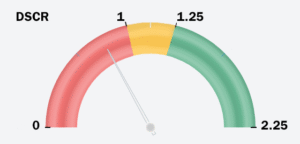
If available, review the property’s DSCR (Net Operating Income ÷ Debt Service). A DSCR below 1.25 is generally considered a red flag for stability. Lower ratios indicate the landlord has little cushion if income drops or expenses rise.
Occupancy Trends & NOI
Vacancy rates and NOI go hand in hand. If occupancy is trending down and there’s no strong leasing activity, the property’s Net Operating Income may already be under stress. Ask for historical NOI data—not just current rent rolls—to spot trends.
CapEx & Maintenance History
Review records for major systems—roof, HVAC, elevators, sprinklers. If these haven’t been replaced or upgraded in 15–20 years, the landlord may be deferring investments due to cash constraints, meaning those costs could be pushed to you mid-lease through OpEx pass-throughs.
Litigation & Tax Records
Search public records for unpaid property taxes, mechanics’ liens, or lawsuits involving the property or landlord. Frequent disputes with vendors or other tenants can signal operational instability.
Takeaways for Tenants
Every step we’ve covered—benchmarking to market, finding comparables beyond your immediate area, generating real competition, protecting yourself with smart clauses, and auditing your landlord’s financial health—comes down to two things:
- Access to reliable, real-time market data
- The ability to act on it before deadlines force your hand
This is where technology gives tenants a measurable advantage. Platforms like REoptimizer® put all of these variables—comps, concessions, OpEx history, landlord profiles, even DSCR and NOI risk—into a single view. You can:
- See comparables at a glance – Not just in your submarket, but across secondary and tertiary markets to spot value gaps.
- Map better alternatives – Layer demographic, labor, and transportation data on available properties to find locations that work operationally and financially.
- Track key lease and market timelines – Set alerts for lease expirations, market shifts, and landlord debt maturities so you never lose leverage to the clock.
- Compare total cost of occupancy scenarios – Evaluate “stay vs. move” decisions with base rent, OpEx, payroll impact, and incentives factored in.
In a 2025 market where landlords are facing rising debt costs, tenants are absorbing higher operating expenses, and competition for quality space is real, the tenants who win are the ones who walk into negotiations knowing exactly what the alternatives are—and what they’re worth.
So don’t risk your next negotiation. Learn more about the tool that can save you millions, REoptimizer®