

When Brookfield defaulted on over $1 billion in loans tied to its downtown Los Angeles office properties last year, the news spread quickly across the financial press.
Bloomberg cited “rising interest rates” and “higher borrowing costs weighed on valuations.” The Financial Times reported that property values had fallen by half, and that lenders were moving several buildings into special servicing.
But the story wasn’t just about one firm. Brookfield’s defaults—rooted in its sprawling portfolio of office towers like the Gas Company Tower, EY Plaza, America Plaza, and the 777 Figueroa Street tower—signaled a deeper shift in how commercial real estate (CRE) works in the modern era.
This wasn’t a bankruptcy. It was a business model pivot—a public admission that owning too much office space had become a liability.
And now, as Brookfield sells off billions in office assets, it’s becoming a case study in how even the most powerful owners are being forced to evolve, deleverage, and redefine success.
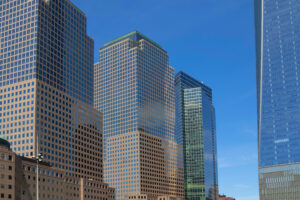
The Los Angeles Defaults: A Case Study in Value Erosion
In February 2024, Brookfield defaulted on loans totaling over $1 billion across its Los Angeles office portfolio, including loans backed by its once-flagship Gas Company Tower.
That 52-story building, valued at $675 million in 2021, was later appraised at just $270 million—a 60% loss in value. It soon landed in receivership, joining a growing list of high-profile Los Angeles office buildings in distress.
The same story repeated at EY Plaza, where Brookfield defaulted on a $275 million loan, and at 777 Tower, burdened with $289 million in debt before a planned $145 million sale collapsed. Another major property, the Wells Fargo Center, carried $763 million in outstanding debt set to mature within the year.
Collectively, these defaults represented less than 1% of Brookfield’s total real estate assets—but more than $1 billion in direct losses tied to some of the country’s most visible downtown office buildings. For lenders and investors, it was a chilling signal that even institutional-grade assets were not immune.

How We Got Here: The Office Market’s Fragile Economics
To understand the Brookfield defaults, it’s necessary to zoom out to the macroeconomic forces reshaping the office market nationwide.
- Office values have plummeted by 30–70% in key U.S. metros since 2020.
- Rising interest rates have doubled borrowing costs for many landlords.
- Leasing demand has declined as tenants shrink footprints and adopt hybrid work.
- Outstanding debt on office assets is expected to exceed $1 trillion by 2026, according to Morgan Stanley.
In this context, Brookfield’s decision to walk away from underwater properties was less a shock than a preview of what’s ahead.
The firm recognized, earlier than most, that paying on non-recourse loans for half-empty office towers in Los Angeles, San Francisco, and even New York no longer made financial sense.
By allowing lenders to take possession, Brookfield effectively capped its losses.
“We made the prudent choice not to continue making payments on certain non-core assets,” Brookfield spokesperson
They confirmed the defaults but emphasized that the company’s “core office holdings remain strong.” In truth, this selective retreat reflected the harsh math of modern real estate: cash flow couldn’t cover debt service, and refinancing at today’s interest rates would have been ruinous.
From Foreclosures to Fund Management: Brookfield’s 2025 Pivot
Fast forward to late 2025. Brookfield, once the largest office owner in the United States, has become one of the largest office sellers. The company is preparing to offload $10 billion in office assets by 2030 as part of a broader $45 billion real estate reduction plan, reshaping its $80 billion portfolio.
The strategy is clear:
- Sell or relinquish underperforming office properties.
- Refinance $8 billion in debt maturities coming due over the next two years.
- Double down on fund management—raising capital from investors rather than owning the properties directly.
Among the properties reportedly on the block are One Liberty Plaza in New York, One Leadenhall in London, and other mid-tier towers that no longer fit Brookfield’s definition of “super-core.”
Meanwhile, the company’s new $17 billion opportunity fund is already targeting distressed office and retail assets—potentially including some buildings it once owned. It’s a full-cycle repositioning: from borrower to buyer of bargains.

Data Doesn’t Lie: The Office Market Is Still in Decline
If Brookfield’s shift seems drastic, it’s because the numbers demand it.
According to Green Street Advisors, U.S. office property prices have fallen by 52% in major CBDs since the pandemic. In San Francisco, vacancy rates hover near 35%; in downtown Los Angeles, they’re approaching 30%.
Even prime assets are trading at cap rates unseen since 2009.
And the outlook? Still cloudy.
- Interest rates remain elevated, and lenders have become more selective.
- Special servicing volumes are up 118% year-over-year, per Trepp data.
- Nearly $300 billion in office loans will mature by the end of 2026.
This means borrowers like Brookfield—even with access to capital and deep relationships with banks—are being forced to make hard choices: sell, restructure, or default.
Lessons from Brookfield: The New Playbook for CRE Giants
The Brookfield defaults are not an isolated event but a glimpse into a broader structural evolution in commercial real estate.
1. The Era of Permanent Leverage Is Over.
For decades, firms like Brookfield and Blackstone thrived on cheap debt and long-term appreciation. That model depended on predictable cash flow and stable interest rates. Neither exists today.
2. Non-Recourse Lending Has Changed the Game.
By utilizing non-recourse loans, Brookfield could default strategically without broader balance sheet exposure. This “walk-away option” is increasingly being exercised by borrowers across markets, particularly where office values have fallen by more than 40%.
3. Portfolio Management Is Now About Subtraction, Not Addition.
Brookfield’s 2025 selloff marks the dawn of lean real estate operations. It’s not just offloading debt—it’s redefining what “core” means in a world where occupancy and financing risk dominate returns.
4. The Shift to Fund Models Is Permanent.
Institutional firms are pivoting from ownership to capital management. Instead of holding towers directly, they raise funds to invest opportunistically—minimizing exposure while keeping upside optionality.

Implications for Tenants and Corporate Occupiers
For corporate tenants, the Brookfield defaults carry clear operational lessons.
- Know Your Landlord’s Financial Health.
Buildings in special servicing or foreclosure can impact lease terms, maintenance, and renewals. Due diligence on ownership structure and outstanding debt is no longer optional. - Revisit Lease Clauses for Continuity and Control.
Tenants should negotiate protections in case of landlord default or asset sale—including continuity-of-service agreements, rights of first offer, and early termination triggers tied to building ownership changes. - Capitalize on Distress.
For tenants renewing or relocating, this period offers leverage. Landlords facing loan maturities or value erosion are increasingly open to generous concessions—free rent, build-out allowances, and flexible terms.
The Wider Market Picture: Default as Strategy, Not Failure
While Brookfield defaulted on marquee Los Angeles office buildings, it continues to expand its global funds platform and manage over $825 billion in total assets. That’s the paradox of today’s market: defaulting is not necessarily failing—it’s sometimes optimizing.
As one former Brookfield executive with direct knowledge of the firm’s debt strategy told the Financial Times, “These are not distress moves—they’re deliberate portfolio management.”
In other words, the default itself has become a financial instrument, a tool to rebalance and reprice risk in an environment where debt and property values no longer align.
What’s Next: Two Years That Will Define the Decade
Over the next two years, the office market faces its most critical test.
Between now and 2027, nearly $800 billion in commercial loans will mature—most tied to office and retail properties whose values have not recovered.
Morgan Stanley estimates that $500 billion of this debt is “at risk of refinance failure.” That means many landlords, from regional owners to global firms, will have to either inject new capital, sell at discounts, or surrender assets outright.
If the Brookfield defaults were the early warning, the Brookfield selloffs are the blueprint for survival.Firms are consolidating, deleveraging, and retooling for a leaner, more data-driven era of CRE.
The Future Belongs to the Agile
The story of Brookfield—from downtown Los Angeles defaults to a global office selloff strategy—captures the broader transformation of the commercial real estate industry.
This is no longer a market of endless expansion or trophy ownership. It’s a market where information, timing, and agility define performance.Office properties are no longer passive income streams; they are dynamic liabilities that must be managed, hedged, or repositioned.
Brookfield’s evolution—from defaulting borrower to opportunistic fund manager—proves one thing: in the new world of commercial real estate, the smartest firms aren’t the ones who never stumble—they’re the ones who immediately respond, adapt, and turn crisis into capital.