
If you’ve spent the last several months watching Manhattan’s office metrics, you might think the market is stabilizing. Vacancies are slipping off their highs, trophy assets are nearly full, and headline numbers look better than they have in years. But beneath that veneer is the real story: office inventory is shrinking. Not leasing. Disappearing.
This is the era many skeptics thought we could never reach, one of of office-to-residential conversion. And in the next few years (if their rapid pace continues), they can change the game for a market marked by oversupply. For tenants, availability can tightens and negotiations shift. So, best to be prepared.
We dug deep into the data, the policy shifts, the political winds, and the on-the-ground leasing patterns to decode where NYC’s conversion wave is heading—and what tenants must understand to navigate it. Let’s start with the numbers. They are… substantial.
The Office Market is Shrinking in NYC
New York City contains 730 million square feet of office space, including nearly 600 million square feet in Manhattan alone—more than any city in North America. (Los Angeles is a distant second at 432M SF.) Historically, that sheer scale has made Manhattan’s commercial real estate feel invincible.
And yet, vacancy rates have hovered around historic highs since 2020:
-
Peak Manhattan office vacancy (June 2025): 23.8%
-
August 2025 vacancy: 22.3%
-
Pre-pandemic average (2015–2019): 9.4%
Different universe entirely.
But here’s the twist even some CRE professionals miss: vacancy is improving partly because the denominator is shrinking. Manhattan isn’t absorbing demand—it’s removing millions of square feet from the pool entirely.

The Conversion Run-Rate Is Exploding
Office-to-residential conversion starts:
-
2023: 1.6M SF
-
2024: 3.3M SF
-
2025 (through August): 4.1M SF
For context: Between 2004–2022, NYC averaged just 1.2M SF of conversions per year. We’re now 3.5x to 4x the historical pace—and accelerating.That’s before we even get to Lower Manhattan, where an industry report shows:
-
5.5M SF already converted since 2020
-
Another 5.8M SF likely
What was once dismissed as unscalable is now reshaping the market in real time.
Why This Is Happening: The Perfect Storm of Policy + Economics
Vacancy tells part of the story. Office valuations tell the rest.
Office building pricing collapse:
-
2019 average price: $1,037/SF
-
2025: $567/SF
A 45% value erosion makes even stubborn owners suddenly open-minded to alternatives. Combine that with a city desperate for housing (Manhattan’s rental vacancy is a microscopic 1.2%), and the political will to support conversions crystalizes.

Enter the policy shift of the decade.
The 467-m Tax Incentive
Enacted in April 2024, this program:
-
Provides up to 35 years of property tax relief
-
Requires affordability
-
Heavily favors conversions south of 96th Street
If you’re sensing a geographic inequity there, you’re correct—and so are outer-borough developers who have politely (or not) pointed out that Manhattan gets a 90% tax exemption while Queens and Brooklyn get 65%.
Still, for Manhattan owners, 467-m is a blazing neon sign that reads: CONVERT NOW OR FOREVER HOLD YOUR OBSOLETE FLOORPLATES.
Zoning Floodgates Open
The city didn’t stop at tax incentives. It also:
-
Passed a major zoning amendment aiming to produce 80,000 new homes
-
Removed the FAR limit in high-density zones for conversions with affordable units
-
Created the Office Conversion Accelerator to streamline approvals
-
Approved Midtown South’s largest residential rezoning in 20 years
-
Added density bonuses for public improvements
Taken together, these moves signal an all-of-government commitment to transforming aging office stock into housing. And the conversion candidates aren’t just the unloved buildings anymore.

Class A Buildings Are Now on the Table
Between 2004–2019:
94.5% of conversions were Class B or C.
Between 2020–2025:
35.5% are Class A.
You read that right: More than one-third of new conversions involve buildings that were once considered prime, institutional-quality assets.
For tenants, this changes the calculus entirely.No longer can a Fortune 500 firm assume that their “nice-but-not-iconic” office tower is safe. Landlord incentives, valuation drops, and zoning changes create a world where even higher-grade buildings can flip.
This is exactly what happened at 77 Water Street, which is becoming 650 residential units, sending major tenants like engineering firm Arup and law firm Lewis Brisbois scrambling to 140 Broadway. They traded up in quality and rent—from the high $40s PSF to the $65–$79 PSF range—not because they wanted to, but because stability became a premium feature.
The new tenant mantra in Lower Manhattan:Please don’t convert my building.
And remarkably, tenants are staying put in the neighborhood, competing for a shrinking pool of Class A options. Leasing volume in Lower Manhattan is up over 100% year-over-year, even as inventory disappears. Scarcity, it turns out, is great for leasing—if not for budgets.
Conversions Are Booming, But They’re Not Easy
Developers like to say, “Everything is convertible with enough money.” Architects like to say, “Sure, but not with your money.”
Office-to-residential conversions face real technical challenges:
-
Deep floor plates limit natural light
-
Plumbing riser demands increase exponentially
-
Structural retrofits for residential loads
-
Egress requirements change
-
Historic materials need fire-rating analysis
-
Window requirements clash with 20th-century office design
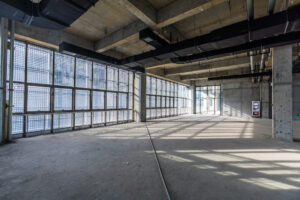
For many Midtown buildings—particularly those with fat, center-core floor plates—conversion remains borderline impossible without heroic intervention.
Yet some projects show what’s possible:
-
SoMA, the former JPMorgan HQ, now a 1,320-unit rental
-
One Wall Street, an Art Deco landmark reborn as luxury condos
-
Walker Tower, one of Manhattan’s most coveted condo buildings
-
Emigrant Savings Bank HQ, now becoming 441 units (111 affordable)
-
29 West 35th, the first Midtown South rezoning conversion (107 micro units)
Conversions create quirky layouts (home offices everywhere, because rooms without windows can’t be bedrooms), but renters don’t care—SoMA is already 50% leased.This is where the tenant story begins.
Tenants Are Now Competing With Housing Policy
Until recently, the office market moved on a relatively predictable cycle.
Now? Tenants must navigate a market where:
-
Supply is shrinking faster than demand
-
Class A options are being cannibalized for conversions
-
Conversion risk becomes a material lease consideration
-
Rental premiums are emerging for “conversion-proof buildings”
-
Policy shifts can instantly change asset viability
And that’s before you factor in politics.

What a Mamdani Administration Means for Office Conversions
Mayor-elect Zohran Mamdani enters office with a clear housing mandate and a progressive vision of urban density. If Bill de Blasio championed affordable housing and Eric Adams championed “city of yes,” Mamdani will likely champion something more radical:
1. More zoned areas eligible for conversion: Expect land-use changes not just in Midtown/FiDi but throughout civic corridors, public sites, and state-owned assets.
2. A push for deeper affordability requirements: Expect stronger inclusionary mandates and possibly pilots involving social or non-profit housing.
3. Expansion or redesign of 467-m: Potentially equalizing benefits across boroughs or strengthening incentives tied to affordability.
4. A philosophical shift toward 24/7 districts: Mamdani views dense, mixed-use neighborhoods as engines of equity and vibrancy.
5. Faster approvals + more city-backed support: Think “Conversion Accelerator 2.0.”
For tenants, this means the conversion wave is nowhere near cresting. If anything, it may broaden.
So, What Should Corporate Tenants Do Now? (Your Playbook)
Here’s how tenants can navigate this evolving landscape strategically.
1. Assess Your Building’s Conversion Risk
Evaluate:
-
Age
-
Floor plate depth
-
Zoning changes
-
Landlord behavior/past conversions
-
Location relative to policy-incentivized zones
A surprising number of Class A buildings are suddenly vulnerable.
2. Build “conversion risk clauses” into your lease negotiations
These may include:
-
Extended notice periods
-
Mandatory relocation assistance
-
Early termination rights
- Renovation disruption protections
This is no longer hypothetical. It’s operational risk management.
3. Consider stability as a primary leasing metric
Tenants in Lower Manhattan are already paying premiums to avoid being displaced again.That will spread citywide.
4. Lock in space earlier than you think
High-quality inventory is shrinking. Lease lead times should reflect this.
5. Anticipate tighter Class A competition
As more buildings convert, demand compresses into a smaller set of “forever-office” assets.
6. Monitor political signals closely
A Mamdani-era zoning package could instantly reprice entire submarkets.
The Bottom Line
NYC isn’t losing its office market. It’s remaking it.
The result will be a leaner, more competitive, more bifurcated landscape—one where tenants need to think like strategists, not just occupiers.
Conversions aren’t a sideshow. They’re the market.
And tenants who understand that—who adapt early, negotiate smartly, and plan ahead—will be the ones who secure stability in the most dynamic office environment New York has seen in decades.
As NYC’s office inventory contracts and competition heats up, REoptimizer® helps corporate tenants make smarter, faster, more informed decisions. REoptimizer® gives corporate tenants the data, modeling tools, and scenario planning needed to navigate shrinking supply, evaluate conversion risk, and secure stable, long-term space in an increasingly competitive market. If you’re making occupancy decisions in NYC, now is the time to operate with precision. REoptimizer® keeps you ahead of the market—before the market moves on you. Learn more today.