
As we look at the data from early 2026, a clear paradox has emerged: Office utilization is surging, yet global occupancy is technically over capacity.
In plain English, this means that while people are finally using the office again, companies have shrunk their real estate so much that the math no longer adds up on a Tuesday morning.
The office isn’t empty anymore, but it’s also not “back to normal.” It’s being hyper-optimized. Companies are trying to fit more employees into less office space to save costs, but they are hitting a new roadblock: a “capacity wall” that is starting to hurt employee satisfaction.
So let’s explore the data-driven reality of the return to office mandate, the impact on employee satisfaction, and how senior leaders are utilizing advanced transaction management software to navigate the “density squeeze.”

The Returning to Office Paradox
According to the latest 2026 reports, office building utilization reached 53% in 2025—a massive leap from the 35% seen just two years prior.
On the surface, this suggests that the return to the office is working. However, the underlying data reveals a significant friction point for many organizations.
Peak Days, Employee Satisfaction, and the Capacity Wall
For senior leaders, this presents a dual-headed monster: How do you enforce an office return when the office is physically too small for a full return?
Remember over half of the world’s largest organizations right-sized their footprints in a post-covid working environment. We’re dealing with the next leg of a pandemic readjustment.
1. The 111% Rule: The “Oversold Flight” Strategy
Think of this like an airline that sells 111 tickets for a plane with only 100 seats. They do this because, historically, someone always misses their flight.
- The Strategy: Many organizations have realized that with a hybrid work policy, having a 1:1 desk-to-employee ratio is a waste of capital. By allocating 111% of their workforce to a physical location, they are betting that on any given day, at least 11% of people will be working remotely, on vacation, or out at meetings.
- The Reality: This works perfectly on a Monday or Friday. But the moment a return to office mandate forces a “All Hands” meeting on a Wednesday, the “flight” is overbooked.
- The Consequence: This is where “Coffee Badging” (showing up just to be seen) turns into “Floor Wandering.” If employees can’t find a place to sit within ten minutes, job satisfaction plummets and they head back to their own home.
2. The Squeeze: Efficiency vs. The “Human Radius”
In the “old days,” we had a “buffer zone” of personal space. That buffer is officially gone.
- The Strategy: By tightening design density to 190 square feet per seat, employers are maximizing the yield of their workplace. It looks great on a spreadsheet because it lowers the “cost per head.”
- The Reality: Humans aren’t just data points. When you pack people this tightly, you hit capacity pressure. This isn’t just about elbow room; it’s about acoustics.
- The Consequence: Without the luxury of “dead space” to absorb sound, the office becomes a cacophony of Zoom calls and chatter. Heads down work and quiet time become impossible. The very collaboration that senior leaders want actually suffers because the environment is too overstimulating for deep thought.
3. The Tuesday-Thursday Peak: The “Mid-Week Bottleneck”
If utilization were spread evenly across five days, a 53% average would be a dream for organizations. But work culture doesn’t move in a straight line; it moves in a bell curve.
- The Strategy: Most hybrid work models allow for flexible work, which inevitably leads to many workers choosing the same specific days (Tuesday, Wednesday, and Thursday) to be in office.
- The Reality: While the weekly average is manageable, the peak utilization hits 80%. This is significantly higher than the 65% target—the “Goldilocks Zone” where a building feels vibrant but not crowded.
- The Consequence: At 80% utilization, every “extra” amenity breaks. The elevators take longer, the gym is packed, and the “hot desking” app shows zero availability by 9:15 AM.

The Remote Work Generational Divide
The remote and hybrid work debate is no longer a monolith. By 2026, the data shows that job satisfaction is tied directly to how leaders manage the flexible work spectrum.
Hybrid Work Priorities by Generation
| Demographic | Preference | Key Factor |
| Gen Z | In-Person Work | Mentorship and collaboration. |
| Millennials | Hybrid Approach | Better work-life balance and childcare. |
| Baby Boomers | Office Work | Traditional management practices and structure. |
Recent surveys indicate that most employees (84%) feel more productive in a hybrid work setting. However, rto mandates are often seen as “passive layoffs.” In fact, 25% of executives recently admitted they hoped a return to office mandate would trigger voluntary departures.
“The mandates aren’t filling offices; they’re just losing talent. High-performing employees are 16% more likely to leave when facing a rigid mandate.” — 2026 Workplace Research
The Industrial Pivot: Warehouse vs. Office
For tenants with mixed portfolios, the federal workforce trends and private sector office mandates are only half the story. The “Infill Industrial” movement of 2026 has made warehouse space as scrutinized as the office.
- The Micro-Fulfillment Shift: Many organizations are now subdividing massive, 500,000-square-foot “big box” sites into smaller, multi-tenant nodes. Why? To accommodate last-mile delivery needs that require being closer to the consumer’s own home.
- Power and Automation: By 2026, the key factors for warehouse selection have shifted from mere square footage to power availability. As e-commerce giants and major companies integrate AI-driven robotics, a facility’s ability to support high-density automation is the new gold standard for performance.
- The Flexible Lease: Following the hybrid work trend, industrial tenants are increasingly offering flexibility in their own portfolios—moving away from 10-year commitments toward “elastic” short-term arrangements that allow them to scale as workers and demand fluctuate.
The Hub-and-Spoke Reality: Beyond the Central HQ
The traditional “Central HQ” is being replaced by a more agile hub-and-spoke model. Many workers and managers have realized that a long commute to a downtown office is the primary killer of employee satisfaction.
- Regional Strength: We have seen a 20% rise in interest for suburban and regional hubs that combine office work and logistics in a single “flex” location.
- The Commute Factor: By placing “Spoke” offices near regional warehouse clusters, employers are successfully bridging the gap between in-person work and better work-life balance.
- Data-Driven Placement: Leaders are now using research and recent surveys to place these hubs in “talent-rich” suburbs where Gen Z and Baby Boomers actually live, effectively reducing “commute friction” while maintaining collaboration.
The 2026 Insight: For the modern business, the goal is no longer a full office return to a single point on a map. It’s about building a workplace network that is as fast and flexible as the supply chain itself.

Critical Factors for Portfolio Optimization
To manage this complexity, employers are focusing on portfolio optimization as a top priority. The primary driver is a plan for contraction—expecting to need less space due to working remotely part of the week.
Data-Driven Decision Making for Remote and Hybrid Work
- Desk Sharing Ratios: 69% of organizations now utilize desk sharing. The sweet spot for performance is currently 1.01–1.49 people per seat.
- Specific Days: Successful managers are letting teams decide their own in office days (e.g., three days a week) rather than a top-down week starting Monday mandate.
- Noise & Technology: Investment in noise reduction and collaboration tech is crucial to keep employees from fleeing back to their own home for “real work.”
Optimization Through Transaction Intelligence
In the high-stakes environment of 2026, “gut feeling” real estate decisions aren’t just risky—they are a liability to the bottom line. Organizational health now depends on key insights that bridge the gap between remote work benefits and the logistical necessity of in-person work.
REoptimizer® is the definitive transaction management software for corporate tenants navigating the “111% occupancy puzzle.” Whether you are orchestrating a full office return for a massive federal workforce or fine-tuning a hybrid work policy for a global company, our platform transforms raw data into a competitive advantage.
Why REoptimizer® is Critical for the 2026 Portfolio:
- Precision Deal Optimization: Stop overpaying for underutilized square footage. Ensure every lease—from high-rise office towers to last-mile warehouse hubs—is data-driven and aligned with actual workforce attendance.
- True Portfolio Transparency: Gain a real-time view of where your workers are actually productive and where your space is being wasted. Identify the “density squeeze” before it impacts employee satisfaction.
- Agile Transaction Management: Streamline the complex practice of disposing of redundant assets, subletting mid-week “ghost zones,” or rapidly acquiring regional hubs to accommodate flexible work growth.
- Performance Benchmarking: Use research-backed metrics to compare your workplace efficiency against industry standards, ensuring your senior leaders are making moves that support long-term productivity.
Don’t Manage the Future with Yesterday’s Spreadsheets
The future of business belongs to organizations that treat their real estate as a dynamic asset, not a fixed cost. REoptimizer® gives leaders the tools to explore new opportunities, optimize specific days, and ensure that every person in the team has the right space at the right time. See the difference it can make in your portfolio today.
Book a Demo
The headlines of the last few years have vacillated between “the office is dead” and “the Great Return.” However, for corporate tenants managing large-scale, complex portfolios, the reality is far more nuanced. As we move into 2026, the data reveals a landscape defined not by a universal recovery, but by regional divergence and the solidification of a “new seasonal norm.”
According to recent data from Placer.ai, December 2025 marked the busiest holiday-season office month since the pandemic. Yet, national attendance remains 33.1% below 2019 levels. For the modern real estate executive, this isn’t just a statistic—it’s a signal to rethink footprint strategy, lease expirations, and the technology used to manage them.

The Bifurcation of the American Office Market
The recovery is not happening at the same speed everywhere. If your portfolio spans from Miami to San Francisco, you aren’t managing one real estate strategy; you’re managing two different worlds.
The Leaders: Sunbelt and Financial Hubs
The “flight to quality” and “flight to the sun” are no longer just theories. The top-performing markets have one thing in common: business-friendly environments and a high concentration of industries that value face-to-face interaction.
-
Miami (-10.9% from 2019): Miami remains the gold standard for office recovery. With the smallest gap in the nation, the “Wall Street South” movement has proven to be durable rather than a temporary migration.
-
Dallas (-18.8% from 2019): A powerhouse for corporate relocations and a hub for diversified logistics and finance, Dallas continues to outperform the national average significantly.
-
New York (-19.6% from 2019): Despite the high cost of living, NYC’s financial core has pulled the city back toward the 80% recovery mark, driven by aggressive return-to-office mandates from major banking institutions.
The Laggards: Tech Hubs and Urban Cores
On the opposite end of the spectrum, cities heavily reliant on the tech sector or those with long commute times continue to struggle.
-
Chicago (-47.6%): The widest gap in the nation, suggesting a fundamental shift in how the Midwest’s largest business hub utilizes its downtown core.
-
San Francisco (-44.8%): While still far from 2019 levels, San Francisco saw a staggering 17.9% year-over-year increase in 2024. This suggests a “rebound from the bottom” fueled by the AI boom.
-
Denver (-44.7%): Despite its lifestyle appeal, Denver’s office recovery has plateaued, showing only 0.6% growth year-over-year.

Understanding the “December Dip” and Seasonal Norms
Placer.ai’s latest report highlights a phenomenon called “the solidification of a new post-Covid seasonal norm.” In December 2025, visits per working day reached post-pandemic highs, yet overall attendance dipped compared to the autumn months.
For corporate tenants, this is a critical insight. The dip wasn’t a setback; it was a choice. Many employers are now easing in-office expectations during December to accommodate holiday travel.
Why this matters for your portfolio:
-
HVAC and Operations: If 30% of your office is empty for 1/12th of the year, are your building systems optimized for that vacancy?
-
Employee Value Proposition: Flexibility is becoming seasonal. If you are leasing 100,000 square feet, but your staff only utilizes 40,000 in December, the “cost per utilized square foot” skyrockets.
The Intersection of Office and Warehouse Space
For tenants managing mixed portfolios that include both high-tier office properties and massive warehouse footprints, the data suggests a symbiotic relationship.
In markets like Dallas and Miami, the strength of the office sector often mirrors the strength of the logistics sector. As more corporations move their headquarters to these hubs, the demand for regional distribution centers follows.

However, the “recovery” in these two asset classes looks very different:
-
Office: Recovery is measured by human presence and foot traffic.
-
Warehouse: Recovery is measured by throughput and vacancy rates.
The challenge for 2026 is managing the “Hybrid Creep.” As office mandates tighten, the need for integrated logistics—supporting employees who may be working from various locations—remains high. If your transaction management doesn’t account for the geographic proximity of your office talent to your warehouse operations, you are leaving money on the table.
The “Hybrid Creep” and the 2026 Outlook
Looking ahead, Placer.ai predicts a steady climb in office visits. This isn’t necessarily due to “Big Bang” return-to-office announcements, but rather “Hybrid Creep.”
This is the gradual increase of required days—from two to three, then three to four—often without a formal change in policy. This creates a “shadow demand” for space.
Critical considerations for 2026:
-
Lease Flexibility: With San Francisco and Chicago showing such volatile year-over-year swings, long-term, rigid leases are becoming liabilities.
-
Portfolio Right-Sizing: If national visits are down 33%, but your portfolio hasn’t shrunk by at least 20%, you may be over-leveraged in under-utilized assets.
-
Data-Driven Negotiations: You cannot negotiate a lease in 2026 using 2019 data. You need real-time foot traffic data and market-specific recovery metrics to push back on landlords.
Strategies for Portfolio Optimization in a Divergent Market
How should a corporate tenant respond to this data? It comes down to three pillars: Consolidation, Relocation, and Optimization.
-
Consolidate in Laggard Markets: In cities like Chicago or Denver, where recovery is stalled, tenants have the upper hand. This is the time to consolidate multiple satellite offices into a single, high-amenity “Class A” trophy space at a discounted rate.
-
Lock in Rates in Growth Markets: In Miami and Dallas, the window for “pandemic pricing” has closed. If you have upcoming expirations in these hubs, move early.
-
Leverage Technology for Transaction Management: You cannot manage a 50-property portfolio using spreadsheets. The delta between the “best” and “worst” markets is now over 35%. That margin is where your profit (or loss) lives.

Don’t Guess—Optimize with REoptimizer®
The Placer.ai data proves that the “national average” is a myth. To successfully manage a large-scale portfolio in 2026, you need granular, market-specific insights and a platform that can turn that data into actionable deals.
The complexity of today’s market—balancing office recovery trends, warehouse demand, and “hybrid creep”—requires more than just a broker. It requires a system.
REoptimizer® is the critical transaction management software designed for the modern corporate tenant. We help you:
-
Visualize Portfolio Gaps: See exactly where your space utilization lags behind market recovery trends.
-
Optimize Deal Flow: Standardize your transaction process across different regions, ensuring you get “Miami-level” precision in every market.
-
Reduce Occupancy Costs: Identify underperforming assets and execute on disposals or renegotiations before the “Hybrid Creep” makes them obsolete.
The office isn’t dead, but the old way of managing it is. In a world of 33% national vacancy gaps and 17% year-over-year surges, you need a tool that moves as fast as the market.
Ready to see how your portfolio stacks up against the latest recovery data? [Request a demo of REoptimizer® today] and start optimizing your deals for the new normal.
The San Francisco office market is entering a materially different phase than it occupied just 12 to 18 months ago. Is this the comeback no one expected?
Because while overall vacancy remains elevated, multiple leading indicators—including leasing activity, tenant requirements, net absorption, and capital reengagement—now point toward stabilization and early recovery, particularly at the high end of the market.
For corporate real estate executives and large-scale tenants, San Francisco’s trajectory matters beyond the Bay Area. Historically, the market has acted as a forward indicator for national office trends, especially in innovation-driven metros.
As the industry looks toward 2026 and beyond, the data emerging from San Francisco provides critical insight into what the next office cycle is likely to look like across the U.S. Let’s go deeper.

Leasing Activity Reflects A Fundamental Shift In Demand Composition
Leasing activity in San Francisco accelerated meaningfully in 2025, reversing several years of contraction and signaling renewed occupier engagement.
According to an industry Q4 2025 Office Leasing Market Summary:
- 10.2 million square feet of office space was leased in San Francisco in 2025
- AI companies accounted for 25% of that leasing activity
- 2.5 million square feet of space was leased by AI firms alone—the highest annual total since 2018
AI-driven leasing is largely concentrated among well-capitalized companies with long-term growth horizons, which has implications for lease duration, credit quality, and space selection.

And go figure, the same AI technologies widely expected to reduce long-term office demand are currently among the strongest drivers of leasing activity. This also mirrors the Silicon Valley Boom of early Facebook and Google days.
What’s Different This Cycle:
- Demand is highly selective, not broad-based
- Leasing is concentrated in best-in-class buildings
- Space decisions are being tied directly to innovation, collaboration, and talent strategy
For occupiers, this reinforces that office space is once again being treated as a strategic input, and a big cost worthy of appearing on a balance sheet.
Net Absorption Turns Positive For The First Time In Years
One of the most consequential data points in 2025 was the return of positive net absorption. Industry reports point to:
- 2.2 million square feet of positive net absorption in 2025
- AI companies drove 82% of that absorption (approximately 1.8 million square feet)
- The previous absorption peak was 3.9 million square feet in 2018
Positive net absorption marks a critical inflection point. It signals that leasing activity is no longer simply recycling space but is reducing overall availability—a prerequisite for any sustained recovery. This is an incredible comeback from an area choked by unprecedented vacancies and urban decline.
Why This Matters For CRE Leaders:
- Absorption typically leads vacancy improvement
- Vacancy improvement precedes pricing power
- Pricing power eventually drives asset value stabilization

Vacancy Remains Elevated—But The Direction Has Changed
Despite years of strikingly negative headlines, vacancy metrics are now moving in the right direction.
Key vacancy data from Q4 2025:
- Overall vacancy declined to 33.5%
- This represents a three percentage point year-over-year reduction
- The decline marks the largest annual vacancy improvement since 2011
It is critical to note that vacancy reduction is not uniform across the market.
- Trophy and Class A buildings are experiencing the fastest improvement
- Lower-quality and poorly located assets continue to struggle
- Submarkets with modern inventory and strong transit access are outperforming
This bifurcation reinforces the reality that the recovery is asset-specific, not market-wide. This is a national trend appearing very acutely in San Francisco.
Tenant Demand Is At A Record High—Despite Elevated Vacancy
One of the most forward-looking indicators of future performance is tenant intent, not just executed leases. Industry reports point to:
- Tenants are currently seeking eight million square feet of office space in San Francisco—an all-time high
- Approximately three million square feet of this demand represents expected net absorption growth
- AI companies account for 2.8 million square feet of active requirements
- AI firms represent 1.7 million square feet of expected net absorption
This demand exists despite more than 30 million square feet of vacant space, underscoring how quality and suitability—not raw availability—are driving decisions.
Implication For Occupiers: There is a narrowing window to secure top-tier space before competition increases and concessions begin to compress in high-demand buildings.
Capital Markets Reengage As The Bid-Ask Spread Narrows
Improving leasing fundamentals have been accompanied by renewed capital market confidence.
According to GlobeSt and market participants:
- The bid-ask spread has meaningfully narrowed
- Institutional equity and lenders are reentering the market
- Transactions are increasingly grounded in realistic pricing, not forced distress
This shift has unlocked:
- Repositioning strategies for underperforming buildings
- Acquisitions trading below replacement cost
- Renewed interest in land and selective development opportunities
Importantly, capital is no longer frozen by uncertainty—it is selectively targeting assets aligned with post-pandemic demand patterns.

San Francisco As A National Leading Indicator Heading Into 2026
San Francisco’s recovery matters because it reflects a pattern likely to repeat nationally.
Key national implications:
- Top-tier assets recover first in every cycle
- Office demand is evolving, not disappearing
- Vacancy compression will be slow, uneven, and quality-driven
- Rent growth will lag fundamentals, likely into late 2026
Markets that share San Francisco’s characteristics—deep talent pools, innovation-driven industries, institutional capital, and improving governance—are positioned to follow a similar trajectory.
Outlook: A Selective, Data-Driven Office Recovery
Looking ahead, the San Francisco office market is not poised for a rapid rebound—but it is firmly in recovery mode.
Expectations for 2026:
- Continued demand growth, led by technology and AI
- Further reductions in vacancy, concentrated in Class A assets
- Concessions to remain elevated in lower-tier buildings
- Gradual improvement in pricing and asset values
The next office cycle will reward precision, patience, and portfolio optimization—not broad exposure.
The REoptimizer® Perspective
At REoptimizer®, we view San Francisco as a case study in early-cycle recovery.
For occupiers, this market presents a rare opportunity to align long-term space strategy with favorable economics—before leverage shifts. For portfolio leaders and investors, the lesson is clear: the office is not coming back uniformly, but it is coming back strategically.
San Francisco is no longer a warning signal. It is a roadmap.
As leverage begins to shift and performance gaps widen between assets, organizations with clearly defined real estate strategies will gain a durable advantage—while others are forced into reactive decisions. This is the moment to evaluate not just where you operate, but why, how, and on what terms your portfolio supports the business.
REoptimizer® works exclusively on behalf of occupiers to strengthen portfolio performance across markets. We provide independent, data-driven advisory services that help organizations:
- Reposition portfolios ahead of market inflection points
- Optimize lease structures, timing, and capital commitments
- Reduce long-term occupancy risk while improving flexibility
- Align real estate decisions with enterprise strategy, growth, and talent objectives
Our role is not to transact—it is to help you make better decisions before the market forces your hand.
Learn how REoptimizer® can help you transform market insight into lasting portfolio strength.
Frequently Asked Questions: San Francisco Office Market
What Is Driving The Current Recovery In The San Francisco Office Market?
The recovery is being driven primarily by technology and AI companies, improved net absorption, and renewed capital market confidence.
Key drivers include:
- 2.5 million square feet of AI leasing activity in 2025
- 2.2 million square feet of positive net absorption, with AI firms accounting for 82%
- A three percentage point year-over-year decline in vacancy, the largest since 2011
- Reengagement from institutional equity and lenders as pricing expectations realign
This recovery is selective, not broad-based, with demand concentrated in Class A and trophy office buildings.
Is Vacancy Still A Concern In San Francisco?
Yes, overall vacancy remains elevated, but the trend has shifted.
- Q4 2025 vacancy: 33.5%, down from the prior year
- Vacancy declines are asset-specific, not market-wide
- Top-tier buildings are experiencing the fastest improvement
- Lower-quality and poorly located assets continue to face challenges
For decision-makers, the direction of change is more important than the absolute number at this stage of the cycle.
What Types Of Office Space Are Seeing The Most Demand?
Demand is concentrated in high-quality, well-located office space.
Most sought-after characteristics include:
- Trophy and Class A buildings
- Modern infrastructure and efficient floor plates
- View space and strong natural light
- Locations requiring minimal tenant improvements
- Proximity to transit and amenities
This bifurcation reinforces the growing performance gap between best-in-class assets and commodity office space.
How Significant Is AI’s Role In Office Demand?
AI is the dominant source of net new demand in San Francisco.
- AI companies accounted for 25% of all leasing activity in 2025
- They represent 12% of total occupied office space
- AI firms drove 82% of positive net absorption
- 2.8 million square feet of active tenant requirements are tied to AI companies
This level of concentration is reshaping how office demand is evaluated across innovation-driven markets.
Are Tenants Actively Looking For Space Despite High Vacancy?
Yes—tenant intent is at a record high.
- Tenants are seeking eight million square feet of office space, an all-time high
- Roughly three million square feet represents expected net absorption growth
- Competition is strongest for top-tier buildings, despite over 30 million square feet of vacant space
This reflects a market where quality matters more than quantity.
What Does This Mean For Large Office Tenants In 2026?
Large tenants are entering a strategic window of opportunity.
- Access to best-in-class space at historically favorable economics
- Strong negotiating leverage in most assets, though diminishing at the top end
- Ability to future-proof portfolios before availability tightens in premium buildings
Occupiers with long-term space needs should act before leverage shifts further.
What Does The San Francisco Market Signal For The U.S. Office Sector?
San Francisco is acting as a leading indicator for national office trends.
Key signals for 2026:
- Office recovery will be selective and quality-driven
- High-performance assets will recover first across gateway markets
- Vacancy compression will precede rent growth by several quarters
- Markets with deep talent pools and innovation ecosystems will outperform
What happens in San Francisco today is likely to appear in other top-tier markets next.
Will Office Rents Increase In The Near Term?
Broad-based rent growth is likely to be gradual.
- Effective rent growth will lag occupancy improvements
- Concessions remain elevated due to high availability
- Rent stability and growth will emerge first in trophy and Class A assets
- Meaningful pricing power is more likely in late 2026 and beyond
This is a fundamentals-led recovery, not a pricing-led one.
How Should CRE Executives Respond To This Market Environment?
Executives should focus on portfolio optimization rather than expansion.
Best practices include:
- Prioritizing quality over quantity
- Stress-testing long-term space needs against workforce strategy
- Locking in favorable terms for critical locations
- Evaluating repositioning and consolidation opportunities
The next cycle will reward intentional, data-driven decision-making.
How Does REoptimizer® Help Organizations Navigate This Market?
REoptimizer® provides independent, data-driven advisory services designed to help occupiers:
- Optimize real estate portfolios across multiple markets
- Evaluate lease decisions using real-time market intelligence
- Reduce occupancy costs while improving space performance
- Navigate complex office market cycles with confidence
In markets like San Francisco, where recovery is uneven and timing matters, strategy—not timing alone—drives success.
JPMorgan Chase opened its new headquarters at 270 Park Avenue, and it’s massive.
At 1,388 feet tall and 2.5 million square feet, the bank’s new global HQ is the most expensive single-asset office project in New York’s history. Designed by Foster + Partners, it’s being pitched as the office tower of the future: sustainable, smart, healthy, and flexible.
The project lands at a time when New York’s office vacancy is pushing 20%, and most landlords are fighting to keep tenants, not build new ones — which makes JPMorgan’s move both bold and hard to replicate.
Understanding what JPMorgan built (and why) offers a glimpse into how major occupiers are now thinking about space, investment, and long-term positioning in a volatile market.
A Building Built to Prove a Point
JPMorgan could’ve renovated its old headquarters. Instead, it demolished a 700-foot tower and started over — the tallest voluntary teardown in U.S. history.

That decision raised eyebrows, but it also sent a message: retrofits aren’t enough for companies that want total control over their workplace strategy.
To its credit, the project pushed environmental limits. Roughly 97% of the old building’s materials were recycled or reused, a benchmark even sustainability consultants didn’t expect. The new tower runs fully on hydropower, eliminating on-site combustion, and claims 40% lower water usage than standard code.
On paper, it’s one of the greenest towers in the world.
Still, this is a 2.5 million-square-foot, $3 billion building for one tenant — at a time when most major occupiers are still shrinking footprints and rethinking in-office utilization. JPMorgan’s bet is that if you make a space good enough, people will actually want to come in. We’ll see if that holds true when the novelty fades.
What’s Inside: Amenities, Algorithms, and Optics
The new 270 Park isn’t your father’s bank tower. It’s packed with the kind of amenities that define new “Class A+” space:
- A 20-vendor food hall, Irish pub, and a wellness-focused gym run by EXOS.
- A three-story “Exchange” hub combining dining, work, and event space.
- Touchless biometric entry, occupancy sensors, and an app that remembers lighting and temperature preferences.
- Air filtration and daylight levels above NYC code requirements, and enough acoustic insulation to make Midtown sound almost peaceful.
In short: the building is less about desks and more about experience engineering. JPMorgan wants the office to feel like an ecosystem — something that functions intuitively, not mechanically. But whether that model scales beyond the world’s biggest bank remains an open question.
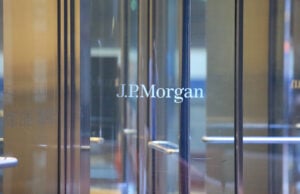
For smaller occupiers, the capital expenditure behind these systems is a non-starter. The average retrofit budget in Midtown today is around $100–$150/SF. A tower like this pushes well beyond $1,000/SF in total build cost.
The Broader Play: Midtown as a Test Lab
JPMorgan isn’t just building a headquarters; it’s building a campus. Between 270 Park, 383 Madison Avenue, and 250 Park Avenue, the bank now controls nearly six million square feet within a few blocks. That’s an urban moat: three assets connected by design, technology, and culture.
It’s also a bet on Midtown East rezoning, which encourages teardown-and-rebuild projects that open the ground plane and add public plazas. JPMorgan’s new footprint includes wider sidewalks, open green space, and ground-level retail — things older Midtown blocks often lack.
But while 270 Park might be Midtown East’s success story, it’s not the norm. Most landlords in the district are struggling with 25–35% availability rates and tenant downsizing that hasn’t stopped since 2020. The bank’s investment helps the optics — but it doesn’t solve the vacancy math. It’s a striking outlier in a market still under strain, which makes it the perfect lens to understand how the office sector is fragmenting
What It Really Means for the Office Market
Let’s cut through the marketing: 270 Park isn’t a model most landlords can replicate. It’s a proof of concept for what’s possible at the very top of the market — and a useful lens into how the rest of the office sector is stratifying.
1. The “Flight to Quality” Isn’t Just a Buzzword
Tenants are trading quantity for quality.
Across major U.S. markets, occupancy recovery is strongest in the top 10–15% of buildings — those offering advanced air systems, hospitality-style amenities, and sustainability credentials. According to CBRE’s Q3 2025 data, Class A+ space in Manhattan is averaging 88% occupancy, while Class B sits closer to 67%, and Class C often below 50%.

Landlords without modern infrastructure or ESG performance metrics are losing tenants even if they cut rent. JPMorgan’s HQ simply illustrates the far edge of this curve: what happens when the “best of the best” becomes the new baseline for corporate environments.
2. New Construction Will Be the Exception, Not the Rule
Most office owners can’t start from scratch. With construction costs up 35–40% since 2019 and debt markets tightening, large-scale teardowns are the domain of cash-heavy owner-occupiers and sovereign funds.
Instead, the next cycle of supply will come from adaptive reuse and deep retrofits — targeting energy efficiency, daylighting, and new mechanicals without full demolition.
Expect Class B landlords to pivot toward conversion (residential, life science, education) while institutional owners invest selectively in repositioning high-potential assets. The gap between those who can finance modernization and those who can’t will continue to widen.
3. Workplace Experience Is the New Amenity War
The value proposition of the office has shifted from “where you work” to “why you’d bother coming in.” JPMorgan’s response — cafés on every floor, a 20-vendor food hall, gym, wellness suites, and prayer rooms — is expensive, but strategic.
Data from Kastle Systems shows that office attendance in NYC remains around 64% of pre-pandemic levels. That means companies are under pressure to earn their employees’ commutes. Amenities and health-driven design are now tools for talent retention, not perks.
For landlords, that translates to operational complexity: hospitality-level service expectations with office-level margins. Those who can deliver “experience as infrastructure” will command higher rents and longer leases. Those who can’t will rely on discounting.

4. Midtown’s Future Is Selective
JPMorgan’s move may revitalize Midtown East, but it won’t rescue the entire submarket.
Manhattan’s overall office vacancy remains around 20%, translating to roughly 95 million square feet of available space. Trophy towers like One Vanderbilt, 425 Park, and now 270 Park are leasing well, but older postwar stock continues to struggle.
That polarization will deepen. Expect Midtown to evolve into a two-tier landscape:
- Tier 1: ESG-compliant, amenity-rich towers (20–25% of inventory) attracting premium tenants and commanding $140–$200/SF rents.
- Tier 2: Legacy buildings facing value declines of 40–60% compared to pre-pandemic appraisals. Many will pivot to residential conversions under city incentive programs.
270 Park shows that the right project, in the right place, can reprice a district — but it also highlights how few owners can play at that level.
The Bottom Line
JPMorgan’s new HQ is both a marvel and a warning.
It proves that when capital, brand, and long-term vision align, the office can still be an asset worth building — not just maintaining. But it also underscores how uneven the recovery really is.
The future of office real estate isn’t a single trend — it’s a split market:
- For global corporations and institutional investors: High-performance campuses like 270 Park will serve as recruiting and cultural anchors.
- For everyone else: The challenge is survival — reconfiguring space, improving efficiency, and finding the right use case for aging square footage in a market where “good enough” no longer cuts it.
270 Park isn’t the future of every office. It’s the benchmark against which the rest of the market will now be judged.
The next phase of the office market won’t reward size; it will reward clarity.
The office landscape is diverging fast — utilization patterns are shifting, operating costs are volatile, and capital markets are punishing inefficiency. The winners will be those who can connect real-time data to real estate decisions, turning portfolio visibility into strategic action.

That’s where REoptimizer® comes in.
Our platform gives corporate real estate teams a 360° view of their portfolio — from occupancy and lease terms to trend metrics and cost performance. It helps you see what’s working, what’s not, and what’s next. Whether you’re rightsizing, renegotiating, or planning for future demand, REoptimizer® transforms raw data into clarity — and clarity into leverage.
The office sector in 2025 continues to face a record-high office vacancy rate.
Once-bustling office towers in central business districts from San Francisco to Dallas–Fort Worth now carry vast amounts of empty space, a stark contrast to pre-pandemic levels when demand for office space seemed insatiable.
Today, still, many office buildings sit partially dark, while others are flooded with sublease space or being repositioned entirely.
According to Moody’s Analytics and recent labor statistics, slowing demand from professional and business services and the financial activities sector has eroded absorption.
Even as millions of square feet of new office space have been delivered, occupiers continue shrinking their footprints under hybrid and remote work models.
The result is a widening gap between office inventory and actual office using employment.
Nationally, the office market now counts tens of millions of square feet vacant, with some western markets such as San Diego and San Francisco faring worse than northeastern markets or the Twin Cities.
The National Office Vacancy Rate
Vacancy calculations show the national average vacancy rate edging toward 20%, with some metros well above that level. Meanwhile, owner occupied buildings remain steadier, but investment sales volume for multi-tenant office properties has plunged as property owners confront falling property values.
For tenants, the silver lining is clear: the current supply–demand imbalance has tipped the scales in favor of occupiers. With new construction slowing, acquiring zoning approval becoming tougher, and landlords staring down excess supply, tenants who benchmark office rents against the report period’s depressed comparables can unlock highly favorable deals.
1. The City with the Most Empty Office Buildings is San Francisco
San Francisco remains ground zero for the nation’s office distress. Vacancy rates have reached 28.6%–29.3%, with some submarkets pushing past 30%.
- Where vacancies are concentrated: The Mid-Market and Financial District corridors are hardest hit, with large blocks of Class A space sitting dark.
- Why it’s this bad:
- The city was overly reliant on tech firms, many of which downsized during the 2022–2024 correction.
- Remote work adoption remains especially high in the Bay Area, keeping daily occupancy levels stubbornly low.
- A wave of lease expirations hit in 2024–2025, and many tenants opted to contract rather than renew at the same footprint.
What this means for tenants: San Francisco landlords are under enormous pressure. With trophy towers trading at a fraction of pre-pandemic values, new tenants can secure deep rent discounts, extended concessions, and favorable renewal terms if they benchmark against these distressed market comparables.

2. Austin
Austin’s meteoric rise as a tech hub has backfired into an office glut, with vacancy rates reaching 28.5%.
- Where vacancies are concentrated: Oversupply is most acute in Downtown and The Domain, where developers delivered millions of square feet just as demand softened.
- Why it’s this bad:
- A construction boom outpaced leasing demand.
- Tech sector volatility (including hiring freezes and pullbacks) left Austin with too much space and too few takers.
- Tenant downsizing during renewals has left landlords with large contiguous blocks difficult to fill.
What this means for tenants: In Austin, the story is about timing. New supply is colliding with weakened absorption, forcing landlords to compete for a smaller tenant base. That translates into tenant-friendly economics across both new and second-generation space.
3. Seattle
Seattle’s vacancy rate now sits just above 27.5%, representing one of the steepest increases among major markets.
- Where vacancies are concentrated:
- Downtown Seattle has vacancy levels at or near 30%, compared to suburban nodes (like Bellevue), which have weathered the downturn more resiliently.
- Why it’s this bad:
- Heavy dependence on Big Tech occupiers (Amazon, Microsoft, etc.) made the city especially vulnerable to space givebacks.
- Hybrid work is entrenched, with surveys showing office attendance lagging behind other metros.
- Newer Class A towers are faring better, but older Class B product is struggling to attract tenants.
What this means for tenants: Seattle’s bifurcated market gives tenants options. Downtown landlords are particularly aggressive with concessions, and tenants who benchmark properly can negotiate significant rent reductions or upgrade into higher-quality space for the same price.
4. Denver
Denver’s vacancy has climbed to 25.2%, showing a consistent pattern of oversupply.

- Where vacancies are concentrated: Vacancies are most visible in the Central Business District, with suburban corridors like the Denver Tech Center somewhat healthier but still challenged.
- Why it’s this bad:
- Denver’s market saw a flood of speculative development in the late 2010s and early 2020s.
- Leasing has not kept pace, particularly as regional firms embrace flexible and hybrid office strategies.
- Energy and professional services tenants, once key demand drivers, have downsized footprints.
What this means for tenants: With supply significantly outpacing absorption, Denver tenants should expect ample landlord competition for deals, especially downtown, where effective rents have been sliding.
5. Bay Area (Excluding San Francisco)
The broader Bay Area reports vacancy rates between 25.5%–26.4%, making it one of the weakest regional office markets in the country.
- Where vacancies are concentrated: Silicon Valley and Peninsula submarkets (Santa Clara, Sunnyvale, Palo Alto) are facing elevated levels of sublease space and shadow vacancy.
- Why it’s this bad:
- The tech slowdown cut deep into regional leasing.
- Many large occupiers, from start-ups to established giants, are offloading space onto the sublease market.
- Tenants are gravitating only toward newer, amenity-rich Class A space, leaving older properties behind.
What this means for tenants: Across the Bay Area, sublease availability provides unique leverage. Benchmarking against these discounted sublease comps can drive renewal negotiations lower.
6. Portland
Portland’s vacancy now stands at 21.2%–21.8%, a sharp increase from pre-pandemic levels.
- Where vacancies are concentrated: Vacancies are most visible in downtown Portland, where civic challenges and declining foot traffic have slowed recovery.
- Why it’s this bad:
- Population and business outflows from downtown reduced demand.
- Remote work reduced office occupancy, and some tenants relocated to suburban markets.
- Landlords have been slower to reposition properties, leaving older stock uncompetitive.
What this means for tenants: Portland’s downtown weakness means bargaining power is firmly with occupiers, who can use vacancy data to negotiate below-market renewals or relocate into upgraded space.
7. Downtown Los Angeles
Downtown Los Angeles remains one of the nation’s most distressed office submarkets, with vacancy exceeding 30%.

- Where vacancies are concentrated: The problem is largely a Downtown L.A. phenomenon; Westside and suburban markets like Century City remain stronger.
- Why it’s this bad:
- Flight to quality: Tenants have favored premium Westside assets, leaving downtown towers hollowed out.
- Crime and safety concerns have dampened return-to-office enthusiasm.
- New deliveries have only added to the challenge of filling space.
What this means for tenants: Tenants willing to commit to Downtown L.A. can extract unprecedented concessions—free rent, turnkey improvements, and reduced escalations—by benchmarking against distressed downtown comparables.
Key National Trends for Office Sector
- Tech Hubs Hit Hardest: San Francisco, Austin, Seattle, and the Bay Area lead the vacancy rankings, all exposed to tech layoffs and hybrid work.
- Downtown Struggles vs Suburban Resilience: In most markets, downtown cores are disproportionately vacant, while suburban nodes retain more stable occupancy.
Elevated vacancy rates, unprecedented levels of sublease space, and record amounts of total square feet vacant are reshaping the economics of commercial real estate. In many metropolitan statistical areas, downtown cores continue to resemble ghost towns, while suburban properties show relative resilience.
But the broader truth is undeniable: across regional boundaries defined by market boundaries, office using sectors are leasing less, even as millions of square feet remain in the supply pipeline.
Benchmark Your Leases to the Current Office Market
For tenants, this climate offers leverage.
Benchmarking against full service rates, analyzing vacancy calculations, and comparing to customized data within the regional boundaries of a target market will ensure occupiers do not overpay. In many metros, the gap between office construction begun and actual demand means tenants can negotiate for concessions, rent relief, or even a move into higher-quality office towers for the same cost.
While landlords navigate labor market headwinds and struggle with declining property values, tenants have the ability to capitalize.
The lesson is straightforward: in a market marked by excess supply, weak employment numbers, and space reverting to pre-pandemic levels, the best strategy is to freely grant yourself negotiating power by benchmarking to the national vacancy rate and local submarket realities.
Doing so ensures every renewal or relocation is aligned not with landlord optimism but with the cold math of the office vacancy rate.
And leverage only pays off if you have the data and benchmarking tools to back up your negotiation. That’s where REoptimizer® comes in.
Our platform takes the complexity of the office market—from vacancy calculations and sublease space to market boundaries and office rents—and translates it into clear, actionable strategies for your next lease or renewal.
Whether you’re looking at millions of square feet downtown or evaluating suburban properties, REoptimizer® empowers you to see the real numbers, compare against national averages and regional boundaries, and negotiate from strength.
In a market defined by empty towers, excess supply, and landlords under pressure, tenants who use REoptimizer® don’t just find space, they win deals.
Learn more about REoptimizer® today.
