For the Fortune 500 real estate director, a lease is more than a right to occupy; it is a long-term liability that requires active hedging. Central to this hedge is the expense stop, a mechanism that defines the boundary between a predictable overhead and an escalating variable cost.
The expense stop is the pivot point of this risk. It is a contractual provision that sets a maximum limit on the landlord’s operating expenses.
While it serves to provide a predictable “floor” for the landlord’s contribution, it simultaneously functions as a latent liability for the tenant. For the sophisticated occupier, understanding the interplay between the base year, actual expenses, and annual increases is the difference between budget stability and an unexpected multi-million dollar hit to the EBITDA.

Expense Stop: The Landlord’s Hedge and the Tenant’s Exposure
An expense stop in commercial real estate is essentially a risk-transfer mechanism. It is primarily used in Full-Service Gross Leases to protect landlords from rising costs while providing tenants with a predictable initial rent. By setting a certain amount—typically expressed per square foot—the landlord caps their financial liability.
From the landlord’s perspective, this provision ensures predictable cash flow. The risk of rising inflation, sudden spikes in utility costs, or labor increases for building expenses is transferred to the tenant.
If the actual operating expenses rise to $12 per square foot while the expense stop amount is set at $10, the tenant is responsible for the $2 difference. On a 100,000-square-foot headquarters, this “minor” fluctuation results in a $200,000 unbudgeted expense.
However, the expense stop is not inherently predatory; it can provide predictability for tenants in terms of operating expenses, allowing them to budget effectively for the first year. The risk, however, is that if the initial stop is set artificially low during lease negotiations, the tenant may be exposed to large, immediate increases in subsequent years.
Base Year: Defining the Economic Baseline
The base year is the chronological anchor of a commercial lease. While it can be any year agreed upon, it is typically the first year of the lease term. In a full service or modified gross lease, the landlord pays for all operating expenses incurred during this period. The actual amount of expenses tied to this window becomes the “floor” for the remainder of the term.
For the C-suite, the base year amount is a critical data point. If a tenant signs a lease in a building that is only 50% occupied during the base year, the actual expenses will be deceptively low. As the building fills and occupancy reaches 95%, the variable expenses—such as janitorial services, utilities, and property management fees—will skyrocket.
Without proper lease protections, such as a “Gross-Up” clause, the tenant will face significant rent increases simply because the landlord was successful in leasing the rest of the building. A sophisticated new lease negotiation must ensure the base year is adjusted to reflect a fully occupied building, creating a “realistic base year” that prevents unfair spikes in the second year and beyond.

Operating Expenses: The Anatomy of “Additional Rent”
To manage a large-scale portfolio, one must look beyond the total sum and analyze the components of building operating expenses. These generally include:
- Property Taxes: Often the largest and most volatile uncontrollable expense.
- Insurance: Subject to global market shifts and climate-related adjustments.
- Common Area Maintenance (CAM): The costs of operating shared lobbies, elevators, and parking structures.
- Property Management Fees: Usually calculated as a percentage of gross revenue.
In a full service lease, the tenant benefits from the landlord’s management of these services, but they assume the risk of any operating costs that exceed the specified expense stop. This can lead to significant, unexpected increases in total rent.
Conversely, in a net lease, the tenant pays their pro rata share of all expenses from day one. While a net lease offers more transparency, the gross lease with an expense stop is often preferred by large corporations for the initial budget certainty it provides, provided the base year stop is negotiated aggressively.
Commercial Real Estate Portfolio Strategy: Mitigation and Negotiation
A Fortune 500 tenant must approach commercial real estate leases with a defensive mindset. Because the risk of unexpected increases in property expenses is transferred to the tenant—supporting the stability of the landlord’s investment—the tenant must negotiate counter-measures.
- Negotiating the Expense Cap: While the expense stop limits the landlord’s downside, a sophisticated tenant will negotiate for an “expense cap.” This is a secondary ceiling that limits how much the tenant’s pro rata share can increase year-over-year. For example, capping annual increases on controllable operating expenses (like landscaping or security) at 5% ensures that the landlord has an incentive to manage the property efficiently.
- The Power of Audit Rights: Many tenants fail to exercise their right to verify actual expenses. Tenants should negotiate robust audit rights to ensure accuracy in the landlord’s operating expense statements. Requesting an annual audit prevents the landlord from passing through capital expenditures (which should be the landlord’s cost) as common area maintenance.
- Understanding the Base Year Lease vs. Expense Stop Amount: It is a common misconception that all commercial leases handle increases the same way. In a base year lease, the tenant is responsible for any increase in operating expenses over the actual expenses of the first year. In a lease with a fixed expense stop amount, the dollar figure is hard-coded (e.g., $10.00/SF). If the building’s actual expenses in the first year are already $11.00/SF, the tenant is effectively paying overages from the moment they move in.
Common Area Maintenance: The Friction Point
The common area maintenance (CAM) section of a lease is where most disputes arise. For a large-scale office building, CAM includes everything from HVAC maintenance to the flowers in the lobby.

Sophisticated tenants must scrutinize the definition of CAM to exclude:
- Executive salaries of the landlord’s personnel.
- Marketing costs for vacant spaces.
- Costs associated with other specific tenants’ modified gross leases.
- Taxes and insurance that should be itemized separately to ensure they are not being marked up by management fees.
By tightening these definitions, the tenant ensures that the difference they pay between the actual expenses and the base year stop represents legitimate, market-rate increases rather than landlord inefficiencies.
From Strategy to Execution: Optimizing with REoptimizer®
The most critical insight for a C-suite executive is that an expense stop is not a static figure; it is a dynamic risk that requires continuous monitoring. For organizations managing a high-volume, large-scale portfolio, manual tracking in spreadsheets is an invitation for budget leakage and missed audit windows.
To turn real estate from a passive expense into a strategic asset, forward-thinking tenants leverage REoptimizer®, a cloud-based transaction and lease management platform designed specifically for corporate tenants.
How REoptimizer® Protects Your Bottom Line:
- Centralized Expense Clarity: REoptimizer® acts as a single source of truth, centralizing all lease documents and abstracting critical data points like your base year stop, expense caps, and audit rights.
- Automated Anomaly Detection: The software provides instant visibility into overspending. By benchmarking your actual operating expenses against market data and previous years, REoptimizer® identifies red flags—such as “spiking” variable costs or miscalculated pro rata shares—before they become permanent losses.
- Audit Readiness: When it’s time to exercise your audit rights, REoptimizer® ensures you have the historical data and line-item clarity needed to hold landlords accountable, ensuring you aren’t paying for capital improvements or non-allowable CAM charges.
- Strategic Decision Support: Using interactive dashboards and AI-powered data mapping, REoptimizer® allows you to simulate “what-if” scenarios. You can see the long-term impact of rising property taxes or inflation on your entire portfolio’s occupancy costs years in advance.
Take Control of Your Portfolio Today
Don’t leave your corporate real estate budget to chance or landlord-favorable estimates. Whether you are negotiating a new high-rise lease or auditing a global portfolio, the right technology is your best defense.
Ready to see what you should be paying?
Schedule a Demo of REoptimizer® today to discover how our patented technology can identify inefficiencies, lower your CRE spend, and provide the transparency your C-suite demands.
Book a Demo
Triple net (NNN) leases are a go-to structure across commercial real estate, especially for industrial and flex properties. On paper, they’re simple:
Base rent + taxes + insurance + maintenance (CAM/OPEX).
Landlords like the steady return. Tenants like the transparency and control.
But here’s the catch: NNN leases aren’t fixed-cost. They’re variable-cost agreements tied to expense categories that can swing sharply—especially as buildings age. Over time, that volatility can:
-
Quietly erode margins
-
Blow up budgets
-
Complicate renewal vs. relocation decisions
-
Turn “good rent” into expensive occupancy
If your portfolio includes mixed-age facilities, age-driven OPEX risk may be a bigger financial story than rent. Let’s discuss.
The Built-In Exposure of Triple Net Leases
In a true triple net structure, tenants typically carry most operating expense responsibility beyond base rent, including:
-
Property Taxes: reassessments, mill rate changes, local incentives, shifting valuations
-
Insurance: market cycles, regional risk, asset condition, claims history
-
Maintenance & Repairs (CAM/OPEX): the largest—and least predictable—driver
Think of these as moving variables, not line items. They flex with market conditions, landlord behavior, and building performance. And they rarely move in a straight line.

Why Industrial Tenants Feel It First (and Worst)
Industrial users often see the most immediate impact because so many costs are passed through—and because maintenance decisions are frequently tenant-managed. That means OPEX shifts with:
-
System performance (HVAC, roof, paving, dock equipment)
-
Vendor pricing and availability
-
Seasonality and operational intensity
-
Deferred capital conditions inherited at move-in
A quick reality check:
-
A well-run 10-year-old distribution center may see maintenance land around 10–12% of total occupancy cost
-
A 25-year-old facility with deferred upgrades can push maintenance closer to 20%
Across a multi-site network, that spread can translate into six figures of unplanned spend annually.

Building Age Isn’t a Detail—It’s a Cost Multiplier
Under NNN terms, age becomes a direct financial variable. Older properties usually bring:
-
Higher repair frequency
-
Less efficient mechanical systems
-
End-of-life components (roof, RTUs, electrical, paving)
-
Higher emergency maintenance risk
Deferred Maintenance: The “Rent Discount” Trap
In older assets, landlords may delay major capital replacements knowing an NNN tenant absorbs the operating burden. A “competitive” rent rate can hide upcoming expense spikes that show up in year 2, 4, or 7—right when you’re trying to stabilize operations.
Energy and System Inefficiency Adds Up Fast
Older industrial buildings often lack modern efficiency standards—HVAC performance, insulation, lighting, controls. If you’re paying utilities directly (common in NNN), inefficiency becomes a recurring tax that compounds over the full term.
Maintenance Escalation Isn’t Linear
Maintenance doesn’t rise gradually—it often jumps once major systems hit the 15–20 year range. If the roof, mechanical, or electrical systems are near that threshold, your cost curve can steepen mid-term—not at renewal.
Bottom line: a low base rent can mask a high effective rent once age-adjusted OPEX is included.

Model Total Cost of Occupancy (TCO), Not Just Rent
The more durable approach is Total Cost of Occupancy (TCO) modeling across the lease term—rent plus projected OPEX and capital exposure.
Evaluate Life-Cycle Cost, Not Just Lease Cost
Run scenarios that incorporate:
-
Age-based maintenance trajectories (roof, HVAC, lighting, paving)
-
Historical tax reassessment patterns
-
Insurance volatility (especially for older or high-value assets)
Even conservative assumptions will quickly reveal where “cheap rent” becomes high all-in occupancy cost.
Negotiation Moves That Actually Reduce Risk
Tie Tenant Improvements to Asset Condition
If the building needs modernization—mechanical upgrades, lighting retrofits, dock equipment—push for landlord participation. Improvements with residual life beyond your lease term often increase property value, which makes them easier for landlords to justify.
Define Maintenance vs. Capital Replacement—In Writing
This is non-negotiable in older facilities. Lease language must clearly separate:
-
Routine maintenance (tenant)
-
Capital replacement (landlord)
The difference determines whether a failure becomes a manageable repair—or a major unbudgeted capital hit.
Require OPEX Transparency and Audit Rights
Add provisions for:
-
Detailed CAM/OPEX statements
-
Standardized backup documentation
-
Audit rights and dispute windows
For multi-site occupiers, centralized audits across the portfolio can uncover recurring discrepancies and recover overcharges.

Control vs. Responsibility: The Hidden Trade-Off in NNN
NNN leasing promises visibility and operational control—but across dozens (or hundreds) of sites, that control becomes complexity.
What you gain
-
Cost management through bidding, preventative maintenance, and efficiency upgrades
-
Operational alignment with your temperature, security, and logistics needs
-
Line-item transparency
What you inherit
-
Cost volatility in taxes, insurance, and repairs
-
Administrative burden across vendors, invoices, audits, and site conditions
-
Age amplification: older assets = less predictability
This is where many portfolios get surprised: control doesn’t guarantee predictability.
Turn NNN Exposure Into an Advantage With Operational Discipline
NNN shifts risk to the tenant—but disciplined operators can turn that into cost leadership through structured portfolio management:
-
Preventive maintenance optimization: extend system life and reduce emergency repairs
-
Energy retrofits: lighting and controls upgrades can meaningfully lower utility spend
-
Portfolio-level insights: recurring inefficiencies and overcharges become visible only when data is centralized
Without integrated data, most tenants never see the full trendline—they just keep paying the bills.

The Strategic Shift: From Lease Thinking to Lifecycle Thinking
Triple net leases make one thing clear: you’re not just leasing space—you’re operating an asset. That means performance depends as much on physical condition and operating discipline as on the lease terms.
Sophisticated occupiers are shifting toward lifecycle-based governance, evaluating sites by:
-
Age and deferred maintenance exposure
-
Energy intensity and upgrade potential
-
OPEX volatility mapping
-
Renewal vs. relocation equivalency
That’s where platforms like REoptimizer® become essential—turning occupancy cost into a measurable, optimizable variable.
The Bottom Line
Triple net leases reward diligence and punish complacency. They offer transparency—but they also transfer volatility and aging-asset risk downstream.
In today’s environment of rising maintenance costs, insurance swings, and aging industrial stock, lease structure is strategy.
If you manage a large, mixed-age portfolio, don’t just negotiate rent. Model lifecycle exposure, track OPEX trends, and quantify the real cost of building age.
Because in a triple net world, the number on the lease is only half the story.
Model the real cost of occupancy. Optimize with REoptimizer®. See what REoptimizer® can unlock across your portfolio. Learn More
FAQs: Triple Net Leases, Building Age, and OPEX Volatility
What is a triple net (NNN) lease?
A triple net lease is a commercial lease structure where the tenant pays base rent plus operating expenses, typically including property taxes, insurance, and maintenance/CAM. It’s common in industrial, flex, retail, and single-tenant assets.
What does “OPEX” mean in commercial real estate?
OPEX (operating expenses) refers to the ongoing costs to operate a property, such as maintenance, repairs, common area maintenance (CAM), utilities (often), property management, and other pass-through charges, depending on lease language.
Why can OPEX matter more than rent in an NNN lease?
Because rent is usually fixed or escalates predictably, while taxes, insurance, and maintenance can fluctuate significantly. Over time, OPEX volatility can raise your effective occupancy cost enough to outweigh a “good” rent rate.
How does building age increase NNN lease risk?
Older buildings typically have:
-
More frequent repairs
-
Less efficient systems (HVAC, lighting, insulation)
-
Components closer to end of life (roof, paving, electrical)
This results in higher maintenance spend and a greater likelihood of mid-term cost spikes, not just renewal-driven increases.
What is CAM, and how is it different from OPEX?
CAM (common area maintenance) usually refers to shared-area costs in multi-tenant properties, including:
-
Parking lots
-
Landscaping
-
Snow removal
-
Exterior lighting
OPEX is broader and may include CAM plus other operating costs, depending on how the lease defines pass-through expenses.
What are the biggest hidden cost drivers in an NNN lease?
Most surprises come from:
-
Tax reassessments and mill rate changes
-
Insurance premium increases driven by market shifts, risk exposure, or asset condition
-
Maintenance and repair escalation, especially in older assets
-
Unclear responsibility for capital replacement versus routine maintenance
What’s the difference between maintenance and capital replacement?
-
Maintenance: routine service and repairs that keep systems operating, such as filters, minor fixes, and patchwork
-
Capital replacement: replacing major components like roofs, HVAC units, paving, or structural systems
Lease language should clearly define responsibility, as this distinction often determines whether costs remain manageable or escalate rapidly.
Can a landlord push capital costs to a tenant in an NNN lease?
If the lease is vague, yes—especially in older properties. Clear definitions separating repair from replacement and operating costs from capital costs are critical to limiting exposure.
How do I evaluate the real cost of an NNN lease?
Use total cost of occupancy (TCO) modeling across the lease term, including:
-
Base rent
-
Property taxes and reassessment trends
-
Insurance volatility assumptions
-
Age-based maintenance curves
-
Energy and utility impacts if utilities are tenant-paid
What should I request before signing an NNN lease?
Ask for:
-
Three or more years of CAM and OPEX history with line-item detail
-
Recent property tax bills and assessment history
-
Insurance claims history and current premiums
-
Roof and HVAC age, service records, and estimated remaining life
-
Vendor contracts tied to pass-through charges
What lease clauses reduce OPEX volatility?
Common protections include:
-
Detailed CAM statement requirements
-
Audit rights and dispute windows
-
Exclusions for landlord overhead or undefined administrative fees
-
Clear capital replacement responsibility and amortization rules
-
Spending approval thresholds for major repairs
Are NNN leases always a bad deal for tenants?
No. NNN leases can be advantageous for tenants with strong operational discipline because they allow:
-
Competitive vendor bidding
-
Preventive maintenance optimization
-
Energy efficiency and retrofit strategies
Without portfolio-level visibility, however, the cost volatility remains with the tenant.
How can tenants reduce OPEX in older industrial buildings?
High-impact strategies include:
-
Preventive maintenance scheduling, especially for HVAC and roof systems
-
LED lighting and controls retrofits
-
Sealing and insulation improvements
-
Vendor consolidation and standardized scopes of work
-
Portfolio-wide CAM and OPEX audits
What’s the simplest red flag that an older NNN building will get expensive?
A combination of:
-
Below-market base rent
-
Limited building documentation
-
Aging roof and HVAC systems near end of life
-
Vague lease language around maintenance and capital replacement
How does REoptimizer® help with NNN lease management?
REoptimizer® helps occupiers turn occupancy cost into structured intelligence by enabling:
-
Portfolio-wide OPEX trend tracking
-
Anomaly detection and audit readiness
-
Lifecycle exposure modeling tied to asset age
-
Data-driven renewal versus relocation decisions
If you’re leasing space for offices, labs, or light industrial, the surge in data centers matters—and you should care. A major driver of real-estate change now is digital infrastructure: power, cooling, connectivity. The numbers are striking.
- In the U.S., data-centers consumed ≈ 176 terawatt-hours (TWh) in 2023, which is about 4.4% of total U.S. electricity consumption.
- Globally, electricity use from data centers is projected to climb to ≈ 945 TWh by 2030, more than double current levels.
- Goldman Sachs forecasts global power demand for data centers could rise ~165% by 2030 vs 2023.
What does that mean for you as a tenant? In short: your competition for “good” real-estate is changing. And what qualifies as “good” is shifting.

Data Centers and the Digital Economy
The drivers are intense: cloud growth, AI workloads, 5G/edge, large-scale compute, all converging to demand enormous infrastructure. A few compelling numbers:
- In the U.S., data-centers are expected to account for a rapidly growing share of electricity use. Barclays estimates U.S. data-center power demand could grow 14%-21% annually through 2030, potentially tripling from ~150-175 TWh in 2023 to as much as ~560 TWh.
- Globally, vacancy in data-center space is extremely low: one report puts global weighted-average vacancy at ~6.6% in Q1 2025.
- In the U.S., large-scale data-center capital spend is already in the tens of billions: one firm reports ~$31.5 billion annualised spending on new U.S. data-center construction.
The takeaway: the “digital‐infrastructure” wave is real, and it’s rewriting the rules of real-estate competition.
Understanding Digital Infrastructure: The New Backbone of Business and Real Estate
In today’s digital economy, digital infrastructure forms the backbone of every organization’s operations—an interconnected system of physical infrastructure, data centers, cloud computing, and networking solutions that enable companies to operate, scale, and innovate.
In simplest terms, digital infrastructure refers to the layers of hardware, software, and digital services that support data exchange, cloud operations, and communication across global networks.
As digital technologies continue to evolve, digital infrastructure encompasses far more than servers and storage—it integrates operating systems, cloud services, and digital infrastructure services that keep business processes running in real time.
This multi-layered framework supports remote work, software applications, and the data connectivity required for modern enterprise growth. In this context, data centers are no longer just utility consumers; they’re the key components of a digital ecosystem that underpins corporate strategy, enabling companies to leverage digital operations for long-term success and competitive advantage.
For corporate tenants, understanding how digital infrastructure relate to occupancy strategy is crucial. Access to reliable networks, secure cloud platforms, and robust physical hardware is as important as square footage.
In a digital world defined by vast amounts of data, rising interest in cloud, and constant technology trends, CRE decisions now depend on a property’s ability to host and support digital infrastructure important to business continuity. The result: a new market dynamic where infrastructure, data, and connectivity are the real levers of value creation.
The New Fundamentals: Infrastructure First
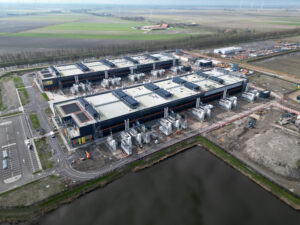
Traditionally, site selection in CRE meant: good transit, labour market, cost per sq ft. Today the first question is: can this site deliver the power, connectivity and cooling needed for high-density compute?
Because many markets are limited by grid capacity, the constraint for new data centers is not land (per se) but time-to-power. One analysis by Newmark says U.S. data-center project power demands exceed what utilities are slated to supply by roughly 50%.
Key implications for corporate tenants:
- A site in a “good” city might be less competitive if its power infrastructure is maxed out.
- If a data-center development enters your submarket, it may raise land and utility pricing for other uses.
Asset-Class Bifurcation
What’s happening: commercial real-estate is splitting into two broad tracks. One track is “digital-infrastructure-capable” (data centers, high-density labs, edge hubs). The other is “traditional” office/light industrial.
In emerging markets, data-center conversions of older industrial or even office real-estate are increasingly common. One report states that ~24% of industrial-zoned site acquisitions in recent years were for data-center development.
For tenants:
- If you lease a space in a building without infrastructure depth, you may face a higher risk of obsolescence or conversion pressure.
- Alternatively, buildings that were previously considered “secondary” markets may offer value if real-estate owners are chasing land for data-centers, leaving other tenants with better concession opportunities.
Lease Economics Are Changing
When power, cooling and latency matter, lease metrics shift. Rent per sq ft remains relevant—but just part of the story. Consider these evolving metrics:
- kW per sq ft or kW footprint of your tenancy.
- Time to utility connection or upgrade milestone in the lease.
- Pass-throughs and energy escalation tied to high-density usage.
- Service levels / redundancy associated with mission-critical infrastructure.
For example, a major report shows colocation data-center average rents (in North America) varying by scale: for >20 MW deals, ~$129 /kW/month; for 1-5 MW deals ~$157/kW/month.
Leases in high-density space increasingly include commitments from landlords around infrastructure availability. For tenants, the negotiation should include:
- Representations and warranties about utility infrastructure (substation, fibre, redundancy).
- Escalation or audit rights for utility and pass-through charges.
- Rights to terminate or relocate if infrastructure milestones are not met.
Strategic Actions for Tenants
Embed Infrastructure Metrics Into Your Site Strategy
When you evaluate sites, alongside labor, access and cost, include:
- Available kW per sq ft and expansion potential.
- Cooling capacity and adaptability (liquid cooling, high-density racks).
- Connectivity (fiber landing, latency).
- Utility risk: grid upgrade timelines, power pricing, backup capacity.
This gives you a broader and more realistic view of site quality and risk.

Build Infrastructure Protections Into Leases
Don’t assume base rent covers everything. You should:
- Ensure landlord commits to infrastructure delivery dates tied to occupancy.
- Include audit rights for energy, power, cooling pass-throughs.
- Negotiate escalation caps or shared cost structures where you’re using high-density infrastructure.
Rethink Location Strategy With Flexibility
Markets once avoided (secondary/tertiary) because of perceived risk now may offer advantages: less grid congestion, available land, speed to permit. For example, many data-center developers are turning to West Texas, or suburban markets outside major hubs.
For your organization:
- Consider a mix of locations: core premier sites + secondary sites with better infrastructure headroom.
- Size your portfolio for agility: have the ability to shift workloads, expand or contract, move to locations with better infrastructure economics.
Monitor Portfolio Risk and Future‐Proof
Look at your existing leases and footprint and ask:
- Which sites may face rising cost or obsolescence because of infrastructure constraints?
- Which markets may be squeezed by new data-center developments, raising land/utility costs for remaining tenants?
- Are you positioned to adapt if your business demands shift (e.g., more compute, labs, edge deployments)?

The Cost & Risk Landscape You Must Know
Even for tenants that don’t operate data-centers, there are knock-on risks:
- Utility infrastructure bottlenecks: where grid upgrades are delayed, your site may face higher cost or delivery risk.
- Escalating power and cooling cost pressures: as data-center demand pushes pricing, landlords may pass through higher costs.
- Obsolescence risk: assets without infrastructure depth may lose competitiveness or face conversion pressure.
- Environmental/regulatory risk: Data-centre growth is facing scrutiny for energy consumption, water usage and community impacts. One study in Texas flagged that a 10 MW data centre can emit ~37,668 metric tons of CO₂ annually plus generator NOₓ emissions.
These risks mean you must expand your real-estate diligence beyond typical market rent and location to include infrastructure, utility risk, asset resilience and flexibility.
Looking Ahead: What the Next 5-10 Years Look Like
We are entering a decade of repositioning and renormalization in CRE, underpinned by digital-infrastructure demand. Key points:
- The pipeline of data-center capacity is enormous: one North America report predicts more than 100 GW of capacity across colo + hyperscale could break ground or deliver between 2025-2030.
- In many core hubs, pre-leasing is extremely high: one report states ~73% of under-construction capacity is pre-leased.
- Because infrastructure is constrained, lease terms and pricing are shifting—not just for data centers but for all asset classes in impacted markets.
- For tenants, real-estate will increasingly integrate operational/IT strategy, not just head-count and location. Your facility may at once support office work, labs, edge computing, R&D—embedding infrastructure intensity in ways that previously were niche.
Final Word
As a tenant, the competitive advantage in real-estate no longer lies solely in staff-amenities or metro prestige—it lies in operational resilience, infrastructure readiness, and flexibility to evolve. A site that looked “cheap” because of base rent may turn out expensive when you factor in utility risk, grid delay, cooling upgrades or relocation risk.
Real-estate decisions now call for a dual runway: space + infrastructure. If you get that right, you’ll secure cost-effective, future-ready occupancy. If you don’t, you risk being stuck with legacy assets in markets being re-priced by others.
In an era where data is the new currency, your real-estate portfolio isn’t just a roof and floor—it’s the foundation for your digital and operational footprint.
The triple net (NNN) lease remains a standard structure among commercial assets, especially for industrial and flex properties.
It’s transparent, simple, and seemingly predictable: you pay base rent plus your share of taxes, insurance, and maintenance (CAM). The landlord receives a consistent return; you get operational control and visibility.
But under the surface, a triple net lease is anything but static. It’s a dynamic, variable-cost tied to three categories that can shift substantially over time. And as assets age, those shifts accelerate.
Across large-scale portfolios, this volatility can quietly erode margin, distort budgets, and complicate renewal strategies. What starts as a “known” rent structure can evolve into a moving target, especially if building age and efficiency aren’t properly priced into the deal.
The Exposure Built Into NNN Leases
In a triple net structure, the tenant assumes responsibility for most operational expenses beyond rent:
- Property taxes – influenced by municipal reassessments, mill rate changes, and local incentives.
- Insurance – dependent on asset condition, regional risk exposure, and claims history.
- Maintenance and repairs – the broadest and least predictable cost driver.
Think of these not as costs, but as variables. Each one flexes with market forces, landlord behavior, and building performance.

Industrial Implications
Industrial users face this most acutely. Because so many expenses are passed through (and many maintenance costs are tenant-managed) OPEX shifts with equipment performance, landlord practices, and even seasonal operating patterns.
For example:
- A well-managed 10-year-old distribution center might see maintenance representing 10–12% of total occupancy costs.
- A 25-year-old facility with deferred capital upgrades might see that figure approach 20%.
Across a multi-site network, that variance can translate into hundreds of thousands of dollars annually.
Why Age Matters
When you assume maintenance and operational responsibilities under a NNN lease, building age becomes a direct financial variable.
Older properties carry higher repair frequency, less efficient systems, and often, legacy components at or near end-of-life.
Deferred Maintenance
Landlords can potentially delay large capital replacements (roofs, paving, HVAC) knowing a NNN tenant will assume the burden. What looks like a competitive rent rate may mask upcoming expense spikes.
Energy and System Inefficiency
Industrial assets built before the mid-2000s frequently lack high-efficiency HVAC systems, modern insulation, and LED lighting. Energy intensity can be 15–30% higher than in newer buildings, based on Energy Star and DOE benchmarks for commercial facilities.

For tenants paying utilities directly, as most NNN structures require, these inefficiencies compound quickly. Over a 10-year term, the total energy delta can exceed any perceived rent discount on an older property.
Maintenance Escalation
Operating costs rarely move linearly. Maintenance spend tends to rise exponentially after major systems reach 15–20 years of service life. If the roof, mechanical, or electrical systems are near that threshold, your cost curve will steepen mid-term, not at renewal.
In short: A low base rent can conceal a high effective rent once age-adjusted costs are accounted for.
Modeling the Total Cost of Occupancy
The smarter approach is to model the total cost of occupancy (TCO) over the lease term, including projected OPEX and capital exposures.

Evaluate Life-Cycle Cost, Not Just Lease Cost
Run long-range scenarios incorporating:
- Age-based maintenance trajectories (roofs, HVAC, lighting).
- Historical tax reassessment rates.
- Insurance volatility (especially for high-value or older assets).
Even if your model relies on conservative industry averages, this exercise reveals where your “cheap rent” might actually produce the highest all-in occupancy cost.
Tie Tenant Improvement (TI) to Asset Condition
When negotiating, use asset age as leverage for TI or landlord contribution.
If the facility needs modernization — mechanical upgrades, dock levelers, lighting retrofits — push for shared investment. Landlords are often willing to fund improvements with residual life beyond your lease term, since they enhance asset value.
Clarify Maintenance Boundaries
Lease language must separate routine maintenance (tenant) from capital replacement (landlord). In older properties, this boundary line is critical.
If your HVAC unit fails due to age-related wear, is that “maintenance” or “replacement”? The answer determines whether it’s a $2,000 repair or a $200,000 capital burden.
Require Cost Transparency
Include lease clauses requiring detailed CAM statements and the right to audit pass-through charges. For larger occupiers, centralizing these audits portfolio-wide can reveal recurring discrepancies and recovery overcharges,
Control vs. Responsibility
One of the biggest appeals of NNN leasing is transparency. You see what you pay. You manage the vendors. You make the call on how and when to maintain the property.

But transparency doesn’t automatically equal predictability…and control doesn’t always mean freedom.
When you’re managing dozens or hundreds of leased properties, each with unique age profiles and expense structures, what feels like autonomy can become operational complexity.
Advantages:
- Cost Management: You can reduce spend through competitive bidding, proactive maintenance, and energy efficiency measures.
- Customization: You can align building operations with your specific needs — temperature ranges, security standards, logistics flow.
- Transparency: You know exactly where your money is going, line by line.
Disadvantages:
- Volatility: Costs for taxes, insurance, and repairs fluctuate.
- Administrative Burden: Managing service contracts, audits, and maintenance across multiple sites consumes internal resources.
- Age Amplification: The older your average building stock, the more unpredictable your expenses become.
For many portfolio managers, this trade-off defines the “hidden risk” of the NNN model.
Operational Discipline: Turning Exposure into Advantage
While NNN leases push more risk to the tenant, they also open opportunities for cost leadership (if managed systematically)..
By turning NNN lease data into structured intelligence, tenants gain a clearer picture of where costs are controllable — and where age or condition dictates inevitable drift.
For example:
- Preventive Maintenance Optimization: Regular HVAC tune-ups can extend system life 3–5 years and reduce emergency repairs by up to 30%.
- Energy Retrofits: Simple lighting and control upgrades can lower energy use by 10–20%, even in older industrial stock.
- Portfolio Insights: Identifying recurring overcharges or inefficiencies can unlock meaningful year-over-year savings without a single lease renegotiation.
These gains require visibility. Without data integration, most tenants never see the full cost pattern across their portfolios — they simply pay the bills.
The Strategic Shift: From Lease to Lifecycle Thinking
Portfolio performance lives beyond the lease document. Triple net leases make that explicit. You’re not just occupying space… you’re operating it. The financial outcome depends as much on the building’s physical condition and management efficiency as on the terms you negotiated.
That’s why sophisticated occupiers are evolving toward lifecycle-based portfolio governance, where each location is evaluated not just by rent or headcount, but by:
- Age and deferred maintenance risk.
- Energy intensity and upgrade potential.
- Cost volatility and exposure mapping.
- Renewal vs. relocation cost equivalency.
This is precisely where data-driven platforms like REoptimizer® move from helpful to essential — turning the “cost of occupancy” into a measurable, optimizable variable.
The Bottom Line
Triple net leases reward diligence and punish complacency. They give tenants visibility and control — but they also shift cost volatility and asset risk downstream.
Among rising maintenance costs, volatile insurance markets, and aging industrial stock, lease structure is strategy.
If you manage a large, mixed-age portfolio, make sure your team isn’t just negotiating rent — it’s modeling lifecycle exposure, tracking OPEX trends, and quantifying the real cost of age across your assets.
Because in a triple net world, the number on the lease is only half the story. The other half lives in the systems, surfaces, and line items that age reveals — quietly, and expensively.
Model the real cost of occupancy. Optimize with REoptimizer®. See what difference REoptimizer® can make across your portfolio.
Learn More
