Triple net (NNN) leases are a go-to structure across commercial real estate, especially for industrial and flex properties. On paper, they’re simple:
Base rent + taxes + insurance + maintenance (CAM/OPEX).
Landlords like the steady return. Tenants like the transparency and control.
But here’s the catch: NNN leases aren’t fixed-cost. They’re variable-cost agreements tied to expense categories that can swing sharply—especially as buildings age. Over time, that volatility can:
-
Quietly erode margins
-
Blow up budgets
-
Complicate renewal vs. relocation decisions
-
Turn “good rent” into expensive occupancy
If your portfolio includes mixed-age facilities, age-driven OPEX risk may be a bigger financial story than rent. Let’s discuss.
The Built-In Exposure of Triple Net Leases
In a true triple net structure, tenants typically carry most operating expense responsibility beyond base rent, including:
-
Property Taxes: reassessments, mill rate changes, local incentives, shifting valuations
-
Insurance: market cycles, regional risk, asset condition, claims history
-
Maintenance & Repairs (CAM/OPEX): the largest—and least predictable—driver
Think of these as moving variables, not line items. They flex with market conditions, landlord behavior, and building performance. And they rarely move in a straight line.

Why Industrial Tenants Feel It First (and Worst)
Industrial users often see the most immediate impact because so many costs are passed through—and because maintenance decisions are frequently tenant-managed. That means OPEX shifts with:
-
System performance (HVAC, roof, paving, dock equipment)
-
Vendor pricing and availability
-
Seasonality and operational intensity
-
Deferred capital conditions inherited at move-in
A quick reality check:
-
A well-run 10-year-old distribution center may see maintenance land around 10–12% of total occupancy cost
-
A 25-year-old facility with deferred upgrades can push maintenance closer to 20%
Across a multi-site network, that spread can translate into six figures of unplanned spend annually.

Building Age Isn’t a Detail—It’s a Cost Multiplier
Under NNN terms, age becomes a direct financial variable. Older properties usually bring:
-
Higher repair frequency
-
Less efficient mechanical systems
-
End-of-life components (roof, RTUs, electrical, paving)
-
Higher emergency maintenance risk
Deferred Maintenance: The “Rent Discount” Trap
In older assets, landlords may delay major capital replacements knowing an NNN tenant absorbs the operating burden. A “competitive” rent rate can hide upcoming expense spikes that show up in year 2, 4, or 7—right when you’re trying to stabilize operations.
Energy and System Inefficiency Adds Up Fast
Older industrial buildings often lack modern efficiency standards—HVAC performance, insulation, lighting, controls. If you’re paying utilities directly (common in NNN), inefficiency becomes a recurring tax that compounds over the full term.
Maintenance Escalation Isn’t Linear
Maintenance doesn’t rise gradually—it often jumps once major systems hit the 15–20 year range. If the roof, mechanical, or electrical systems are near that threshold, your cost curve can steepen mid-term—not at renewal.
Bottom line: a low base rent can mask a high effective rent once age-adjusted OPEX is included.

Model Total Cost of Occupancy (TCO), Not Just Rent
The more durable approach is Total Cost of Occupancy (TCO) modeling across the lease term—rent plus projected OPEX and capital exposure.
Evaluate Life-Cycle Cost, Not Just Lease Cost
Run scenarios that incorporate:
-
Age-based maintenance trajectories (roof, HVAC, lighting, paving)
-
Historical tax reassessment patterns
-
Insurance volatility (especially for older or high-value assets)
Even conservative assumptions will quickly reveal where “cheap rent” becomes high all-in occupancy cost.
Negotiation Moves That Actually Reduce Risk
Tie Tenant Improvements to Asset Condition
If the building needs modernization—mechanical upgrades, lighting retrofits, dock equipment—push for landlord participation. Improvements with residual life beyond your lease term often increase property value, which makes them easier for landlords to justify.
Define Maintenance vs. Capital Replacement—In Writing
This is non-negotiable in older facilities. Lease language must clearly separate:
-
Routine maintenance (tenant)
-
Capital replacement (landlord)
The difference determines whether a failure becomes a manageable repair—or a major unbudgeted capital hit.
Require OPEX Transparency and Audit Rights
Add provisions for:
-
Detailed CAM/OPEX statements
-
Standardized backup documentation
-
Audit rights and dispute windows
For multi-site occupiers, centralized audits across the portfolio can uncover recurring discrepancies and recover overcharges.

Control vs. Responsibility: The Hidden Trade-Off in NNN
NNN leasing promises visibility and operational control—but across dozens (or hundreds) of sites, that control becomes complexity.
What you gain
-
Cost management through bidding, preventative maintenance, and efficiency upgrades
-
Operational alignment with your temperature, security, and logistics needs
-
Line-item transparency
What you inherit
-
Cost volatility in taxes, insurance, and repairs
-
Administrative burden across vendors, invoices, audits, and site conditions
-
Age amplification: older assets = less predictability
This is where many portfolios get surprised: control doesn’t guarantee predictability.
Turn NNN Exposure Into an Advantage With Operational Discipline
NNN shifts risk to the tenant—but disciplined operators can turn that into cost leadership through structured portfolio management:
-
Preventive maintenance optimization: extend system life and reduce emergency repairs
-
Energy retrofits: lighting and controls upgrades can meaningfully lower utility spend
-
Portfolio-level insights: recurring inefficiencies and overcharges become visible only when data is centralized
Without integrated data, most tenants never see the full trendline—they just keep paying the bills.

The Strategic Shift: From Lease Thinking to Lifecycle Thinking
Triple net leases make one thing clear: you’re not just leasing space—you’re operating an asset. That means performance depends as much on physical condition and operating discipline as on the lease terms.
Sophisticated occupiers are shifting toward lifecycle-based governance, evaluating sites by:
-
Age and deferred maintenance exposure
-
Energy intensity and upgrade potential
-
OPEX volatility mapping
-
Renewal vs. relocation equivalency
That’s where platforms like REoptimizer® become essential—turning occupancy cost into a measurable, optimizable variable.
The Bottom Line
Triple net leases reward diligence and punish complacency. They offer transparency—but they also transfer volatility and aging-asset risk downstream.
In today’s environment of rising maintenance costs, insurance swings, and aging industrial stock, lease structure is strategy.
If you manage a large, mixed-age portfolio, don’t just negotiate rent. Model lifecycle exposure, track OPEX trends, and quantify the real cost of building age.
Because in a triple net world, the number on the lease is only half the story.
Model the real cost of occupancy. Optimize with REoptimizer®. See what REoptimizer® can unlock across your portfolio. Learn More
FAQs: Triple Net Leases, Building Age, and OPEX Volatility
What is a triple net (NNN) lease?
A triple net lease is a commercial lease structure where the tenant pays base rent plus operating expenses, typically including property taxes, insurance, and maintenance/CAM. It’s common in industrial, flex, retail, and single-tenant assets.
What does “OPEX” mean in commercial real estate?
OPEX (operating expenses) refers to the ongoing costs to operate a property, such as maintenance, repairs, common area maintenance (CAM), utilities (often), property management, and other pass-through charges, depending on lease language.
Why can OPEX matter more than rent in an NNN lease?
Because rent is usually fixed or escalates predictably, while taxes, insurance, and maintenance can fluctuate significantly. Over time, OPEX volatility can raise your effective occupancy cost enough to outweigh a “good” rent rate.
How does building age increase NNN lease risk?
Older buildings typically have:
-
More frequent repairs
-
Less efficient systems (HVAC, lighting, insulation)
-
Components closer to end of life (roof, paving, electrical)
This results in higher maintenance spend and a greater likelihood of mid-term cost spikes, not just renewal-driven increases.
What is CAM, and how is it different from OPEX?
CAM (common area maintenance) usually refers to shared-area costs in multi-tenant properties, including:
-
Parking lots
-
Landscaping
-
Snow removal
-
Exterior lighting
OPEX is broader and may include CAM plus other operating costs, depending on how the lease defines pass-through expenses.
What are the biggest hidden cost drivers in an NNN lease?
Most surprises come from:
-
Tax reassessments and mill rate changes
-
Insurance premium increases driven by market shifts, risk exposure, or asset condition
-
Maintenance and repair escalation, especially in older assets
-
Unclear responsibility for capital replacement versus routine maintenance
What’s the difference between maintenance and capital replacement?
-
Maintenance: routine service and repairs that keep systems operating, such as filters, minor fixes, and patchwork
-
Capital replacement: replacing major components like roofs, HVAC units, paving, or structural systems
Lease language should clearly define responsibility, as this distinction often determines whether costs remain manageable or escalate rapidly.
Can a landlord push capital costs to a tenant in an NNN lease?
If the lease is vague, yes—especially in older properties. Clear definitions separating repair from replacement and operating costs from capital costs are critical to limiting exposure.
How do I evaluate the real cost of an NNN lease?
Use total cost of occupancy (TCO) modeling across the lease term, including:
-
Base rent
-
Property taxes and reassessment trends
-
Insurance volatility assumptions
-
Age-based maintenance curves
-
Energy and utility impacts if utilities are tenant-paid
What should I request before signing an NNN lease?
Ask for:
-
Three or more years of CAM and OPEX history with line-item detail
-
Recent property tax bills and assessment history
-
Insurance claims history and current premiums
-
Roof and HVAC age, service records, and estimated remaining life
-
Vendor contracts tied to pass-through charges
What lease clauses reduce OPEX volatility?
Common protections include:
-
Detailed CAM statement requirements
-
Audit rights and dispute windows
-
Exclusions for landlord overhead or undefined administrative fees
-
Clear capital replacement responsibility and amortization rules
-
Spending approval thresholds for major repairs
Are NNN leases always a bad deal for tenants?
No. NNN leases can be advantageous for tenants with strong operational discipline because they allow:
-
Competitive vendor bidding
-
Preventive maintenance optimization
-
Energy efficiency and retrofit strategies
Without portfolio-level visibility, however, the cost volatility remains with the tenant.
How can tenants reduce OPEX in older industrial buildings?
High-impact strategies include:
-
Preventive maintenance scheduling, especially for HVAC and roof systems
-
LED lighting and controls retrofits
-
Sealing and insulation improvements
-
Vendor consolidation and standardized scopes of work
-
Portfolio-wide CAM and OPEX audits
What’s the simplest red flag that an older NNN building will get expensive?
A combination of:
-
Below-market base rent
-
Limited building documentation
-
Aging roof and HVAC systems near end of life
-
Vague lease language around maintenance and capital replacement
How does REoptimizer® help with NNN lease management?
REoptimizer® helps occupiers turn occupancy cost into structured intelligence by enabling:
-
Portfolio-wide OPEX trend tracking
-
Anomaly detection and audit readiness
-
Lifecycle exposure modeling tied to asset age
-
Data-driven renewal versus relocation decisions
The triple net (NNN) lease remains a standard structure among commercial assets, especially for industrial and flex properties.
It’s transparent, simple, and seemingly predictable: you pay base rent plus your share of taxes, insurance, and maintenance (CAM). The landlord receives a consistent return; you get operational control and visibility.
But under the surface, a triple net lease is anything but static. It’s a dynamic, variable-cost tied to three categories that can shift substantially over time. And as assets age, those shifts accelerate.
Across large-scale portfolios, this volatility can quietly erode margin, distort budgets, and complicate renewal strategies. What starts as a “known” rent structure can evolve into a moving target, especially if building age and efficiency aren’t properly priced into the deal.
The Exposure Built Into NNN Leases
In a triple net structure, the tenant assumes responsibility for most operational expenses beyond rent:
- Property taxes – influenced by municipal reassessments, mill rate changes, and local incentives.
- Insurance – dependent on asset condition, regional risk exposure, and claims history.
- Maintenance and repairs – the broadest and least predictable cost driver.
Think of these not as costs, but as variables. Each one flexes with market forces, landlord behavior, and building performance.

Industrial Implications
Industrial users face this most acutely. Because so many expenses are passed through (and many maintenance costs are tenant-managed) OPEX shifts with equipment performance, landlord practices, and even seasonal operating patterns.
For example:
- A well-managed 10-year-old distribution center might see maintenance representing 10–12% of total occupancy costs.
- A 25-year-old facility with deferred capital upgrades might see that figure approach 20%.
Across a multi-site network, that variance can translate into hundreds of thousands of dollars annually.
Why Age Matters
When you assume maintenance and operational responsibilities under a NNN lease, building age becomes a direct financial variable.
Older properties carry higher repair frequency, less efficient systems, and often, legacy components at or near end-of-life.
Deferred Maintenance
Landlords can potentially delay large capital replacements (roofs, paving, HVAC) knowing a NNN tenant will assume the burden. What looks like a competitive rent rate may mask upcoming expense spikes.
Energy and System Inefficiency
Industrial assets built before the mid-2000s frequently lack high-efficiency HVAC systems, modern insulation, and LED lighting. Energy intensity can be 15–30% higher than in newer buildings, based on Energy Star and DOE benchmarks for commercial facilities.

For tenants paying utilities directly, as most NNN structures require, these inefficiencies compound quickly. Over a 10-year term, the total energy delta can exceed any perceived rent discount on an older property.
Maintenance Escalation
Operating costs rarely move linearly. Maintenance spend tends to rise exponentially after major systems reach 15–20 years of service life. If the roof, mechanical, or electrical systems are near that threshold, your cost curve will steepen mid-term, not at renewal.
In short: A low base rent can conceal a high effective rent once age-adjusted costs are accounted for.
Modeling the Total Cost of Occupancy
The smarter approach is to model the total cost of occupancy (TCO) over the lease term, including projected OPEX and capital exposures.

Evaluate Life-Cycle Cost, Not Just Lease Cost
Run long-range scenarios incorporating:
- Age-based maintenance trajectories (roofs, HVAC, lighting).
- Historical tax reassessment rates.
- Insurance volatility (especially for high-value or older assets).
Even if your model relies on conservative industry averages, this exercise reveals where your “cheap rent” might actually produce the highest all-in occupancy cost.
Tie Tenant Improvement (TI) to Asset Condition
When negotiating, use asset age as leverage for TI or landlord contribution.
If the facility needs modernization — mechanical upgrades, dock levelers, lighting retrofits — push for shared investment. Landlords are often willing to fund improvements with residual life beyond your lease term, since they enhance asset value.
Clarify Maintenance Boundaries
Lease language must separate routine maintenance (tenant) from capital replacement (landlord). In older properties, this boundary line is critical.
If your HVAC unit fails due to age-related wear, is that “maintenance” or “replacement”? The answer determines whether it’s a $2,000 repair or a $200,000 capital burden.
Require Cost Transparency
Include lease clauses requiring detailed CAM statements and the right to audit pass-through charges. For larger occupiers, centralizing these audits portfolio-wide can reveal recurring discrepancies and recovery overcharges,
Control vs. Responsibility
One of the biggest appeals of NNN leasing is transparency. You see what you pay. You manage the vendors. You make the call on how and when to maintain the property.

But transparency doesn’t automatically equal predictability…and control doesn’t always mean freedom.
When you’re managing dozens or hundreds of leased properties, each with unique age profiles and expense structures, what feels like autonomy can become operational complexity.
Advantages:
- Cost Management: You can reduce spend through competitive bidding, proactive maintenance, and energy efficiency measures.
- Customization: You can align building operations with your specific needs — temperature ranges, security standards, logistics flow.
- Transparency: You know exactly where your money is going, line by line.
Disadvantages:
- Volatility: Costs for taxes, insurance, and repairs fluctuate.
- Administrative Burden: Managing service contracts, audits, and maintenance across multiple sites consumes internal resources.
- Age Amplification: The older your average building stock, the more unpredictable your expenses become.
For many portfolio managers, this trade-off defines the “hidden risk” of the NNN model.
Operational Discipline: Turning Exposure into Advantage
While NNN leases push more risk to the tenant, they also open opportunities for cost leadership (if managed systematically)..
By turning NNN lease data into structured intelligence, tenants gain a clearer picture of where costs are controllable — and where age or condition dictates inevitable drift.
For example:
- Preventive Maintenance Optimization: Regular HVAC tune-ups can extend system life 3–5 years and reduce emergency repairs by up to 30%.
- Energy Retrofits: Simple lighting and control upgrades can lower energy use by 10–20%, even in older industrial stock.
- Portfolio Insights: Identifying recurring overcharges or inefficiencies can unlock meaningful year-over-year savings without a single lease renegotiation.
These gains require visibility. Without data integration, most tenants never see the full cost pattern across their portfolios — they simply pay the bills.
The Strategic Shift: From Lease to Lifecycle Thinking
Portfolio performance lives beyond the lease document. Triple net leases make that explicit. You’re not just occupying space… you’re operating it. The financial outcome depends as much on the building’s physical condition and management efficiency as on the terms you negotiated.
That’s why sophisticated occupiers are evolving toward lifecycle-based portfolio governance, where each location is evaluated not just by rent or headcount, but by:
- Age and deferred maintenance risk.
- Energy intensity and upgrade potential.
- Cost volatility and exposure mapping.
- Renewal vs. relocation cost equivalency.
This is precisely where data-driven platforms like REoptimizer® move from helpful to essential — turning the “cost of occupancy” into a measurable, optimizable variable.
The Bottom Line
Triple net leases reward diligence and punish complacency. They give tenants visibility and control — but they also shift cost volatility and asset risk downstream.
Among rising maintenance costs, volatile insurance markets, and aging industrial stock, lease structure is strategy.
If you manage a large, mixed-age portfolio, make sure your team isn’t just negotiating rent — it’s modeling lifecycle exposure, tracking OPEX trends, and quantifying the real cost of age across your assets.
Because in a triple net world, the number on the lease is only half the story. The other half lives in the systems, surfaces, and line items that age reveals — quietly, and expensively.
Model the real cost of occupancy. Optimize with REoptimizer®. See what difference REoptimizer® can make across your portfolio.
Learn More
HVAC systems rarely get the spotlight in industrial real estate, but they should. They influence operating costs, worker safety, product quality, and energy performance — all of which shape a tenant’s total occupancy cost.
In warehouses, where air volume and environmental consistency are critical, HVAC can be both an efficiency driver and a financial risk. For tenants signing long-term leases, the difference between a system that performs and one that doesn’t can mean hundreds of thousands in unexpected expenses over the lease term.
Here’s what every tenant and corporate occupier should understand before committing to a space.
1. Capacity: Matching the System to the Space
HVAC capacity determines how well a system can maintain consistent temperature and humidity across a warehouse. When systems are undersized, they run constantly, fail to keep up, and degrade faster. Oversized systems waste energy and cycle inefficiently, creating temperature swings that affect both products and people.
Baseline formula for estimating cooling load:

This provides a general benchmark: roughly one ton of cooling for every 400 square feet. But it’s only a starting point. Real conditions often vary.
Variables that alter load requirements:
- Ceiling height: Each additional 10 feet of vertical clearance adds measurable air volume to cool or heat.
- Insulation quality: Poor insulation can raise energy demand by up to 25%.
- Machinery and lighting: Equipment and high-output LEDs generate significant internal heat.
- Occupancy: Worker density affects heat load and ventilation needs.
- Climate zone: Facilities in Phoenix or Dallas may require 30–40% more cooling capacity than those in Chicago or Denver.
Tenant takeaway: Always request the building’s mechanical drawings, commissioning reports, or a third-party HVAC load analysis before signing. If documentation is missing, assume further evaluation is necessary.
2. Efficiency Ratings: The Financial Impact of SEER and SEER2
HVAC efficiency is no longer a technical detail — it’s a financial metric that directly affects operating budgets.
The Seasonal Energy Efficiency Ratio (SEER) measures how efficiently an HVAC system delivers cooling per unit of electricity. Higher SEER means better performance and lower costs.
Efficiency scale:
- 8–12 SEER: Legacy, inefficient systems
- 13–15 SEER: Standard efficiency
- 16–20 SEER: High efficiency
- 21+ SEER: Best performance
Upgrading from 13 SEER to 18 SEER typically cuts annual HVAC-related energy costs by about 27%. In a 250,000-square-foot warehouse, that difference can exceed $50,000 per year.

The SEER2 Standard
Beginning in 2023, the U.S. adopted the SEER2 standard — a more realistic testing model that accounts for static pressure and airflow losses common in warehouse environments. SEER2 ratings appear slightly lower but reflect actual field performance.
- Northern regions: Minimum 14 SEER2
- Southern regions: Minimum 15 SEER2
- Performance difference: SEER2 values are roughly 4.5% lower than equivalent SEER ratings.
Tenant takeaway: A non-compliant system today means a costly retrofit tomorrow. During lease negotiations, confirm that all installed equipment meets SEER2 standards or secure commitments for upgrade credits.
3. Smart HVAC Systems: Technology and Control
Technology has fundamentally changed how industrial climate systems operate. Modern HVAC setups now integrate sensors, data analytics, and automation to fine-tune performance continuously.
Key innovations driving efficiency:
- IoT-Enabled Controls: Sensors monitor temperature, humidity, and occupancy in real time to maintain balance and avoid overcooling.
- Dynamic Demand Ventilation: Systems adjust airflow based on workforce density or process heat, reducing energy consumption when zones are idle.
- AI-Driven Thermal Mapping: Predictive algorithms identify hot spots before they escalate into performance issues.
- Load Shifting: Systems pre-cool or pre-heat spaces during off-peak utility periods to reduce demand charges.
- CO₂ and Air Quality Sensors: Automatically adjust ventilation rates to maintain safe conditions and lower energy waste.
Smart HVAC solutions can reduce energy consumption by 25–40% in large warehouses. They also improve indoor air quality — an often-overlooked factor in worker comfort and retention.
Tenant takeaway: When landlords promote “smart” or “energy-optimized” systems, ask for proof. Request performance data or maintenance logs to confirm the system is actively managed, not just automated on paper.
4. Airflow and Zoning: Where Efficiency Meets Comfort
Airflow dictates both energy efficiency and product safety. The key measurement is CFM (Cubic Feet per Minute) — how much air moves through the system.
Formula for calculating CFM:

Uniform temperature distribution across a warehouse is nearly impossible without zoning. Different areas have distinct needs:
- Cold storage or food-grade areas: Require strict temperature and humidity control.
- Bulk inventory zones: Often need only minimal conditioning
- Shipping and receiving bays: High air exchange rates to manage temperature loss from open doors.
Adding zoning controls and high-volume low-speed (HVLS) fans can improve air balance and reduce total HVAC costs by 15–25%.
Tenant takeaway: Request an airflow map or temperature zoning plan as part of the due diligence process. Poor zoning often reveals itself later through uneven cooling, high bills, or worker complaints.
5. Lease Language: The Hidden Cost Center
In industrial leasing, HVAC responsibility is one of the most misunderstood — and expensive — clauses.
Tenant vs. Landlord Responsibility
- Triple Net (NNN) leases: Tenants typically bear full responsibility for HVAC upkeep, including repairs, maintenance, and eventual replacement.
- Gross or Modified Gross leases: Landlords handle basic maintenance but often pass through repair costs via operating expense clauses.
Before executing a lease, clarify two key provisions:
- System Condition at Move-In: Require inspection and certification from a licensed HVAC contractor. Without it, tenants risk inheriting a failing unit.
- Capital Expenditure vs. Maintenance: Define where routine servicing ends and replacement begins. Some landlords classify full system replacements as “maintenance” — a major financial exposure for tenants.
Tenant takeaway: Treat HVAC like a separate asset class within your lease. If you’re paying for it, manage it proactively.
6. Preventive Maintenance: The Cost of Neglect
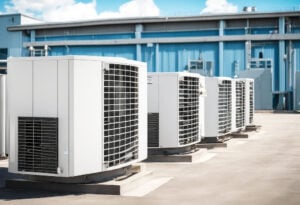
An unmaintained HVAC system doesn’t just fail faster — it drives up energy use and emergency repair costs.
Recommended preventive maintenance checklist:
- Filter changes: Clogged filters increase energy use by 10–15% and strain fans.
- Refrigerant checks: Low refrigerant forces compressors to work harder, risking early failure.
- Duct and ventilation inspections: Blocked or leaking ducts cause uneven temperatures and wasted airflow.
- Belt and motor inspections: Worn belts or motors cause overheating, noise, and system inefficiency.
Regular inspections can extend system lifespan by up to 30%. High-dust environments such as textile, paper, or grain facilities may require more frequent service cycles.
Tenant takeaway: Require documentation. Maintenance logs should be attached to the lease or stored in your facility management system for audit and planning purposes.
7. The Financial Lens: HVAC as a Strategic Variable
Energy represents a growing share of warehouse operating costs — often 25–40% of total expenses. HVAC efficiency directly influences total occupancy cost and long-term competitiveness.
Incentives under the Inflation Reduction Act and regional energy programs now make high-efficiency upgrades more affordable. Tenants with multiple facilities can often qualify for tax credits or shared-savings models by retrofitting systems to SEER2 or higher standards.
Modernization benefits include:
- Lower utility spend and carbon footprint
- Improved lease renewal leverage through demonstrated efficiency
- Reduced downtime from system reliability improvements
For multi-site occupiers, benchmarking HVAC performance across locations highlights where inefficiencies or compliance risks are hiding in the portfolio.
Tenant takeaway: Efficiency data is negotiation leverage. The more you know about system performance and age, the more control you have over future costs.
REoptimizer® Insight
HVAC may sit quietly on the roof, but it drives some of the most dynamic cost variables in warehouse operations. Understanding system capacity, efficiency, maintenance history, and lease language gives tenants control over both energy and financial outcomes.
REoptimizer® helps occupiers quantify those variables across entire portfolios — identifying where outdated or mismanaged systems are inflating costs, exposing risk, or consuming unnecessary capital. With better data, tenants can negotiate smarter leases, plan upgrades strategically, and align facility performance with financial goals.
For tenants managing millions of square feet, small percentage improvements in HVAC performance translate directly into measurable savings. Every degree, every SEER point, and every maintenance cycle counts.
Learn more how REoptimizer® helps occupiers track HVAC performance, benchmark costs, and negotiate better leases.
Commercial real estate is your company’s second-largest expense, and while parking may seem like a small piece of that puzzle, its operational impact is enormous:
- Employee Productivity: Every extra minute spent searching for parking cuts into work time.
- Customer Experience: Clients who struggle to park are less likely to return.
- Recruitment & Retention: In competitive talent markets, amenities like safe, convenient parking are differentiators.
- Cost Efficiency: Poorly planned parking can inflate CAM charges or lead to costly mid-lease adjustments.
Poor parking planning doesn’t just create daily headaches… it quietly inflates costs, from higher CAM charges to expensive mid-lease fixes. And if you’re managing multiple locations? Those headaches multiply fast. Without a clear way to track parking capacity, ratios, and costs across your portfolio, you’re flying blind… and paying for it. So let’s discuss everything corporate tenants need to know about commercial parking.
Understanding Parking Ratios
Time and again, the parking ratio is the key factor in determining whether a property’s parking will work. The parking ratio, usually represented by spaces per 1,000 square feet of rentable space, is the key metric.
For example: A 40,000-square-foot building with 200 spaces has a ratio of 5:1,000 — standard for many suburban offices. Higher ratios mean more available spaces per square foot; lower ratios often reflect urban settings with public transit access.
Key considerations for executives:
- Property Type: Medical offices may require higher ratios than warehouses.
- Workforce Density: More employees per square foot means more parking demand.
- Regional Norms: Suburban markets often expect higher ratios than urban cores.

What Defines the “Right” Ratio?
There’s no universal number. It depends on:
- Employee Commute Habits: If 90% of your workforce drives, you’ll need higher ratios.
- Customer Traffic: Retail and service locations may need overflow capacity.
- Public Transit Access: Properties near major transit hubs can sustain lower ratios.
And ratios aren’t just about capacity, they’re about cost.
Higher parking ratios can increase property expenses, which, across dozens of leases, can significantly impact your portfolio budget.
Lease Clauses Executives Can’t Ignore
Parking terms are often vague, but vague clauses create expensive surprises.
As you evaluate leases across your portfolio, focus on:
- Demised Parking Spaces – Exclusive use, but with maintenance responsibilities.
- Rights to Park – Can be general (first-come, first-served) or exclusive to certain spaces.
- Accessibility Requirements – Compliance with ADA regulations (at least one accessible space per 25 total).
- Relocation Provisions – Whether spaces can be moved or reallocated mid-lease.
- Security & Lighting Commitments – Who pays for cameras, attendants, or improved lighting?
For multi-site portfolios, tracking these details is crucial. Overlooking even one clause can cascade into operational headaches across multiple properties.
Geography’s Influence on Parking
The “right” parking strategy changes dramatically by location:
- Urban Cores: Lower ratios (1:1,000 or less) due to land scarcity and transit access.
- Suburbs: Higher ratios (5–6:1,000) are common, especially in driver-heavy regions.
- Climate Factors: Hot or snowy climates may require covered or structured parking for employee comfort and vehicle protection.
When comparing markets, remember that the same parking ratio can carry very different cost implications depending on local land values.
Obviously parking is not going to be the same in the suburbs versus city centers.

Structured vs. Surface Parking
When it comes to parking, you’ve really only got two options: build up or spread out. And each comes with its own price tag, timeline, and headaches.
Structured Parking (Garages)
Think multi-level garages. They’re a lifesaver when land is tight, density is high, or you want to keep cars out of the sun, snow, and rain.
- Cost per space: Around $22,000 — yes, per space.
- Build time: 18–24 months if everything goes smoothly.
- Why it works:
- Keeps cars (and people) out of extreme weather
- Controlled entry points and better security
- Packs a lot of cars into a small footprint — ideal for high-value land
- Looks and feels like a premium amenity
The flip side: You’ll pay more to build it, more to maintain it, and you need the patience (and budget) to wait up to two years before it’s ready. For short-term leases? Forget it — you’ll never see the return before you’re out.

Surface Parking (Lots)
This is your at-grade, asphalt (or gravel) lot. It’s the simple, no-frills option — and for a lot of situations, it’s exactly what you need.
- Cost per space: $1,500–$3,000 — a fraction of structured.
- Why it works:
- Quick to build and ready to use
- Cheaper to maintain over time
- Easy to expand or reconfigure if your needs change
The flip side: Takes up a ton of land, offers zero weather protection, and doesn’t have the same security advantages. In dense urban markets, it’s often not even an option because land costs make it impractical.
Safety, Security, and Wellbeing
Executives must view parking as part of the workplace environment.
A poorly lit, isolated lot can undo every other amenity your property offers. A secure, well-planned one? It quietly boosts morale and keeps risk low.
Here’s what a safer parking environment looks like:
- Bright lighting so no one’s walking to their car in the dark
- CCTV coverage to deter problems before they start
- Clearly marked pedestrian paths so cars and people don’t mix dangerously
- Emergency call boxes where help is one button away
- Fire safety systems in garages for worst-case scenarios
- Accessible spaces near entrances so everyone can get in easily
These features not only improve daily experience but also reflect positively on corporate brand standards.
Future-Proofing Parking
Parking isn’t static — the way people get to work is changing fast, and your parking strategy needs to keep up. What worked ten years ago may be outdated in five. Future-proofing isn’t just about making life easier for employees today — it’s about making sure your properties stay relevant and competitive tomorrow.
Here’s what’s shaping the future:
- EV Charging Stations – Electric vehicle adoption is climbing fast, and employees expect to be able to charge at work. Installing chargers now avoids a scramble later and signals your property is forward-thinking.
- Ride-Sharing & Drop-Off Zones – Uber, Lyft, and corporate shuttles are part of the commute mix. Designating safe, convenient pickup and drop-off areas keeps traffic flowing and reduces congestion at entrances.
- Bike Storage & Support – Secure, weather-protected bike parking (and even showers) make commuting by bike realistic for more people — and can help meet sustainability goals.
- Flexible Space Design – Surface lots and even parts of garages can be planned with adaptability in mind. If parking demand drops over time, those spaces can be converted to green space, outdoor seating, or even new building footprints.

The payoff? When you anticipate and build for these trends, you’re not just offering amenities — you’re protecting your property’s long-term value and keeping it aligned with market expectations for the next decade.
The Multi-Site Challenge
For a single location, parking planning is straightforward. For a large-scale portfolio, it’s a complex equation:
- Different markets, climates, and property types
- Multiple landlords with varying lease structures
- Inconsistent reporting on parking utilization and costs
Without a centralized view, executives risk making decisions in isolation. This means missing opportunities to renegotiate, consolidate, or optimize parking across the portfolio.
How Portfolio Intelligence Changes the Game
This is where modern CRE intelligence platforms make a measurable difference.
Imagine being able to:
- See parking ratios for every property in your portfolio at a glance
- Filter by lease expiration to identify renegotiation opportunities
- Compare parking costs across markets in seconds
- Layer in workforce commuting data to match parking to actual demand
That’s exactly the kind of portfolio insight solutions like REoptimizer® provide. By centralizing lease terms, property details, and utilization metrics, you can make proactive, data-driven decisions — including parking — with speed and precision.
Takeaways for Tenants
Parking may not be the most glamorous aspect of your portfolio, but it’s one of the most impactful. It touches employee satisfaction, customer experience, operational costs, and long-term property value.
For executives managing multiple sites, the key is visibility: knowing exactly what you have, what you need, and where the gaps are — across the entire portfolio.
When you have the tools to see all parking data side-by-side, you can negotiate smarter leases, design better employee experiences, and control costs more effectively.
And here’s the thing — you can’t manage what you can’t see.If your parking details are buried in leases, scattered in spreadsheets, or hidden in someone’s inbox, you’re making calls without the full picture. REoptimizer® fixes that. It pulls every detail — from parking ratios to EV chargers — into one clear dashboard. You decide what matters most, set your filters, and instantly see only the properties that meet your criteria. No noise. No guessing. Just the right options, ready to act on.
Learn more about how REoptimizer® gives your portfolio a new edge.
